
SLIDE 1
1
Topic: Duplicate Detection and Similarity Computing
UCSB 290N, 2013 Tao Yang Some of slides are from text book [CMS] and Rajaraman/Ullman
Table of Content
- Motivation
- Shingling for duplicate comparison
- Minhashing
- LSH
Applications of Duplicate Detection and Similarity Computing
- Duplicate and near-duplicate documents occur in
many situations
- Copies, versions, plagiarism, spam, mirror sites
- Over 30% of the web pages in a large crawl are
exact or near duplicates of pages in the other 70%
- Duplicates consume significant resources during
crawling, indexing, and search
- Little value to most users
- Similar query suggestions
- Advertisement: coalition and spam detection
Duplicate Detection
- Exact duplicate detection is relatively easy
- Content fingerprints
- MD5, cyclic redundancy check (CRC)
- Checksum techniques
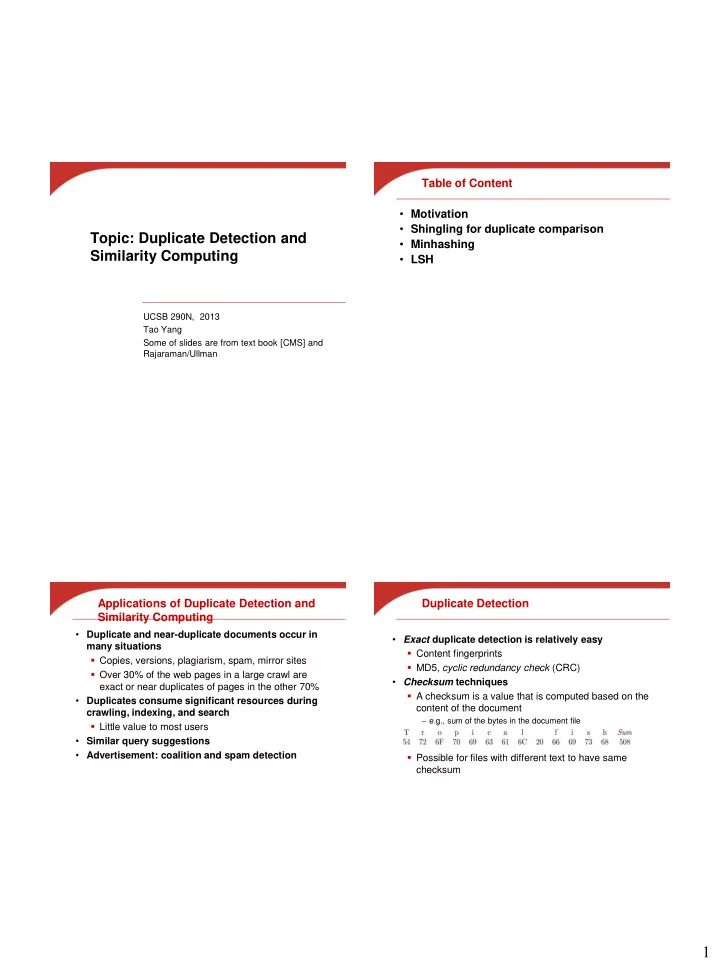
- A checksum is a value that is computed based on the
content of the document
– e.g., sum of the bytes in the document file
- Possible for files with different text to have same