
6/8/2020 1
14 Herbs With Historical Medicinal Uses
1
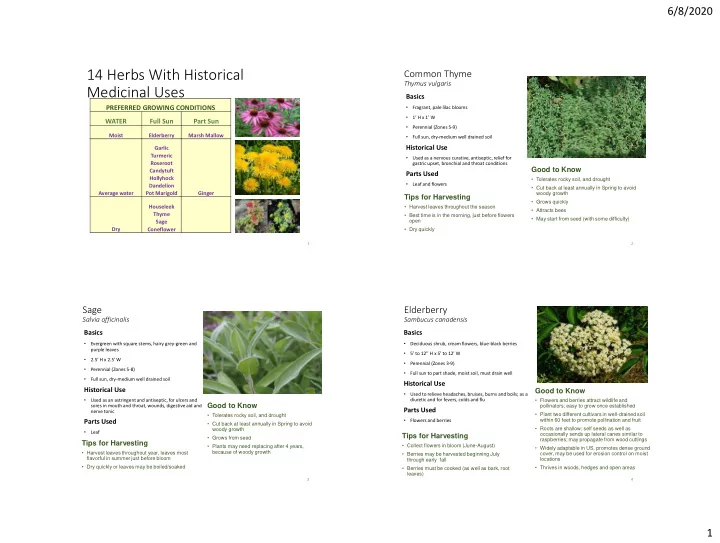
PREFERRED GROWING CONDITIONS WATER Full Sun Part Sun
Moist Elderberry Marsh Mallow Average water Garlic Turmeric Roseroot Candytuft Hollyhock Dandelion Pot Marigold Ginger Dry Houseleek Thyme Sage Coneflower
Basics
- Fragrant, pale lilac blooms
- 1’ H x 1’ W
- Perennial (Zones 5-9)
- Full sun, dry-medium well drained soil
Historical Use
- Used as a nervous curative, antiseptic, relief for
gastric upset, bronchial and throat conditions
Parts Used
- Leaf and flowers
2
Tips for Harvesting
- Harvest leaves throughout the season
- Best time is in the morning, just before flowers
- pen
- Dry quickly
Good to Know
- Tolerates rocky soil, and drought
- Cut back at least annually in Spring to avoid
woody growth
- Grows quickly
- Attracts bees
- May start from seed (with some difficulty)
Common Thyme
Thymus vulgaris Basics
- Evergreen with square stems, hairy grey-green and
purple leaves
- 2.5’ H x 2.5’ W
- Perennial (Zones 5-8)
- Full sun, dry-medium well drained soil
Historical Use
- Used as an astringent and antiseptic, for ulcers and
sores in mouth and throat, wounds, digestive aid and nerve tonic
Parts Used
- Leaf
3
Tips for Harvesting
- Harvest leaves throughout year, leaves most
flavorful in summer just before bloom
- Dry quickly or leaves may be boiled/soaked
Good to Know
- Tolerates rocky soil, and drought
- Cut back at least annually in Spring to avoid
woody growth
- Grows from seed
- Plants may need replacing after 4 years,
because of woody growth
Sage
Salvia officinalis Basics
- Deciduous shrub, cream flowers, blue-black berries
- 5’ to 12’’ H x 5’ to 12’ W
- Perennial (Zones 3-9)
- Full sun to part shade, moist soil, must drain well
Historical Use
- Used to relieve headaches, bruises, burns and boils; as a
diuretic and for fevers, colds and flu
Parts Used
- Flowers and berries
4
Tips for Harvesting
- Collect flowers in bloom (June-August)
- Berries may be harvested beginning July
through early fall
- Berries must be cooked (as well as bark, root
leaves)
Good to Know
- Flowers and berries attract wildlife and
pollinators; easy to grow once established
- Plant two different cultivars in well-drained soil
within 60 feet to promote pollination and fruit
- Roots are shallow; self seeds as well as
- ccasionally sends up lateral canes similar to
raspberries; may propagate from wood cuttings
- Widely adaptable in US, promotes dense ground
cover, may be used for erosion control on moist locations
- Thrives in woods, hedges and open areas
Elderberry
Sambucus canadensis