
SLIDE 1
19 Advanced Topics 1: MT System Combination
In the chapters up to this point, we have covered methods to create effective systems for machine translation. In actuality, when attempting to create the strongest possible system possible, it is common to combine together the results of multiple systems to create the best possible single translation possible. This method is called system combination or ensembling, and this chapter will cover the motivation and methods for doing so.
19.1 Why Combine Together Multiple Systems?
Before explicitly covering methods to perform system combination, it is worth thinking why we would want to do so in the first place. Obviously, creating two different machine translation systems (e.g. a phrase-based system and neural system) obviously takes more work than creating a single system in one of the two paradigms. However, there are in fact significant advantages to creating results with multiple systems and combining them together. In fact, there is a very intuitive argument for system combination: some systems are good at some things and other systems are good at other things. If we take a very simple method
- f training multiple systems and selecting which one to use in which situation, we should
be able to improve our results as a whole. For example, if we were creating a web-based translation system and we expected that users would often input short phrases in addition to full sentences, we might want to have a system based on looking up the short phrases in the dictionary, and then use the neural MT system if there was no hit in the dictionary. This is
- ne very simple variety of system combination.
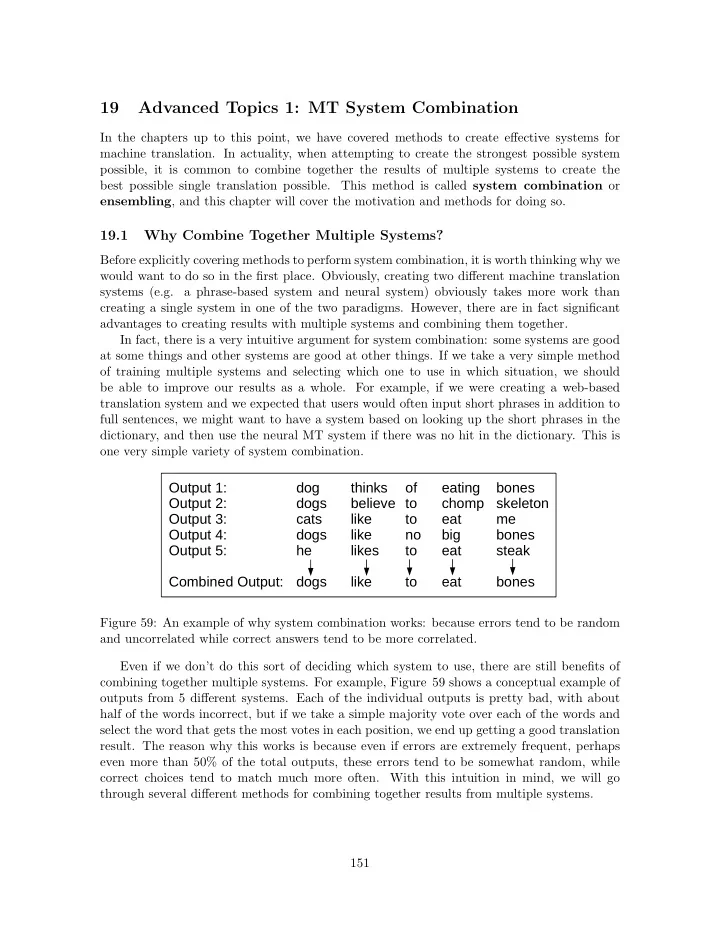
Output 1: dog thinks
- f
eating bones Output 2: dogs believe to chomp skeleton Output 3: cats like to eat me Output 4: dogs like no big bones Output 5: he likes to eat steak Combined Output: dogs like to eat bones
Figure 59: An example of why system combination works: because errors tend to be random and uncorrelated while correct answers tend to be more correlated. Even if we don’t do this sort of deciding which system to use, there are still benefits of combining together multiple systems. For example, Figure 59 shows a conceptual example of
- utputs from 5 different systems. Each of the individual outputs is pretty bad, with about
half of the words incorrect, but if we take a simple majority vote over each of the words and select the word that gets the most votes in each position, we end up getting a good translation
- result. The reason why this works is because even if errors are extremely frequent, perhaps