
SLIDE 1
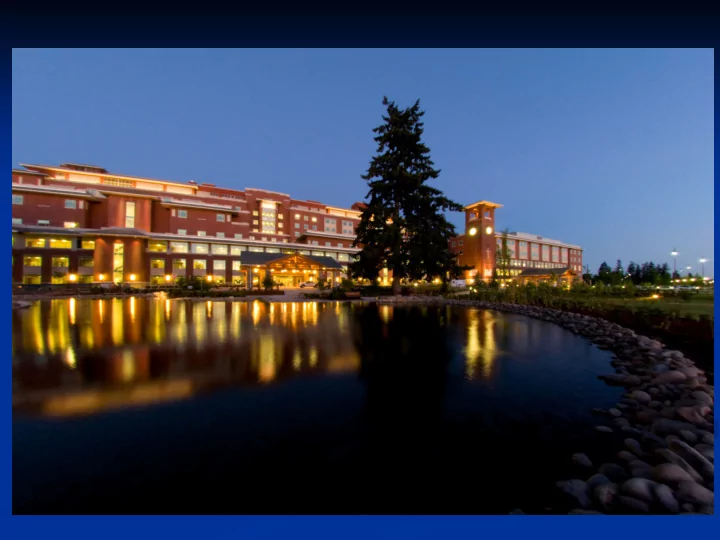
A new option for the Diagnosis and Management of Valvular Heart - - PowerPoint PPT Presentation
A new option for the Diagnosis and Management of Valvular Heart Disease Oregon Comprehensive Valve Center I have no disclosures Oregon Comprehensive Valve Center Multidisciplinary case conferences to discuss optimal treatment of complex
I have no disclosures
Retroflex 1 Edwards-SAPIEN THV 23mm and 26mm valve sizes 22F and 24F sheath sizes
Numbers at Risk
TAVI 179 138 122 67 26 Standard Rx 179 121 83 41 12
Standard Rx TAVI
All-cause mortality (%) Months
∆ at 1 yr = 20.0% NNT = 5.0 pts 50.7% 30.7%
$34,863 $14,451 $31,192 $54,228 $4,742 $5,773
$0 $20,000 $40,000 $60,000 $80,000 TF-TAVR AVR Procedure Non-Procedure Total MD Fees
Transfemoral
$71,955 ∆ = ($2,496) P = 0.53 $74,452
Echocardiogram is recommended if clinical exam detects: New murmur Diminished or absent S2 Murmur in patients with symptoms (chest pain, dyspnea,
syncope or pre-syncope)
Exercise testing is discouraged for aortic stenosis patients due
to safety concerns, however can be performed in selected
Serial testing in asymptomatic patients: Mild AS: Echo every three to five years Moderate AS: Echo every one to two years Severe AS: Annual echocardiogram
P < 0.0001) and six minute walking distance (P = 0.002), after 1-year follow-up
including…
1.1%, P < 0.0001
P < 0.0001
care for patients with aortic stenosis who are not suitable candidates for surgery!
reduce the frequency of procedure-related complications in the future.
assessment of bioprosthetic valve durability, which will mandate obligatory long-term clinical and echocardiography FU of all TAVI patients.
Began September 12, 2012 33 Successful transfemoral TAVR cases Average age of patient 81 years 30 day mortality: 0% 1 year mortality: 9% 3 deaths 1 GI Bleed 1 Fractured hip 1 COPD respiratory failure
Photo taken by and on file at Abbott Vascular.
Supports Protocol Version 6.1 June 11, 2013
Rat ational ale an and G Goal als
Rationale: Vessel scaffolding is only needed transiently*
Goal: Revascularize the vessel like a metallic DES, then resorb naturally into the body
Potential benefits:
Restoration of natural physiologic vasomotor function in some
patients
Enable vascular remodeling and tissue adaptation Elimination of chronic sources of vessel irritation and sources for
chronic inflammation
Possibly avoid current challenges with leaving a metal implant
behind
Potentially reduce the need for prolonged DAPT No permanent implant to complicate future interventions and re-
interventions, particularly in younger patients**
Non-invasive imaging with MSCT or MRA without ‘blooming
artifact’