AFachment Tuning in : The importance of parents JJ - - PDF document

afachment tuning in the importance of parents
SMART_READER_LITE
LIVE PREVIEW

AFachment Tuning in : The importance of parents JJ - - PDF document

06/06/2017 AFachment Tuning in : The importance of parents JJ mind-mindedness for childrens development Elizabeth Meins elizabeth.meins@york.ac.uk


slide-1
SLIDE 1

06/06/2017 ¡ 1 ¡

Tuning ¡in: ¡ The ¡importance ¡of ¡parents’ ¡ ¡ mind-­‑mindedness ¡for ¡children’s ¡ development ¡

Elizabeth ¡Meins ¡ elizabeth.meins@york.ac.uk ¡ @ElizabethMeins ¡ ¡ ¡

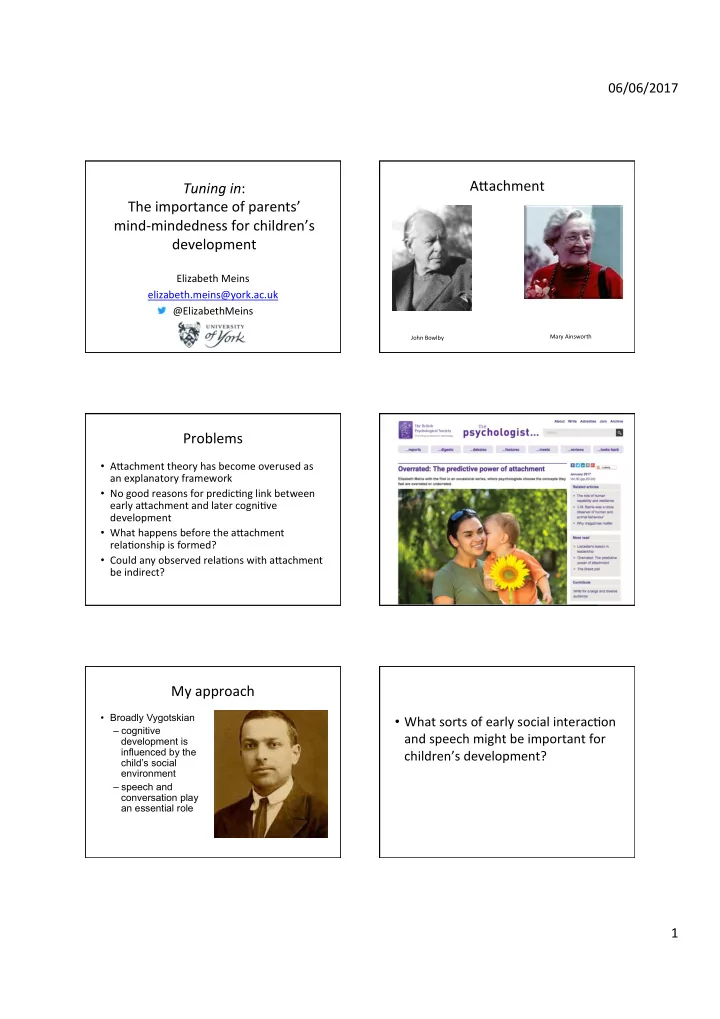
AFachment ¡

  • JJ ¡

John ¡Bowlby ¡ Mary ¡Ainsworth ¡

Problems ¡

  • AFachment ¡theory ¡has ¡become ¡overused ¡as ¡

an ¡explanatory ¡framework ¡

  • No ¡good ¡reasons ¡for ¡predicNng ¡link ¡between ¡

early ¡aFachment ¡and ¡later ¡cogniNve ¡ development ¡

  • What ¡happens ¡before ¡the ¡aFachment ¡

relaNonship ¡is ¡formed? ¡

  • Could ¡any ¡observed ¡relaNons ¡with ¡aFachment ¡

be ¡indirect? ¡

My ¡approach ¡

  • Broadly Vygotskian

– cognitive development is influenced by the child’s social environment – speech and conversation play an essential role

  • What ¡sorts ¡of ¡early ¡social ¡interacNon ¡

and ¡speech ¡might ¡be ¡important ¡for ¡ children’s ¡development? ¡

slide-2
SLIDE 2

06/06/2017 ¡ 2 ¡

Taking ¡the ¡“intenNonal ¡stance” ¡

  • Individual ¡differences ¡in ¡mothers’ ¡aFribuNon ¡
  • f ¡meaning ¡to ¡infants’ ¡early ¡vocalisaNons ¡

(Meins, ¡1998) ¡

  • Individual ¡differences ¡in ¡mothers’ ¡tendency ¡to ¡

describe ¡their ¡3-­‑year-­‑olds ¡with ¡reference ¡to ¡ their ¡mental ¡characterisNcs ¡(Meins ¡et ¡al., ¡ 1998) ¡ ¡ He ¡was ¡my ¡third ¡child. ¡He’s ¡about, ¡em, ¡how ¡tall ¡ would ¡he ¡be? ¡He’s ¡slightly ¡taller ¡than ¡average ¡ for ¡his ¡age. ¡He’s ¡fairly ¡thin, ¡not ¡a ¡lot ¡of ¡beef ¡on ¡

  • him. ¡He ¡has ¡mousy-­‑coloured ¡hair. ¡He ¡has, ¡em, ¡

greeny, ¡spongy ¡eyes, ¡nice ¡eyelashes. ¡Fairly ¡long ¡

  • face. ¡PreFy ¡pale-­‑coloured. ¡Em, ¡bit ¡of ¡a ¡giggler. ¡

Cut ¡all ¡his ¡teeth. ¡Has ¡a ¡good ¡sense ¡of ¡humour. ¡ Bit ¡of ¡a ¡cough. ¡Full ¡of ¡fun, ¡really, ¡I ¡suppose. ¡ Quite ¡boisterous. ¡ ¡ Erm, ¡he’s ¡about ¡3 ¡foot ¡3 ¡high. ¡Blond ¡hair. ¡Er, ¡ dark ¡brown ¡eyes, ¡very ¡long ¡eyelashes. ¡Very ¡ small ¡face, ¡but ¡a ¡big ¡build ¡for ¡his ¡age. ¡Size ¡10 ¡

  • feet. ¡He’s ¡got ¡the ¡front ¡lea ¡tooth ¡black ¡because ¡

he ¡fell ¡on ¡it ¡as ¡a ¡2-­‑year-­‑old. ¡He’s ¡got ¡a ¡birthmark ¡

  • n ¡his ¡lea ¡hand ¡shoulder. ¡He’s ¡got, ¡erm, ¡the ¡

birthmark ¡of ¡a ¡haemangioma ¡on ¡the ¡back ¡of ¡his ¡ lea ¡leg. ¡Er, ¡he’s ¡a ¡pain ¡in ¡the ¡neck. ¡He’s ¡just ¡ started ¡to ¡sleep, ¡3 ¡months ¡ago, ¡through ¡the ¡

  • night. ¡And ¡I ¡think ¡he’s ¡very ¡bright ¡for ¡his ¡age. ¡

¡ I ¡think ¡she’s ¡a ¡vivacious, ¡just ¡3-­‑year-­‑old. ¡She’s ¡ got ¡quite ¡a ¡strong ¡personality, ¡but ¡she’s ¡very ¡ sort ¡of, ¡a ¡loving, ¡caring ¡liFle ¡girl ¡really. ¡And ¡em, ¡ well, ¡she’s ¡become ¡a ¡real ¡companion ¡now. ¡I ¡ don’t ¡know ¡what ¡else ¡to ¡say ¡about ¡her, ¡except ¡ she’s ¡a ¡lovely ¡liFle ¡girl. ¡Quite ¡independent, ¡plays ¡

  • n ¡her ¡own ¡quite ¡a ¡bit, ¡once ¡she ¡gets ¡herself ¡
  • rganised. ¡And ¡her ¡imaginaNon’s ¡just ¡started, ¡

sort ¡of, ¡to ¡take ¡off, ¡and ¡I ¡hear ¡her ¡playing ¡games ¡ with ¡her ¡animals ¡and ¡things, ¡and ¡talking ¡to ¡

  • them. ¡She’s ¡great ¡fun ¡to ¡be ¡with. ¡ ¡

¡

Taking ¡the ¡“intenNonal ¡stance” ¡

  • Individual ¡differences ¡in ¡mothers’ ¡aFribuNon ¡
  • f ¡meaning ¡to ¡infants’ ¡early ¡vocalisaNons ¡

(Meins, ¡1998) ¡

  • Individual ¡differences ¡in ¡mothers’ ¡tendency ¡to ¡

describe ¡their ¡3-­‑year-­‑olds ¡with ¡reference ¡to ¡ their ¡mental ¡characterisNcs ¡(Meins ¡et ¡al., ¡ 1998) ¡ ¡ è Could ¡differences ¡in ¡caregivers’ ¡aFunement ¡ to ¡the ¡child’s ¡mental ¡world ¡provide ¡a ¡good ¡ explanatory ¡framework ¡for ¡predicNng ¡ development? ¡

Outline ¡

  • Defining ¡mind-­‑mindedness ¡(MM) ¡
  • MM ¡and ¡children’s ¡development ¡
  • Can ¡you ¡teach ¡people ¡to ¡be ¡more ¡mind-­‑

minded? ¡

slide-3
SLIDE 3

06/06/2017 ¡ 3 ¡

Mind-­‑mindedness ¡(Meins, ¡1997) ¡

  • The ¡caregiver’s ¡tendency ¡to ¡treat ¡the ¡young ¡

child ¡as ¡an ¡individual ¡with ¡a ¡mind ¡of ¡their ¡own ¡

  • Enables ¡caregiver ¡to ¡‘tune ¡in’ ¡to ¡what ¡the ¡child ¡

may ¡be ¡thinking ¡or ¡feeling ¡ ¡ ¡ ¡ ¡ ¡ ¡ ¡ ¡ ¡ ¡ ¡ ¡ ¡ ¡ ¡ ¡ ¡ ¡ ¡ ¡ ¡ ¡ ¡ ¡ ¡ ¡ ¡ ¡ ¡ ¡ ¡ ¡

How ¡do ¡you ¡measure ¡MM? ¡

  • DescripNons ¡of ¡children ¡
  • What ¡about ¡assessing ¡mind-­‑mindedness ¡

‘online’? ¡

  • How ¡early ¡in ¡the ¡child’s ¡life ¡do ¡you ¡see ¡mind-­‑

mindedness? ¡

InteracNonal ¡MM ¡in ¡the ¡first ¡year ¡of ¡life ¡

  • Can ¡caregivers ¡‘read’ ¡their ¡babies’ ¡minds? ¡
  • Do ¡they ¡talk ¡about ¡what ¡their ¡babies ¡might ¡be ¡

thinking ¡or ¡feeling, ¡or ¡about ¡their ¡likes, ¡dislikes ¡ and ¡interests? ¡

  • If ¡they ¡do, ¡do ¡they ¡seem ¡to ¡get ¡it ¡right? ¡

Mind-­‑related ¡comments ¡

  • Appropriate ¡mind-­‑related ¡comments ¡– ¡the ¡

caregiver ¡accurately ¡reflects ¡what ¡the ¡infant ¡is ¡ thinking ¡or ¡feeling ¡

  • Non-­‑aFuned ¡mind-­‑related ¡comments ¡– ¡the ¡

caregiver ¡misaFributes ¡an ¡internal ¡state ¡to ¡the ¡ child ¡

The ¡MM ¡construct ¡

  • Appropriate ¡and ¡non-­‑aFuned ¡comments ¡are ¡

unrelated ¡(e.g., ¡Meins ¡et ¡al., ¡2003, ¡2012) ¡

  • This ¡means ¡that ¡some ¡parents ¡ ¡

¡– ¡Make ¡high ¡levels ¡of ¡both ¡types ¡of ¡comment ¡ – ¡Make ¡low ¡levels ¡of ¡both ¡types ¡of ¡comment ¡ ¡– ¡Make ¡high ¡levels ¡of ¡one ¡type ¡of ¡comment ¡and ¡ ¡low ¡levels ¡of ¡the ¡other ¡type ¡of ¡comment ¡

A ¡mind-­‑minded ¡caregiver… ¡

  • Scores ¡high ¡on ¡appropriate ¡mind-­‑related ¡

comments ¡ ¡

  • Scores ¡low ¡on ¡non-­‑aFuned ¡mind-­‑related ¡

comments ¡

  • Non-­‑aFuned ¡are ¡less ¡frequent ¡– ¡over ¡a ¡

quarter ¡of ¡parents ¡don’t ¡make ¡them ¡cf. ¡3% ¡ who ¡never ¡make ¡an ¡appropriate ¡comment ¡

slide-4
SLIDE 4

06/06/2017 ¡ 4 ¡

MM ¡& ¡children’s ¡development ¡

Mind-­‑mindedness ¡is ¡associated ¡with: ¡

  • Secure ¡parent–child ¡aFachment ¡(Lundy, ¡2003; ¡

Meins ¡et ¡al., ¡2001, ¡2012, ¡2017) ¡

  • BeFer ¡early ¡language ¡and ¡play ¡development ¡

(Meins ¡et ¡al., ¡2013; ¡Bernier ¡et ¡al., ¡2017) ¡and ¡ behavioral ¡control ¡(Bernier ¡et ¡al., ¡2010) ¡

  • BeFer ¡understanding ¡of ¡others’ ¡thoughts ¡and ¡

feelings ¡at ¡ages ¡4 ¡and ¡5 ¡(CenNfanN ¡et ¡al., ¡2016; ¡ Kirk ¡et ¡al., ¡2016; ¡Laranjo ¡et ¡al., ¡2010, ¡2014; ¡Lundy, ¡ 2013; ¡Meins ¡et ¡al., ¡2002, ¡2003, ¡2013) ¡

  • Some ¡effects ¡are ¡only ¡seen ¡in ¡children ¡from ¡

disadvantaged ¡backgrounds ¡

MM ¡& ¡behavioural ¡difficulNes ¡

  • Socially ¡diverse ¡sample ¡of ¡around ¡200 ¡mothers ¡and ¡

children ¡

  • 90 ¡families ¡low ¡SES ¡(no ¡post-­‑16 ¡ed, ¡no/menial/manual ¡

employment, ¡sig ¡younger, ¡less ¡social ¡support) ¡

  • Behavioural ¡difficulNes ¡assessed ¡at ¡age ¡3 ¡(mother) ¡and ¡

5 ¡(mother ¡and ¡teacher) ¡ ¡

  • DifficulNes ¡can ¡be ¡internalising ¡or ¡externalising ¡

behaviours ¡

  • Did ¡family ¡socioeconomic ¡status ¡moderate ¡any ¡

relaNons? ¡

– Children ¡from ¡low ¡SES ¡backgrounds ¡are ¡more ¡likely ¡than ¡ their ¡high ¡SES ¡peers ¡to ¡have ¡behavioural ¡difficulNes ¡

Meins ¡et ¡al. ¡(2013) ¡Journal ¡of ¡Abnormal ¡Child ¡Psychology ¡

Low ¡socioeconomic ¡status ¡group ¡ High ¡socioeconomic ¡status ¡group ¡ So… ¡

  • Mind-­‑mindedness ¡in ¡the ¡first ¡year ¡of ¡life ¡

appears ¡to ¡protect ¡children ¡from ¡poor ¡ backgrounds ¡against ¡behavioural ¡difficulNes ¡

  • Maternal ¡depression, ¡maternal ¡sensiNvity, ¡

social ¡support ¡& ¡early ¡child ¡language ¡are ¡ controlled ¡in ¡these ¡relaNons ¡

MM ¡& ¡educaNonal ¡aFainment ¡

  • SATs ¡results ¡at ¡ages ¡7 ¡and ¡11 ¡obtained ¡from ¡

NaNonal ¡Pupil ¡Database ¡

  • Average ¡aFainment ¡point ¡score ¡at ¡age ¡7, ¡

reading ¡and ¡maths ¡scores ¡at ¡age ¡11 ¡

  • Do ¡you ¡get ¡the ¡same ¡poverty-­‑specific ¡effect ¡of ¡

early ¡mind-­‑mindedness? ¡

Meins ¡et ¡al. ¡(invited ¡resubmission) ¡Child ¡Development ¡

slide-5
SLIDE 5

06/06/2017 ¡ 5 ¡

Findings ¡

  • Mothers’ ¡appropriate ¡comments ¡when ¡

children ¡were ¡8 ¡months ¡predicted ¡age-­‑7 ¡ aFainment ¡and ¡age-­‑11 ¡reading ¡

  • This ¡associaNon ¡was ¡seen ¡only ¡in ¡the ¡low ¡SES ¡

group ¡

  • The ¡associaNons ¡held ¡when ¡behavioural ¡

difficulNes ¡and ¡children’s ¡age-­‑4 ¡IQ ¡were ¡ accounted ¡for ¡

Outline ¡

OperaNonalising ¡mind-­‑mindedness ¡(MM) ¡ MM ¡and ¡children’s ¡development ¡

  • Can ¡you ¡teach ¡people ¡to ¡be ¡more ¡mind-­‑

minded ¡

MM ¡intervenNons ¡

  • Individually-­‑administered ¡video ¡feedback ¡for ¡

mothers ¡hospitalised ¡for ¡severe ¡mental ¡illness ¡

  • A ¡smartphone ¡app ¡trialled ¡with ¡a ¡community ¡

sample ¡of ¡mothers ¡

Mental ¡illness ¡& ¡MM ¡

  • Mothers ¡filmed ¡on ¡admission ¡to ¡a ¡residenNal ¡

mother ¡and ¡baby ¡unit ¡

  • Mind-­‑mindedness ¡assessed ¡from ¡5 ¡minute ¡

face-­‑to-­‑face ¡interacNons ¡

  • Psychologically ¡healthy ¡control ¡group ¡

Schacht ¡et ¡al. ¡(2017) ¡Development ¡and ¡Psychopathology ¡

MM ¡in ¡mothers ¡with ¡SMI ¡

0 ¡ 1 ¡ 2 ¡ 3 ¡ 4 ¡ 5 ¡ 6 ¡ 7 ¡ 8 ¡ 9 ¡ Appropriate ¡MRC ¡ Non-­‑aFuned ¡MRC ¡ Schacht ¡ Controls ¡

Video ¡feedback ¡

  • Admission ¡observaNons ¡used ¡in ¡single ¡session ¡
  • f ¡video ¡feedback ¡administered ¡by ¡

psychologist ¡to ¡facilitate ¡mind-­‑mindedness ¡

  • 3 ¡moments ¡in ¡the ¡observaNon ¡chosen ¡in ¡

advance ¡

  • Filmed ¡again ¡at ¡discharge ¡
  • Compared ¡against ¡women ¡on ¡the ¡unit ¡who ¡

received ¡standard ¡care ¡

slide-6
SLIDE 6

06/06/2017 ¡ 6 ¡ Appropriate ¡mind-­‑related ¡comments ¡ ¡

0 ¡ 1 ¡ 2 ¡ 3 ¡ 4 ¡ 5 ¡ 6 ¡ 7 ¡ Control ¡ Standard ¡care ¡ IntervenNon ¡ Admission ¡ Discharge ¡

* ¡

Non-­‑aFuned ¡mind-­‑related ¡comments ¡ ¡ ¡ ¡

0 ¡ 1 ¡ 2 ¡ 3 ¡ 4 ¡ 5 ¡ 6 ¡ 7 ¡ 8 ¡ 9 ¡ 10 ¡ Control ¡ Standard ¡care ¡ IntervenNon ¡ Admission ¡ Discharge ¡

* ¡

Does ¡the ¡intervenNon ¡have ¡to ¡be ¡face ¡ to ¡face? ¡

slide-7
SLIDE 7

06/06/2017 ¡ 7 ¡

slide-8
SLIDE 8

06/06/2017 ¡ 8 ¡

EvaluaNng ¡the ¡app’s ¡efficacy ¡

  • The ¡antenatal ¡group ¡can ¡start ¡using ¡the ¡app ¡as ¡

soon ¡as ¡the ¡baby ¡is ¡born ¡ ¡

  • Mind-­‑mindedness ¡is ¡assessed ¡at ¡6 ¡months ¡
  • MM ¡also ¡assessed ¡at ¡6 ¡months ¡in ¡a ¡control ¡

group ¡

Preliminary ¡results ¡

0 ¡ 1 ¡ 2 ¡ 3 ¡ 4 ¡ 5 ¡ 6 ¡ 7 ¡ 8 ¡ 9 ¡ 10 ¡ App ¡Users ¡ Controls ¡ Appropriate ¡MRC ¡ Non-­‑AFuned ¡MRC ¡

Health ¡VisiNng ¡

  • Developed ¡package ¡of ¡acNviNes ¡and ¡materials ¡

to ¡facilitate ¡mind-­‑mindedness ¡ ¡

  • Can ¡be ¡delivered ¡individually ¡or ¡in ¡groups ¡

Thanks ¡to ¡

¡ ¡ ¡ Charles ¡Fernyhough ¡ Susan ¡Pawlby ¡ Luna ¡CenNfanN ¡ Jean-­‑ ¡François ¡Bureau ¡