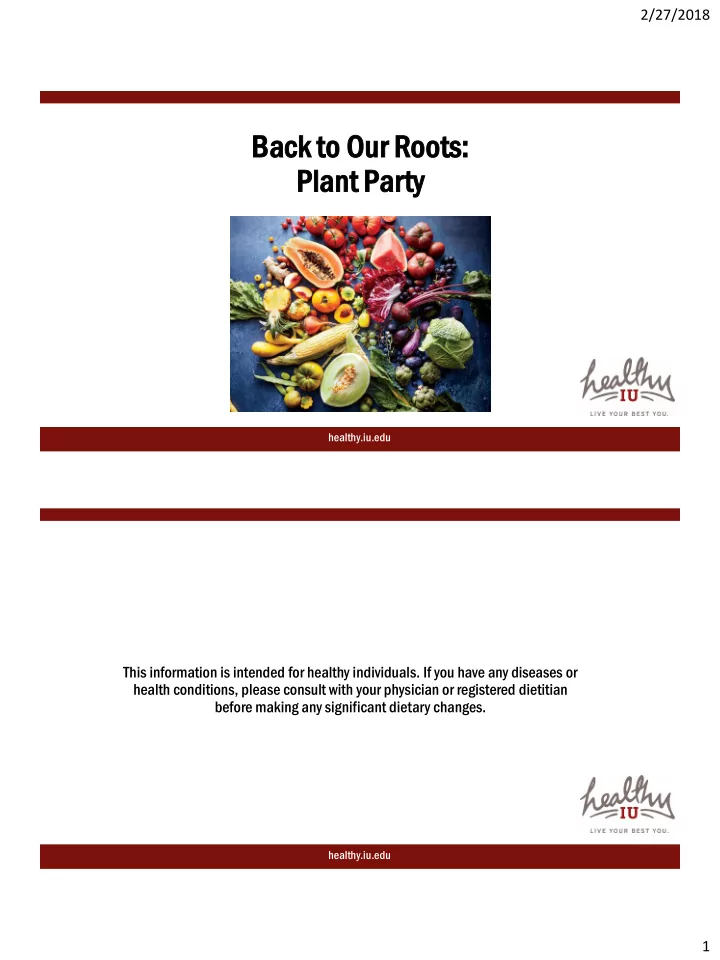
Back k to O Our r Roots: ts: Plant t Pa Party ty - - PDF document

back k to o our r roots ts plant t pa party ty
SMART_READER_LITE
LIVE PREVIEW

Back k to O Our r Roots: ts: Plant t Pa Party ty - - PDF document

2/27/2018 Back k to O Our r Roots: ts: Plant t Pa Party ty healthy.iu.edu healthy.iu.edu This information is intended for healthy individuals. If you have any diseases or health conditions, please consult with your physician or


slide-1
SLIDE 1

2/27/2018 1

healthy.iu.edu healthy.iu.edu

Back k to O Our r Roots: ts: Plant t Pa Party ty

healthy.iu.edu healthy.iu.edu

This information is intended for healthy individuals. If you have any diseases or health conditions, please consult with your physician or registered dietitian before making any significant dietary changes.

slide-2
SLIDE 2

2/27/2018 2

healthy.iu.edu healthy.iu.edu

Why plants?

Benefits of eating more plants:

  • 1. Gut health and microbiome
  • 2. Anti-inflammatory effects of polyphenols
  • 3. Essential vitamins, minerals, and other

nutrients

healthy.iu.edu healthy.iu.edu

  • 1. Gut health and microbiome
  • Gut microbiome: the microorganisms that live in the digestive tract
  • Most microorganisms in our gut are beneficial to our health
  • Health impact:
  • Digestive health
  • Risk of chronic disease and obesity
  • Mental health
slide-3
SLIDE 3

2/27/2018 3

healthy.iu.edu healthy.iu.edu

Feed your Flora with Fiber

  • Gut bacteria eat (ferment) fiber.
  • Whole plant foods are main sources of fiber:
  • Vegetables
  • Fruits
  • Whole grains
  • Beans and legumes
  • Nuts and seeds
  • Association between high fiber diet and reduced risk of:
  • Obesity
  • Heart disease
  • Cancer

healthy.iu.edu healthy.iu.edu

Types of Fiber

  • Fermentable (feeds your gut bacteria)
  • Soluble fiber: Onions, oats, nuts, fruits, vegetables
  • Resistant starch: Unripe bananas, oats, beans, cooked and cooled starches
  • Non-fermentable (increases stool bulk)
  • Insoluble fiber: Whole grains, nuts, fruits, vegetables
  • Most plant foods contain a combination of soluble and insoluble fiber.
slide-4
SLIDE 4

2/27/2018 4

healthy.iu.edu healthy.iu.edu

Types of Soluble Fiber

  • Inulin
  • Garlic, onion, leek, artichoke, asparagus
  • Pectin
  • Pears, apples, plums, oranges (and other citrus fruits)
  • Raffinose
  • Beans, cabbage, broccoli, Brussels sprouts
  • Eating a variety of soluble fiber sources promotes diversity of gut species.

healthy.iu.edu healthy.iu.edu

  • 2. Anti-inflammatory effects of polyphenols
  • Polyphenols (plant-based antioxidant compounds)
  • Anti-inflammatory effects
  • May reduce risk of chronic diseases
  • Promote growth and diversity of healthy microbiome
  • Sources of polyphenols:
  • Whole plant foods: vegetables, fruits, whole grains, nuts, beans, seeds, etc.
  • Herbs and spices: garlic, turmeric, ginger, cinnamon, oregano, rosemary, etc.
  • Others: tea, coffee, dark chocolate, red wine, extra virgin olive oil
slide-5
SLIDE 5

2/27/2018 5

healthy.iu.edu healthy.iu.edu

Polyphenols are color pigments

  • Choose a variety of colors for most nutritional benefit
  • Red: Beets, Red cabbage, Cherries, Cranberries, Red grapes, Red peppers,

Pomegranates, Strawberries, Tomatoes, Watermelon

  • Green: Green beans, Broccoli, Brussels sprouts, Lettuce, Kale, Collard greens,

Spinach, Green grapes, Honeydew, Kiwi

  • Orange/Yellow: Apricots, Squash, Cantaloupe, Mangoes, Oranges, Peaches,

Pineapple, Pumpkin, Corn, Sweet potatoes

  • Blue/Purple: Blackberries, Blueberries, Eggplant, Figs, Plums, Purple grapes
  • White: Cauliflower, Garlic, Onions, Mushrooms, Potatoes

healthy.iu.edu healthy.iu.edu

  • 3. Essential vitamins, minerals, and nutrients
  • Water-soluble vitamins
  • Fat-soluble vitamins
  • Other nutrients
  • Essential fatty acids
  • Proteins
  • Carbohydrates
slide-6
SLIDE 6

2/27/2018 6

healthy.iu.edu healthy.iu.edu

Water-soluble vitamins

  • Thiamine: beans, whole grains
  • Riboflavin: almonds, asparagus
  • Niacin: whole grains
  • B6: bananas, peas, spinach
  • Vitamin C: citrus fruits, tomatoes, potatoes, broccoli, cauliflower, Brussels

sprouts, bell peppers

  • Folate: dark leafy vegetables, beans

healthy.iu.edu healthy.iu.edu

Fat-soluble vitamins

  • Vitamin A: sweet potatoes, carrots, leafy vegetables, pumpkin
  • Vitamin D: some mushrooms
  • Vitamin E: leafy green vegetables, almonds, hazelnuts
  • Vitamin K: leafy green vegetables, broccoli, Brussels sprouts, cabbage
slide-7
SLIDE 7

2/27/2018 7

healthy.iu.edu healthy.iu.edu

Minerals

  • Calcium: broccoli, dark leafy greens, almonds
  • Iron: leafy green vegetables, beans, dark chocolate
  • Magnesium: whole grains, leafy green vegetables, nuts, beans, avocado
  • Potassium: broccoli, potatoes, oranges, bananas, raisins, tomatoes, leafy

green vegetables

  • Selenium: Brazil nuts
  • Zinc: nuts, seeds, beans
  • Iodine: sea vegetables

healthy.iu.edu healthy.iu.edu

Other nutrients

  • Essential fatty acids
  • Linoleic acid (omega-6): nuts and seeds
  • Alpha-linolenic acid (omega-3): flaxseeds, walnuts, chia seeds
  • Protein: nuts, seeds, beans, legumes, grains
  • Carbohydrate: grains, fruit, potatoes
slide-8
SLIDE 8

2/27/2018 8

healthy.iu.edu healthy.iu.edu

Tips for eating more plants

healthy.iu.edu healthy.iu.edu

Simple ways to eat more fruits and vegetables

  • Fruits
  • Eat fruit for dessert instead of sweets
  • Add fresh, frozen, or dried fruit to hot cereal
  • Add frozen fruit to a smoothie
  • Vegetables
  • Make vegetables the focus of lunch and dinner – fill half your plate with vegetables
  • Have a salad for lunch – add protein to make a balanced meal
  • Wash and cut vegetables in batches so that you always have some on hand
  • Add a handful of leafy greens to a smoothie
slide-9
SLIDE 9

2/27/2018 9

healthy.iu.edu healthy.iu.edu

Shopping for Fruits & Vegetables

  • Shop by season for best price, flavor, and nutritional value
  • Compare prices on bagged versus loose produce
  • Save time with pre-washed, pre-cut options
  • Choose frozen options
  • Choose organic when it matters most

healthy.iu.edu healthy.iu.edu

Organic vs. Conventional

slide-10
SLIDE 10

2/27/2018 10

healthy.iu.edu healthy.iu.edu

Frozen fruits and vegetables

  • Low cost
  • Don’t spoil
  • No need to wash or cut
  • Packaged at peak ripeness
  • Taste and nutrition similar to fresh

healthy.iu.edu healthy.iu.edu

Additional sources of fresh produce

  • Home gardening
  • Container gardening
  • Farmers’ markets
  • Farm stands
  • Community Supported Agriculture (CSAs)
slide-11
SLIDE 11

2/27/2018 11

healthy.iu.edu healthy.iu.edu

Simple ways to eat more whole grains

  • Choose whole grain versions of foods you eat regularly
  • Whole wheat pasta
  • Brown rice
  • Whole grain cereals
  • Whole grain bread
  • Check the first ingredient and look for the word “whole”
  • Whole wheat flour
  • Whole oats

healthy.iu.edu healthy.iu.edu

Simple ways to eat more beans and legumes

  • Add beans to a salad
  • Add beans to pasta dishes
  • Add whole beans or mashed beans to a wrap
  • Dip vegetables in hummus
  • Use quick-cooking dry beans, such as lentils
  • Use canned beans to quickly add protein to any meal
slide-12
SLIDE 12

2/27/2018 12

healthy.iu.edu healthy.iu.edu

Simple ways to eat more nuts and seeds

  • A handful of nuts or seeds makes a healthy snack
  • Combine with dried fruit to make trail mix
  • Add nut butter (peanut, almond, etc.) to:
  • Whole grain bread
  • Oatmeal
  • Smoothie

healthy.iu.edu healthy.iu.edu

Simple ways to eat more herbs and spices

  • Experiment with new flavors. Use a small amount at first and taste as you go.
  • Make your own spice mixes.
  • Reduce your reliance on added salt by using other flavors.
  • Buy in bulk and store extra in refrigerator/freezer in air-tight container
slide-13
SLIDE 13

2/27/2018 13

healthy.iu.edu healthy.iu.edu

Saving time in the kitchen

healthy.iu.edu healthy.iu.edu

Saving time in the kitchen

  • Plan:
  • Menus
  • Grocery list
  • Organize your kitchen
  • Keep pantry staples on hand
  • Prep ingredients ahead of time
  • Batch cooking
  • One-dish meals
  • Slow cooker meals
slide-14
SLIDE 14

2/27/2018 14

healthy.iu.edu healthy.iu.edu

Prep Area

Source: Nourish by Cook Smarts healthy.iu.edu healthy.iu.edu

Cooking Area

Source: Nourish by Cook Smarts