Bajas Friendly Whales Biology and Conservation Debra Valov ISSI, - PowerPoint PPT Presentation
Bajas Friendly Whales Biology and Conservation Debra Valov ISSI, August 2015 Introduction Natural History Conservation Issues Ecotourism Natural History Mammal in Order Cetacea Eschrichtius robustus Two separate
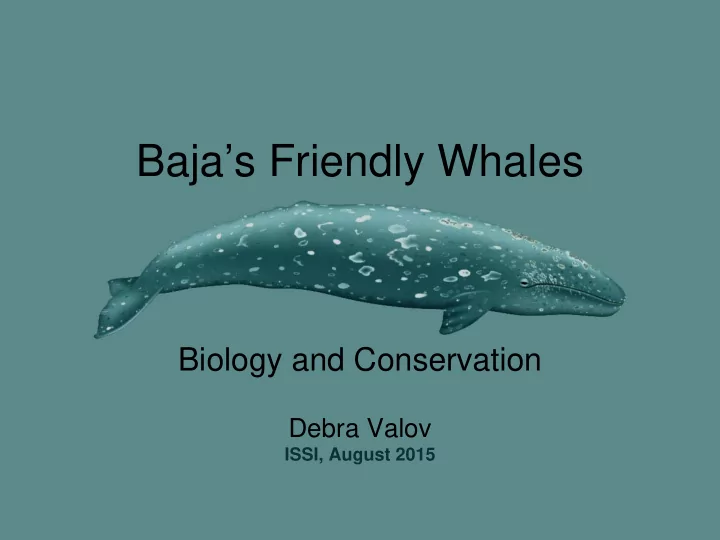
Baja’s Friendly Whales Biology and Conservation Debra Valov ISSI, August 2015
Introduction • Natural History • Conservation Issues • Ecotourism
Natural History • Mammal in Order Cetacea • Eschrichtius robustus • Two separate populations • California or Eastern Pacific Gray Whale
WHALE STATS 45 ft long 30-40 tons “Knuckles” Mottled blackish-grey skin Barnacles and whale lice
WHALE DIET • 1.3 tons (2600 lbs) per day • 198 tons (396,000 lbs) in 5 months Baleen Amphipods (krill)
LIFE CYCLE • Artic to Baja California: longest migration of a mammal • Echolocation
Jun-Sept (Oct) SUMMER • feeding
FALL & SPRING Oct-Nov & Apr-May • migration • 55-60 days Baja California Peninsula No. California Coast
WINTER Dec-Mar • Mate • Give birth • Watch tourists Laguna San Ignacio Laguna Ojo de Liebre
Breaching Breaching Life in the Baja Lagoons Spyhop Fluking/Diving
More than Whales
PREDATORS: KILLER WHALES
PREDATORS: HUMANS • 19 th Century whaling • 1947 IWC Moratorium • Current eastern population: “recovered”?? • Western population “extinct”
Conservation Issues • Whale nurseries declared (Mexico, 1973) • Biosphere Reserve (1988) • World Heritage Site (1993) • 1999 & 2005: salt works proposals
Laguna Ojo de Liebre w/ ESSA Salt works
Laguna San Ignacio
Ecotourism • Whale watching tours • Other “eco” activities • Education programs
Whale Watching Tours
Whale Video
¡Thanks! ¡See you in Baja! This presentation is available at: www.lasecomujeres.org
Recommend
More recommend
Explore More Topics
Stay informed with curated content and fresh updates.