Congo N Engl J Med 2014;371:1375 N Engl J Med 2014;371:1418 As of - - PowerPoint PPT Presentation

congo n engl j med 2014 371 1375 n engl j med 2014 371
SMART_READER_LITE
LIVE PREVIEW

Congo N Engl J Med 2014;371:1375 N Engl J Med 2014;371:1418 As of - - PowerPoint PPT Presentation

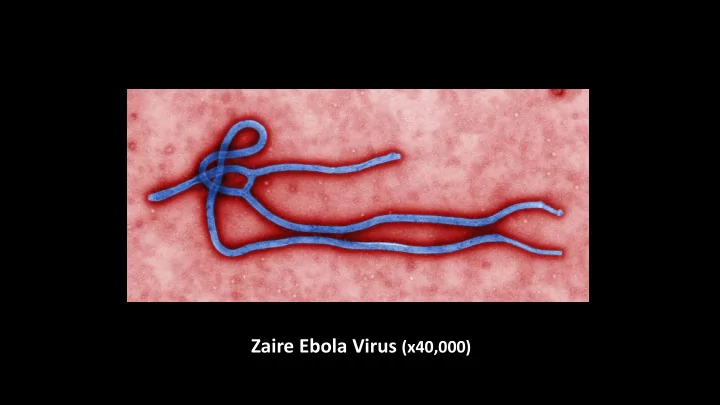
Zaire Ebola Virus (x40,000) Congo N Engl J Med 2014;371:1375 N Engl J Med 2014;371:1418 As of November 11, 2014 Secondary Transmission 1976 Zaire 5.6% among all family contacts maximum, 15% Highest risk with delivery of child


slide-1
SLIDE 1

Zaire Ebola Virus (x40,000)

slide-2
SLIDE 2

Congo

slide-3
SLIDE 3
slide-4
SLIDE 4

N Engl J Med 2014;371:1375

slide-5
SLIDE 5
slide-6
SLIDE 6
slide-7
SLIDE 7

N Engl J Med 2014;371:1418

slide-8
SLIDE 8

As of November 11, 2014

slide-9
SLIDE 9
slide-10
SLIDE 10
slide-11
SLIDE 11
slide-12
SLIDE 12
slide-13
SLIDE 13
slide-14
SLIDE 14

Secondary Transmission

1976 Zaire

  • 5.6% among all family contacts – maximum, 15%
  • Highest risk with delivery of child

1985 Congo

  • 16% household contacts
  • No cases without physical contact

1996 South Africa

  • healthcare workers exposed to an infected, undiagnosed

physician: one secondary case due to blood contact – more than 300 providers using standard precautions exposed

slide-15
SLIDE 15

Ebola Virus Disease

  • Usually abrupt onset 5 –10 days after “exposure.”
  • Initial symptoms: fever, headache, malaise, anorexia,

myalgia, arthralgia, sore throat, retrosternal pain, conjunctival injection, lumbosacral pain, rash.

  • Gastrointestinal symptoms follow in first few days:

nausea, abdominal pain, vomiting (67%), diarrhea (66%).

slide-16
SLIDE 16
slide-17
SLIDE 17
slide-18
SLIDE 18

EPIDEMIOLOGY OF EBOLA VIRUS DISEASE

Anthony L. Esposito, MD Chief, Department of Medicine Hospital Epidemiologist Saint Vincent Hospital Professor of Medicine University of Massachusetts School of Medicine

slide-19
SLIDE 19

Thank You

slide-20
SLIDE 20
slide-21
SLIDE 21

Ebola River, 1976