
SLIDE 1
¡ 1 ¡ Derrida ¡and ¡Schmitt ¡on ¡the ¡‘Exception’ ¡ ¡
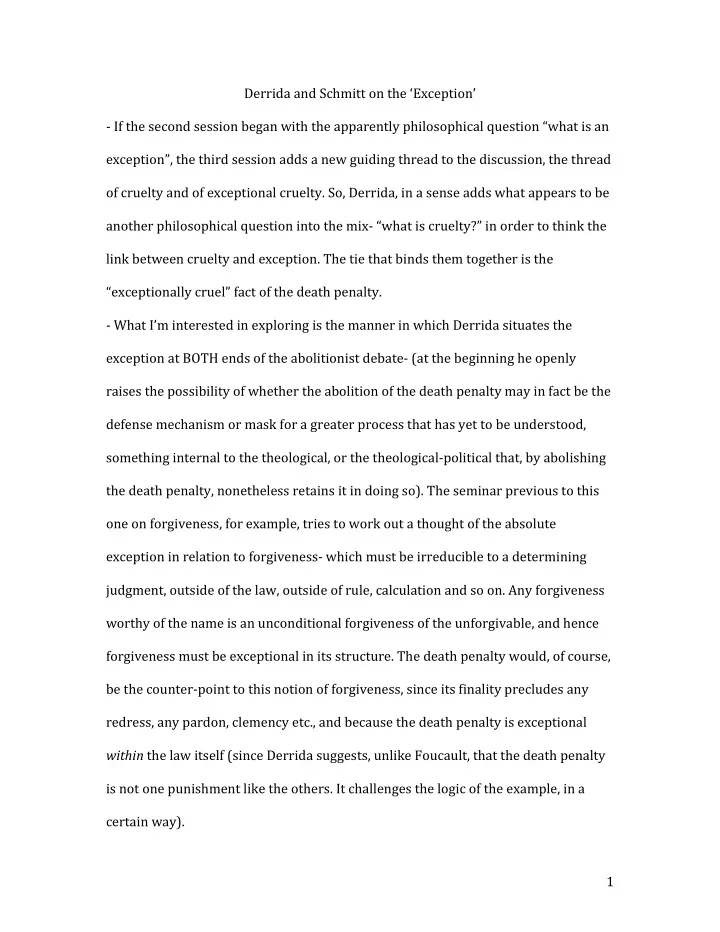
- ‑ ¡If ¡the ¡second ¡session ¡began ¡with ¡the ¡apparently ¡philosophical ¡question ¡“what ¡is ¡an ¡
exception”, ¡the ¡third ¡session ¡adds ¡a ¡new ¡guiding ¡thread ¡to ¡the ¡discussion, ¡the ¡thread ¡
- f ¡cruelty ¡and ¡of ¡exceptional ¡cruelty. ¡So, ¡Derrida, ¡in ¡a ¡sense ¡adds ¡what ¡appears ¡to ¡be ¡
another ¡philosophical ¡question ¡into ¡the ¡mix-‑ ¡“what ¡is ¡cruelty?” ¡in ¡order ¡to ¡think ¡the ¡ link ¡between ¡cruelty ¡and ¡exception. ¡The ¡tie ¡that ¡binds ¡them ¡together ¡is ¡the ¡ “exceptionally ¡cruel” ¡fact ¡of ¡the ¡death ¡penalty. ¡
- ‑ ¡What ¡I’m ¡interested ¡in ¡exploring ¡is ¡the ¡manner ¡in ¡which ¡Derrida ¡situates ¡the ¡
exception ¡at ¡BOTH ¡ends ¡of ¡the ¡abolitionist ¡debate-‑ ¡(at ¡the ¡beginning ¡he ¡openly ¡ raises ¡the ¡possibility ¡of ¡whether ¡the ¡abolition ¡of ¡the ¡death ¡penalty ¡may ¡in ¡fact ¡be ¡the ¡ defense ¡mechanism ¡or ¡mask ¡for ¡a ¡greater ¡process ¡that ¡has ¡yet ¡to ¡be ¡understood, ¡ something ¡internal ¡to ¡the ¡theological, ¡or ¡the ¡theological-‑political ¡that, ¡by ¡abolishing ¡ the ¡death ¡penalty, ¡nonetheless ¡retains ¡it ¡in ¡doing ¡so). ¡The ¡seminar ¡previous ¡to ¡this ¡
- ne ¡on ¡forgiveness, ¡for ¡example, ¡tries ¡to ¡work ¡out ¡a ¡thought ¡of ¡the ¡absolute ¡