
Advanced glycation end products Extracellular matrix components Detoxification Age spots Oxidative stress
LC3-II
CEL CML
JNK
HMOX ERK1/2
p38 Nrf2
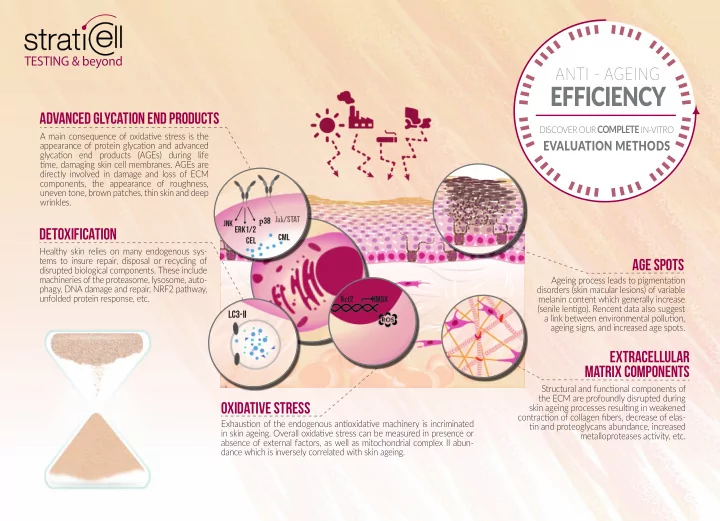
Jak/STAT Structural and functjonal components of the ECM are profoundly disrupted during skin ageing processes resultjng in weakened contractjon of collagen fjbers, decrease of elas- tjn and proteoglycans abundance, increased metalloproteases actjvity, etc. Ageing process leads to pigmentatjon disorders (skin macular lesions) of variable melanin content which generally increase (senile lentjgo). Rencent data also suggest a link between environmental pollutjon, ageing signs, and increased age spots. A main consequence of oxidatjve stress is the appearance of protein glycatjon and advanced glycatjon end products (AGEs) during life tjme, damaging skin cell membranes. AGEs are directly involved in damage and loss of ECM components, the appearance of roughness, uneven tone, brown patches, thin skin and deep wrinkles.
ANTI - AGEING
EFFICIENCY
DISCOVER OUR COMPLETE IN-VITRO
EVALUATION METHODS
Healthy skin relies on many endogenous sys- tems to insure repair, disposal or recycling of disrupted biological components. These include machineries of the proteasome, lysosome, auto- phagy, DNA damage and repair, NRF2 pathway, unfolded protein response, etc. Exhaustjon of the endogenous antjoxidatjve machinery is incriminated in skin ageing. Overall oxidatjve stress can be measured in presence or absence of external factors, as well as mitochondrial complex II abun- dance which is inversely correlated with skin ageing.