Equations of state Active study of gases is done by changing - - PDF document

equations of state
SMART_READER_LITE
LIVE PREVIEW

Equations of state Active study of gases is done by changing - - PDF document

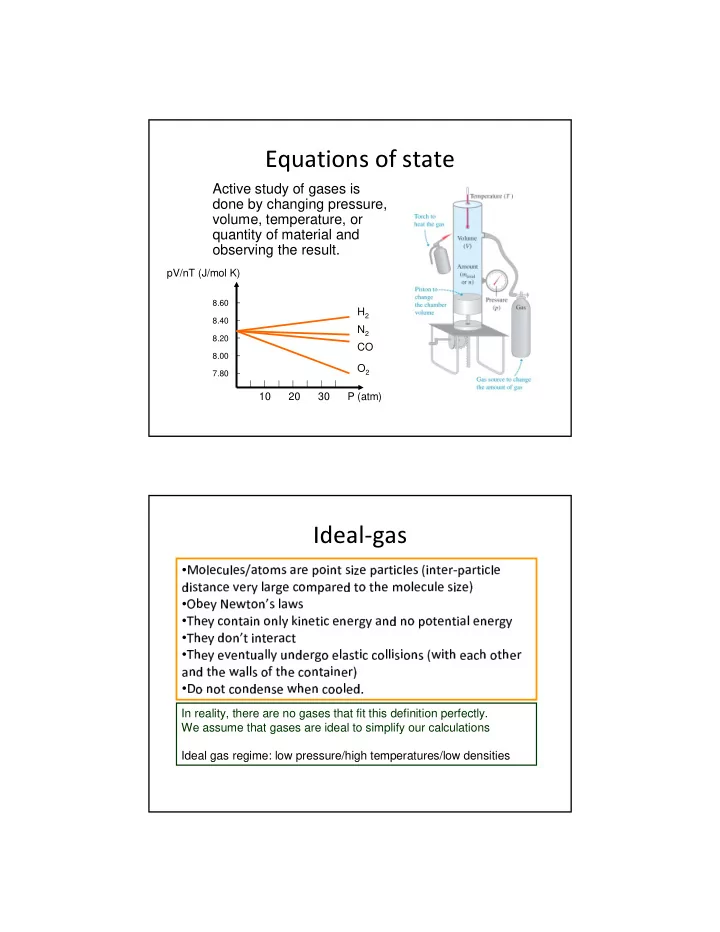
Equations of state Active study of gases is done by changing pressure, volume, temperature, or quantity of material and observing the result. pV/nT (J/mol K) 8.60 H 2 8.40 N 2 8.20 CO 8.00 O 2 7.80 10 20 30 P (atm)


slide-1
SLIDE 1

Equations of state

Active study of gases is done by changing pressure, volume, temperature, or quantity of material and

  • bserving the result.

8.60 8.40 8.20 8.00 7.80

10 20 30 P (atm) pV/nT (J/mol K) H2 N2 CO O2

Ideal-gas

✂ ✄ ☎ ✆ ✂ ✄ ✝ ✞ ✟ ✠ ✁ ✡ ✝ ✟ ☛ ✄ ☞ ✁ ✌ ✍ ✠ ✝ ✌ ✎ ✄ ☞ ✟ ☛ ✠ ✌ ☎ ✂ ✄ ✝ ✏ ✌ ✍ ✠ ✄ ☛ ✑ ☞ ✟ ☛ ✠ ✌ ☎ ✂ ✄ ✒ ✌ ✝ ✠ ✟ ✍ ☎ ✄ ✓ ✄ ☛ ✔ ✂ ✟ ☛ ✕ ✄ ☎ ✁ ✡ ☞ ✟ ☛ ✄ ✒ ✠ ✁ ✠ ✖ ✄ ✡ ✁ ✂ ✄ ☎ ✆ ✂ ✄ ✝ ✌ ✎ ✄ ✗
✙ ✄ ✔ ✚ ✄ ✛ ✠ ✁ ✍ ✜ ✝ ✂ ✟ ✛ ✝
✖ ✄ ✔ ☎ ✁ ✍ ✠ ✟ ✌ ✍ ✁ ✍ ✂ ✔ ✣ ✌ ✍ ✄ ✠ ✌ ☎ ✄ ✍ ✄ ☛ ✕ ✔ ✟ ✍ ✒ ✍ ✁ ☞ ✁ ✠ ✄ ✍ ✠ ✌ ✟ ✂ ✄ ✍ ✄ ☛ ✕ ✔
✖ ✄ ✔ ✒ ✁ ✍ ✜ ✠ ✌ ✍ ✠ ✄ ☛ ✟ ☎ ✠
✖ ✄ ✔ ✄ ✓ ✄ ✍ ✠ ✆ ✟ ✂ ✂ ✔ ✆ ✍ ✒ ✄ ☛ ✕ ✁ ✄ ✂ ✟ ✝ ✠ ✌ ☎ ☎ ✁ ✂ ✂ ✌ ✝ ✌ ✁ ✍ ✝ ✏ ✛ ✌ ✠ ✖ ✄ ✟ ☎ ✖ ✁ ✠ ✖ ✄ ☛ ✟ ✍ ✒ ✠ ✖ ✄ ✛ ✟ ✂ ✂ ✝ ✁ ✤ ✠ ✖ ✄ ☎ ✁ ✍ ✠ ✟ ✌ ✍ ✄ ☛ ✗
✁ ✍ ✁ ✠ ☎ ✁ ✍ ✒ ✄ ✍ ✝ ✄ ✛ ✖ ✄ ✍ ☎ ✁ ✁ ✂ ✄ ✒ ✦

In reality, there are no gases that fit this definition perfectly. We assume that gases are ideal to simplify our calculations Ideal gas regime: low pressure/high temperatures/low densities

slide-2
SLIDE 2

Ideal-gas equation

nRT pV =

✂ ✄ ☎ ✆ ✆ ✝ ✄ ☎ ✞ ✁ ✟ ✠ ✡ ✝ ☛ ☎ ☞ ✁ ✌ ✝ ☛ ✍ ☎ ✄ ✠ ✎ ☛ ✠ ✡ ☎ ✆ ✏ ✁ ✑ ☎ ☛ ✂ ☎ ✄ ✒ ✑ ✝ ✄ ☎ ✓ ✁ ✔ ✕ ☎ ✒ ✡ ✖ ✒ ✆ ✗ ✠ ✌ ✆ ✑ ✒ ✌ ✑ ✘ ✙ ✚ ✛ ✜ ✢ ✣ ✤ ☛ ✠ ✡ ✥

nM mtotal =

✦ ✁ ☛ ✠ ✡ ✒ ✄ ☛ ✒ ✆ ✆

RT M m pV

total

=

✧ ✆ ✔ ✌ ✖ ✑ ★ ☎ ✔ ✕ ☎ ✌ ✑ ✔ ✑ ✩ ✪ ☎ ✠ ✍ ✑ ✒ ✔ ✌

V mtotal / = ρ

ρ

✁ ✕ ☎ ✌ ✆ ✔ ✑ ✩ ✧ ✆ ✔ ✌ ✖ ✑ ★ ☎ ✔ ✕ ☎ ✌ ✑ ✔ ✑ ✩

RT pM = ρ

✪ ☎ ✠ ✍ ✑ ✒ ✔ ✌ ✫ ✠ ✑ ✔ ✗ ☎ ✌ ✠ ✑ ✒ ✑ ✔ ✠ ✌ ✚ ✡ ✠ ✬ ☎ ✄ ✗ ✒ ✆ ☎ ✁ ✔ ✌ ✑ ☎ ✌ ✆ ✔ ✟ ☎ ✭ ✝ ✂ ✂ ☎ ✄ ✗ ✒ ✆ ☎ ✁ ☎ ✮ ✑ ☎ ✌ ✆ ✔ ✟ ☎ ✯ ✝ ✒ ✌ ✑ ✔ ✑ ✔ ☎ ✆

Ideal-gas equation

nRT pV =

✂ ✄ ☎ ✆ ✆ ✝ ✄ ☎ ✞ ✁ ✟ ✠ ✡ ✝ ☛ ☎ ☞ ✁ ✌ ✝ ☛ ✍ ☎ ✄ ✠ ✎ ☛ ✠ ✡ ☎ ✆ ✏ ✁ ✑ ☎ ☛ ✂ ☎ ✄ ✒ ✑ ✝ ✄ ☎ ✓ ✁ ✔ ✕ ☎ ✒ ✡ ✖ ✒ ✆ ✗ ✠ ✌ ✆ ✑ ✒ ✌ ✑ ✘ ✙ ✚ ✛ ✜ ✢ ✣ ✤ ☛ ✠ ✡ ✥

A

nN N =

✰ ✱ ✁ ✲ ✟ ✠ ✖ ✄ ✒ ✕ ✄ ✠ ✌ ✝ ☛ ✍ ☎ ✄

NkT T N R N pV

A

= =

✧ ✆ ✔ ✌ ✖ ✑ ★ ☎ ✔ ✕ ☎ ✌ ✑ ✔ ✑ ✩ ✪ ☎ ✠ ✍ ✑ ✒ ✔ ✌

The constant term R/NA is referred to as Boltzmann's constant, in honor

  • f the Austrian physicist Ludwig Boltzmann (1844–1906), and is

represented by the symbol k:

slide-3
SLIDE 3

Ideal-gas equation (contd.)

2 2 2 1 1 1

T V p T V p =

✄ ✗ ✠ ✌ ✆ ✑ ✒ ✌ ✑ ☛ ✒ ✆ ✆ ✁ ✬ ☎ ✠ ✍ ✑ ✒ ✔ ✌
✄ ✗ ✠ ✌ ✆ ✑ ✒ ✌ ✑ ✑ ☎ ☛ ✂ ☎ ✄ ✒ ✑ ✝ ✄ ☎ ✁ ✬ ☎ ✠ ✍ ✑ ✒ ✔ ✌

. const pV =

✂ ✄ ☎ ✆ ✝ ✞ ✟ ✠ ✄

Boyle’s law

A quantity of an ideal gas is contained in a balloon. Initially the gas temperature is 27°C. You double the pressure on the balloon and change the temperature so that the balloon shrinks to one-quarter of its

  • riginal volume. What is the new temperature of the gas?
  • A. 54°C
  • B. 27°C
  • C. 13.5°C
  • D. –123°C
  • E. –198°C

CPS question

slide-4
SLIDE 4

This pV–diagram shows three possible states of a certain amount

  • f an ideal gas.

Which state is at the highest temperature?

  • A. state #1
  • B. state #2
  • C. state #3
  • D. Two of these are tied for highest temperature.
  • E. All three of these are at the same temperature.

CPS question p V 1 2 3 O

Summary:Equations of state

nRT pV =

✂ ✄ ☎ ✆ ✆ ✝ ✄ ☎ ✞ ✁ ✟ ✠ ✡ ✝ ☛ ☎ ☞ ✁ ✌ ✝ ☛ ✍ ☎ ✄ ✠ ✎ ☛ ✠ ✡ ☎ ✆ ✏ ✁ ✑ ☎ ☛ ✂ ☎ ✄ ✒ ✑ ✝ ✄ ☎ ✓ ✁ ✔ ✕ ☎ ✒ ✡ ✖ ✒ ✆ ✗ ✠ ✌ ✆ ✑ ✒ ✌ ✑ ✘ ✙ ✚ ✛ ✜ ✢ ✣ ✤ ☛ ✠ ✡ ✥

NkT pV =

k: Boltzmann’s constant ; k=R/NA=1.38x10-23 J/K

slide-5
SLIDE 5

Kinetic theory of an ideal gas Pressure of a gas

The pressure that a gas exerts is caused by the impact of its molecules on the walls of the container. Consider a cubic container of volume V containing N molecules with a speed v

slide-6
SLIDE 6

Consider a gas molecule colliding elastically with the right wall of the container and rebounding from it. The force on the wall is obtained using Newton’s second law as follows,

, t P F ∆ ∆ =

And the pressure:

, 1 1 t P A F A P ∆ ∆ = =

∆P: change in momentum Total change in momentum ∆P of all the molecules during a time interval ∆t = Change in momentum of one molecule, times the number of molecules that hit the wall during the interval ∆t: Change in momentum of one molecule:

x x x

mv mv mv p 2 ) ( = − − = ∆

Change in momentum of all the molecules:

hit x

N mv P × = ∆ ) 2 (

tA mv V N P tA v V N N

x x hit

∆ = ∆

=

2

2 1

2

1

x

mv V N t P A P = ∆ ∆ =

Finally, the pressure is given by:

slide-7
SLIDE 7

av x

v m V N P ) (

2

=

Particles move in random directions, so we replace vx

2 by (vx 2 )av

  • r, equivalently

av x

mv N PV ) 2 1 ( 2

2

=

Molecular interpretation of temperature

There is nothing special about the x direction, in general: av z av y av x

v v v ) ( ) ( ) (

2 2 2

= =

and

av x av z av y av x av

v v v v v ) ( 3 ) ( ) ( ) ( ) (

2 2 2 2 2

= + + =

Therefore: The average kinetic energy of a molecule is:

av x

mv N NkT PV ) 2 1 ( 2

2

= =

  • r

kT mv

av x

2 1 ) 2 1 (

2

= kT mv E

av Kin

2 3 ) 2 1 (

2

= =

The absolute temperature is a measure of the average translational kinetic energy of the molecules

slide-8
SLIDE 8

CPS question

An ideal gas is trapped in a chamber, inside a thermally insulated container (see figure). When the partition is broken or removed, the gas expands and fills the entire volume of the

  • container. As a result, the final temperature of the gas after the

expansion is:

  • A. Lower than the initial

temperature

  • B. Higher than the initial

temperature

  • C. The temperature remains

constant

Equipartition theorem

kT mv E

av Kin

2 3 ) 2 1 (

2

= =

When a substance is in equilibrium, there is an average energy of 1/2kT per molecule, or 1/2RT per mole, associated with each degree of freedom

x y z

slide-9
SLIDE 9

Molar heat capacity

RT EKin 2 3 =

Kin

dE dQ = RdT dT CV 2 3 =

  • R

CV 2 3 =

Kinetic energy per mole:

J/mol.K 47 . 12 ) J/mol.K 314 . 8 ( 2 3 = =

V

C

Molar heat capacity

RT EKin 2 3 =

Kin

dE dQ = RdT dT CV 2 3 =

  • R

CV 2 3 =

Kinetic energy per mole: Works well for monoatomic gases… what’s wrong with the others…?

J/mol.K 47 . 12 ) J/mol.K 314 . 8 ( 2 3 = =

V

C

slide-10
SLIDE 10

Heat absorption into degrees of freedom

A molecule can absorb energy in translation, and also in rotation and vibrations in its structure

  • A. At 500 K the molecules can vibrate, while at 50 K they cannot.
  • B. At 500 K the molecules cannot vibrate, while at 50 K they can.
  • C. At 500 K the molecules can rotate, while at 50 K they cannot.
  • D. At 500 K the molecules can rotate, while at 50 K they cannot.

CPS question The molar heat capacity at constant volume of diatomic hydrogen gas (H2) is 5R/2 at 500 K but only 3R/2 at 50 K. Why is this?

slide-11
SLIDE 11

Heat capacity of solids

Solids can absorb energy in the vibrational

  • modes. A 3-dimensional solid has 3

vibrational degrees of freedom+3 translational…

R CV 3 =

  • J/mol.K

9 . 24 ) J/mol.K 314 . 8 ( 3 = =

V

C

Dulong and Petit’s law (Valid at high temperature due to quantum nature of the vibrations)

✂ ✄ ☎ ✆ ✝ ✞ ✞ ✟ ✠ ✡ ✞ ☛ ☞ ✌ ✄ ✍ ✎ ✏ ✑ ☛ ✒ ✏ ✓ ✔ ☛ ✏ ✡ ✍ ✡ ✕ ✖ ✝ ✞ ✡ ✗ ✏ ☛ ✏ ✝ ✑

The fraction of molecules dN with speeds between v and v+dv is given by

dv v f dn ) ( =

The average speeds are given by:

= = 8 ) ( m kT dv v vf vave π

= =

2 2

3 ) ( m kT dv v f v v ave

M RT m kT v 2 2

mp

= =