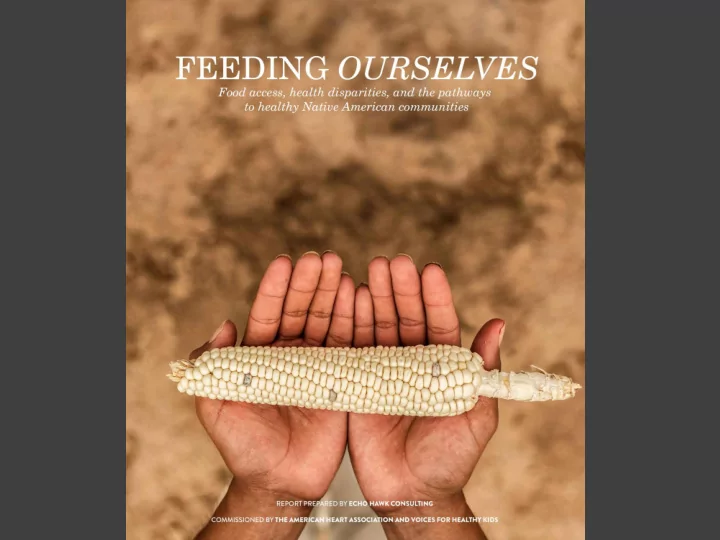
FEEDING OURSELVES When were strong in our foods on this continent we - - PowerPoint PPT Presentation
FEEDING OURSELVES When were strong in our foods on this continent we were strong people-we were healthier. And for Indigenous peoples it all starts with the food. When Indian Country lost its ability to feed itself, through whatever means,
FEEDING OURSELVES
“When were strong in our foods on this continent we were strong people-we were healthier. And for Indigenous peoples it all starts with the food. When Indian Country lost its ability to feed itself, through whatever means, we lost that part of ourselves that support our ability to thrive. It is only by regaining our foods will we be able to restore our health, our resilience as people and secure the stability and diversification within our communities and local economies. But the challenges to secure that future require different approaches than those used in other communities…if for no other reason than our languages, cultural traditions, and the unique legal status of our communities.”
- Janie Hipp (Chickasaw), Indigenous Food and Agriculture Project
FEEDING OURSELVES
Food Access, Health Disparities, and the Pathways to Healthy Native American Communities
Goals:
- Inform key stakeholders of Native health
disparities, and ties to policy, poverty, historical trauma and food systems
- Create space for partnerships with tribal
communities addressing health disparities through traditional food access through innovative solutions
FEEDING OURSELVES
Food Access, Health Disparities, and the Pathways to Healthy Native American Communities
Commissioned by the American Heart Association & Voices for Healthy Kids Download Executive Summary and Report at: www.echohawkconsulting.com FEEDING OURSELVES serves as a call to action for tribal leaders, key stakeholders in Native American agriculture, food, policy and health, by providing overviews of failed federal policies, the current climate of Native American food and health and recommendations for stakeholders to capitalize on short-term opportunities as well supporting strategies for long-term change.
Key Stakeholders:
- Tribes
- Grassroots Activists
- Philanthropic Organizations
- Health Experts
- Policymakers
FEEDING OURSELVES
Echo Hawk Consulting
- Echo Hawk Consulting offers expert consulting services in: philanthropic giving,
community development, executive leadership, fundraising, program design, analysis, public relations and marketing to tribes, grantmakers, nonprofit
- rganizations, businesses and philanthropic individuals focused on opportunities
for impact, strategic growth and social change. Echo Hawk Consulting is a committed and strategic advocate for the health, well-being, social and economic development and rights of Tribes and Native American children and families
Authors
- Crystal Echo Hawk (Pawnee) President and CEO
- Janie Hipp (Chickasaw), Director Indigenous Food and Agriculture
Project, University of Arkansas School of Law
- Wilson Pipestem (Otoe Missouria/Osage), Founder Pipestem Law and
Ietan Consulting
- What are the food access issues in Indian Country?
- What are the root causes?
- How does food access, food systems and food
sovereignty relate to the health of Native Americans?
- What are the solutions?
FEEDING OURSELVES
Food Access, Health Disparities, and the Pathways to Healthy Native American Communities
Food Deserts in Indian Country Today
Healthy food access in Tribal communities is frequently difficult, given that virtually ALL of Indian Country resides within a “food desert” as defined by USDA. Food security depends on access to grocery stores within ten miles. This map illustrates food deserts, where retail grocery stores are more than ten miles away.
Poverty & Indian Country Today
Of the ten poorest counties in the United States, eight are located entirely within Indian reservations or have reservations within them, or have 90% or more Native population within the county. 28.4% of Native peoples lived in poverty in 2010, while the corresponding rate is 15.3% for the nation as a whole.
The Impact of Colonization & U.S. Federal Indian Policies On Native Food, Diet & Health
- Colonization and the evolution of US. Federal Indian policy,
Native peoples have been forcibly separated from historical lands and traditional sources of food.
- The impact of this has manifested itself in the bodies of Native
peoples-today the highest rates of health disparities, especially from diet-related diseases.
- Separation from healthy foods has been one of the most
serious health problems Native peoples endure.
- The epidemics of obesity and diabetes in Native children and
communities are direct consequences of limited access to healthy food.
- Poverty, inequality, the lack of access to capital, and a myriad
- f complex bureaucratic barriers undermine current capacities
- f Native communities to reestablish strong and vibrant food
systems.
Indian Country by the Numbers
- 5.2 million or 1.7% of the population
- Native population grew 27% since 2000 census compared to
9.7% of all other U.S. population
- 60,000 American Indians in Minnesota or 1.2% of the
population
- Tribally diverse urban American Indian population, numbering
well over 35,000 in the eleven County Minneapolis-St. Paul metro areas
- 1 in 4 live in poverty and of the 10 poorest counties in the U.S.,
eight are located on reservations.
- Over 30% live in overcrowded housing conditions
- 1 in 3 drop out of high school
- Poverty is not countered by Indian Gaming. Only 23 casinos
nationwide are deemed highly successful.
Impact of Food Insecurity
- American Indians have the highest food insecurity
rates in the United States. American Indian households with children had a food insecurity rate of 28% compared to a rate of 16% for non-American Indians.
- Compared to all other US ethnic groups, the diet and
activity patterns of American Indians have changed dramatically in the past three generations.
- Changes are rooted in both historical and ecological
- events. Traditional foods have been replaced by less
diverse, high fat, processed commodities and convenience foods.
FEEDING OURSELVES
Food Access and Its Relationship to Diet and Health Outcomes
- Food systems are a major factor in generating and exacerbating key
health disparities-especially in poor & communities of color.
- Health disparities are driven by the complex interplay of community
factors like access to healthy and affordable food, poverty and social, economic, and political forces that impact food supply, nutrient quality, and affordability.
- Diet of Poverty: Members of poor households in which it is consistently
hard to afford enough high-quality food end up eating nutritionally risky diets
- Less expensive, energy-dense foods typically have lower nutritional
quality and, because of overconsumption of calories, have been linked to obesity which is the primary contributor to type 2 diabetes and cardiovascular disease.
High poverty levels and lack of access to healthy food both contribute to health disparities in Tribal
- communities. There are a number of other factors that contribute to these health disparities, including:
lack of basic infrastructure, low education attainment, poverty, and historical trauma.
Health Disparities in Indian Country
- Native peoples are twice as likely as the rest of U.S.
to develop nutrition-related health problems
- Childhood obesity rates often exceed 50% in tribal
communities
- Trends indicate 1 out of 2 American Indian children
will develop type 2 diabetes
- Type 2 Diabetes has reached epidemic proportions
in Indian Country
- Native children as young as 4 years old are being
diagnosed with Type 2 diabetes-average lifespan 25 years
- Native Americans lag 20-25 years behind the general
population in health status, representing the most severe unmet healthcare needs of any group in the U.S.
Paradox: Indian Country Food and Ag
- Ag Census:
- $3b annual market value
- Evenly divided between livestock and all other
- 58k+ American Indian farmers operating 45,000 farms on 53 million
acres of land.
- Most of the value of that product leaves the lands and communities
and doesn’t return
- Largest contiguous farm in the US; top 10 farms in SD, AZ, NM, OR,
WA, CA, ID, etc. are tribal farms
- 80% of Native producers live in 7 states: Arizona, Oklahoma, New
Mexico, Texas, Montana and South Dakota
- Potential to increase Indian Country Food production enormous but
a myriad of barriers including lack of access to capital, land, bureaucracy
- Yet the majority of “food dollars” spent on reservations leave and
are spent in off-reservation stores. Lack of access to food production and vendors on reservation.
Federal Feeding Programs
- Supplemental Nutrition Assistance Program (SNAP) serves
540,000 identifying only American Indian/Alaska Native and an additional 260,000 identifying as AI/AN and white.
- Estimated 20% AI households use SNAP
- 77,000-80,000 use the Food Distribution Program
(“Commodity” or FDPIR Program)
- USDA Food and Nutrition Service has Congressional
authority for over 10 years to purchase traditional and healthy foods for these programs but has largely refused until recently. Bison recently approved.
- Growing movement and call for tribes to take over
management of FDPIR and other federal feeding programs serving their people and to build the capacity of local, Native producers to provide healthy, traditional, local foods for these programs to improve health, tribal economies and food sovereignty.
Indian Country: Food Sovereignty
- Focuses on Food for People
- Sufficient, healthy and culturally appropriate food as the center
for all food policy
- Values Food Providers
- Localizes Food Systems
- Brings local food providers and consumers together
- Puts Control Locally
- Rights of food providers to land, seeds and water
- Rights are established in the law
- Builds Knowledge and Skills
- Local knowledge & skills; sustainable food production free from
technologies that undermine health/well-being
- Works with Nature
- Improves resiliency in the face of climate change and works
with the local ecosystem
Indian Country: Innovation
- Navajo Nation Junk Food Tax and Zero Tax on Vegetables (AZ):
Passed in spring 2015
- Mvskoke Food Sovereignty Initiative (OK): Policy wins to
create Tribal Food Policy and Fitness Council and resolution that tribal programs and entities like Head Start have to purchase local, fresh vs. highly processed, cheap foods
- Dream of Wild Health (MN): Organic farm, farmers markets in
Minneapolis and St. Paul, Community Supported Agriculture (CSA), youth and family programs
- Choctaw Fresh (OK): 100% tribally owned, provides fruits,
vegetables and herbs to local community, a farm to school program and soon plan to expand production to supply local casino and restaurants.
- Oneida Nation Community Integrated Food Systems (WI):
Improved local access to fresh and affordable food, farmers markets, farm to school, 83-acre organic garden, and sell value- added food products through cannery and retail. Stimulated local tribal economy and improving health.
Indian Country: Innovation
Native Led Funders Investing in Native Food Systems and Health
- First Nations Development Institute
- NB3 Foundation
- Seventh Generation Fund
Experts in Native Food and Ag
- Indigenous Food and Agriculture Project
- Intertribal Agriculture Council
- Tribal Colleges
- Numerous local, regional and national groups
Shakopee Mdewakanton Sioux Community
SeedsOfNativeHealth.org
- Extreme poverty and the loss of traditional foods has led to increased
- besity, diabetes, and other profound health problems on a large scale.
- Important work to solve the problems of Indian nutrition is already being
done by many tribes, nonprofits, public health experts, researchers, and advocates on a localized basis. But much more work remains to be done.
- Seeds of Native Health is a multifaceted national campaign to improve
Native American nutrition that includes grantmaking, sharing of best practices, capacity building, research and educational initiatives.
Opportunities and Roles for Tribal Governments
- Establish Robust Protection of our Foods (Alone and In
Coordination with Other Tribal Governments)
- We Stand on the Solution to our health and economic
Challenges
- Protection of Culture is not the entire picture
- Recapturing health through revitalizing food systems
- Creating business opportunities for your people
- Establishing clear policy based on shared vision
- Tap into and support the talent and power of our people
- Invest in infrastructure, pipelines to support new Native
producers, access to capital, land
Opportunities for Non-Native Allies and Stakeholders
- Tribes and urban Native communities need to be at
the table in any conversations related to empowering local food systems, addressing food insecurity
- Relationships and mutual understanding, respect,
need to be built to find common ground and solutions to shared challenges related to food insecurity, poverty and health disparities
- Tribes and American Indian communities need to be
seen as important stakeholders and allies in advocacy and community driven solutions
- Innovative work around food sovereignty and food
access being led by Natives in Minnesota-build partnerships!
A Call to Action
Current Projects and Opportunities to Engage, Lead and Have Impact on Native food systems, tribal economies, nutrition and health.
Model Food and Agriculture Codes Project Funded Phase One Shakopee Mdewakanton Sioux Community & MAZON: A Jewish Response to Hunger
So, what should be included in food and agriculture codes?
- Model Food and Agriculture
Code Development – Examples
- f Many Types of Sections
- Traditional Foods Protection
- Seeds and Seed Protection
- Food Safety
- Food Security & Access to
Food
- Animal Rights and Animal
Welfare; Animal Health
- Aquaculture
- Commercial Relationships
- Biotechnology
- Ag Cooperatives and other
Business Entities
- Taxation in General
- Taxation of Unhealthy Foods
- Restrictions on Corporate
Farming
- Energy Issues
- Environmental Issues
- Estate Planning related to
Agriculture
- Farm Labor & Child Labor
- Beginning Farmer & Rancher
- Land Use for Food
- Donation of Food
- Food Waste and Recovery
- Protection of Producers of
Food
- Movement of Food into and
- ff trust lands
- Food Labeling
- Types of Food Production
Allowed on Lands
- ETC.
Fertile Ground Funders Roundtable
- Joint initiative of the Shakopee
Mdewakanton Sioux Community and the American Heart Association
- Goal to increase philanthropic
investment to Native American agriculture, food systems, nutrition and health
- Convened 41 national, regional, tribal
and Minnesota-based funders, federal and state funding agencies October 14- 15th, Minneapolis
- First of its kind event and largest
concentration of funders focused on these issues
- 2nd Convening Planned for Advocates
and Funders in Early 2016
FEEDING OURSELVES: Recommendations
Tribes
- Tribes have the knowledge and land base to increase food sovereignty and
restore Tribal health.
- It is essential to increase tribal control of assets related to food production and
purchasing for and by Native American communities.
- Placing decision-making power within Native hands will benefit the health of
community members and have positive economic impacts.
- Investment is needed to support policy change, food production, and
tribal/community-driven solutions that connect Native food systems, food access, health, culture and economic development.
FEEDING OURSELVES: Recommendations
Federal Agencies
- Study the feasibility of placing management of all feeding programs within USDA Food and
Nutrition Service’s jurisdiction under direct tribal government management
- Ensure greater use of traditional foods within federal feeding programs and as donated food
product in all public institutional settings in Indian Country; For Foundations
- Fund Native community engagement strategies around local food systems, including
demonstration models, capacity building technical assistance, Native intermediary funders that provide on-the-ground expertise, grassroots organizers, and CDFIS that support health food businesses
- Convene tribes, public agencies, philanthropic players, public health experts and Native and
non-Native nonprofit organizations to develop consensus, identify expertise and roles and create plans for local and systemic change.
FEEDING OURSELVES: Recommendations
State and Local Agencies and Advocates
- Engage tribes and Native populations in all dialogue and efforts related to food access
- Seek assistance in identifying and build key relationships
- American Indian populations are unique, based on their political status. Approaches that
work for other populations may not work for American Indians
- American Indians need to be a part of solutions to create access to healthy food for their
communities and Minnesota
- Engage Native food sovereignty advocates and leaders in Minnesota and build partnerships
FEEDING OURSELVES
A Call to Action
WE STAND ON THE SOLUTION
- Urgent call to action for tribal leaders, policymakers, philanthropy, advocates,
institutions and Native peoples to step forward and come together to devise strategies to strengthen Native food systems, economies and the health and well being of our children, families and cultures.
THANK NK YOU FOR YOUR INTER EREST EST, TIME E AND SUPPOR PORT! T!