
SLIDE 1
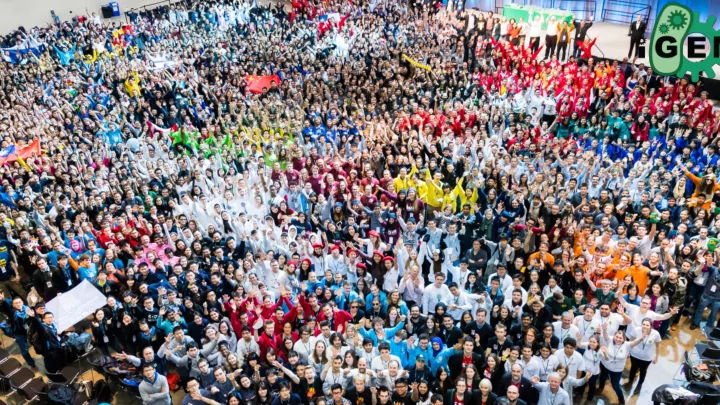
http://2016.igem.org/Community - - PowerPoint PPT Presentation
http://2016.igem.org/Community http://www.businesswire.com/news/home/20170105005656/en/Takeda-PvP-Biologics-Announce-Development-Agreement-Therapeutic https://pvpbio.com/2016/12/20/uw-spin-out-seeks-to-develop-celiac-disease-therapy/
http://2016.igem.org/Community
http://www.businesswire.com/news/home/20170105005656/en/Takeda-PvP-Biologics-Announce-Development-Agreement-Therapeutic
https://pvpbio.com/2016/12/20/uw-spin-out-seeks-to-develop-celiac-disease-therapy/
http://2011.igem.org/Team:Washington
http://igem.org/Facets
http://2017.igem.org/Safety/Responsibility
www.biosecu.re | piers@biosecu.re | @biosec_re
http://pubs.acs.org/doi/pdf/10.1021/sb500058e
https://sgidna.com/archetype.html
http://2016.igem.org/Team:Arizona_State
http://2016.igem.org/Team:Minnesota
https://www.statnews.com/2016/12/14/gene-drive-students-igem/
http://2017.igem.org/Safety/Policies
For the purposes of iGEM, a gene drive includes Cas9 (and other endonucleases, such as dCas9 and Cpf1) integrated into the genome (including through the use of gRNA) of a sexually reproducing eukaryotic
asexually, such as yeast) and/or the use of a drive to impact the progeny.
Teams will need to convince the Safety Committee that:
just on gene drives.
reference to host organism (chassis), modifications (including any associated parts) and containment measures.
“Safeguarding gene drive experiments in the laboratory”
drives in your project and you and your faculty advisor have participated in a mandatory conference call with experts on drives and on safeguards.
for regulated sequences.
part will not be accepted and this can have implications for medal criteria.
http://2017.igem.org/Safety/Policies
https://www.flickr.com/photos/51868421@N04/7401843836
http://2009.igem.org/Team:PKU_Beijing https://2010.igem.org/Team:VT-ENSIMAG_Biosecurity http://2013.igem.org/Team:Lethbridge http://2015.igem.org/Team:Bielefeld-CeBiTec
http://www.openphilanthropy.org/