Its Not About Sprawl Or About Density: Its About What - - PDF document

it s not about sprawl or about density it s about what
SMART_READER_LITE
LIVE PREVIEW

Its Not About Sprawl Or About Density: Its About What - - PDF document

Its Not About Sprawl Or About Density: Its About What Makes Us Safe, Secure, Healthy And Prosperous The battle lines are drawn: on one side


slide-1
SLIDE 1

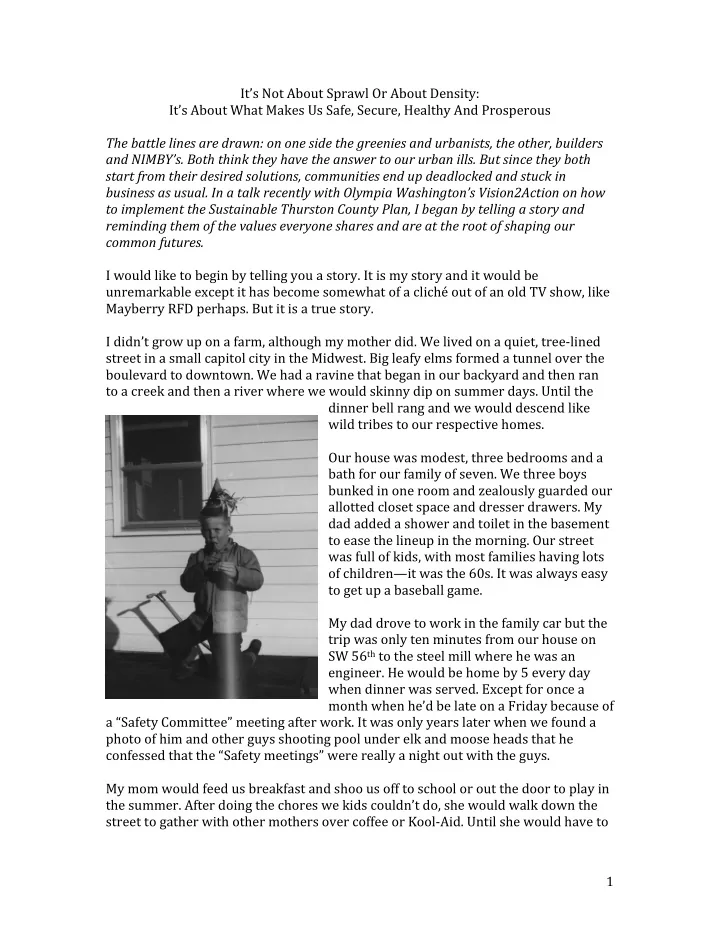
¡ 1 ¡ It’s ¡Not ¡About ¡Sprawl ¡Or ¡About ¡Density: ¡ It’s ¡About ¡What ¡Makes ¡Us ¡Safe, ¡Secure, ¡Healthy ¡And ¡Prosperous ¡ ¡ The ¡battle ¡lines ¡are ¡drawn: ¡on ¡one ¡side ¡the ¡greenies ¡and ¡urbanists, ¡the ¡other, ¡builders ¡ and ¡NIMBY’s. ¡Both ¡think ¡they ¡have ¡the ¡answer ¡to ¡our ¡urban ¡ills. ¡But ¡since ¡they ¡both ¡ start ¡from ¡their ¡desired ¡solutions, ¡communities ¡end ¡up ¡deadlocked ¡and ¡stuck ¡in ¡ business ¡as ¡usual. ¡In ¡a ¡talk ¡recently ¡with ¡Olympia ¡Washington’s ¡Vision2Action ¡on ¡how ¡ to ¡implement ¡the ¡Sustainable ¡Thurston ¡County ¡Plan, ¡I ¡began ¡by ¡telling ¡a ¡story ¡and ¡ reminding ¡them ¡of ¡the ¡values ¡everyone ¡shares ¡and ¡are ¡at ¡the ¡root ¡of ¡shaping ¡our ¡ common ¡futures. ¡ ¡ I ¡would ¡like ¡to ¡begin ¡by ¡telling ¡you ¡a ¡story. ¡It ¡is ¡my ¡story ¡and ¡it ¡would ¡be ¡ unremarkable ¡except ¡it ¡has ¡become ¡somewhat ¡of ¡a ¡cliché ¡out ¡of ¡an ¡old ¡TV ¡show, ¡like ¡ Mayberry ¡RFD ¡perhaps. ¡But ¡it ¡is ¡a ¡true ¡story. ¡ ¡ I ¡didn’t ¡grow ¡up ¡on ¡a ¡farm, ¡although ¡my ¡mother ¡did. ¡We ¡lived ¡on ¡a ¡quiet, ¡tree-­‑lined ¡ street ¡in ¡a ¡small ¡capitol ¡city ¡in ¡the ¡Midwest. ¡Big ¡leafy ¡elms ¡formed ¡a ¡tunnel ¡over ¡the ¡ boulevard ¡to ¡downtown. ¡We ¡had ¡a ¡ravine ¡that ¡began ¡in ¡our ¡backyard ¡and ¡then ¡ran ¡ to ¡a ¡creek ¡and ¡then ¡a ¡river ¡where ¡we ¡would ¡skinny ¡dip ¡on ¡summer ¡days. ¡Until ¡the ¡ dinner ¡bell ¡rang ¡and ¡we ¡would ¡descend ¡like ¡ wild ¡tribes ¡to ¡our ¡respective ¡homes. ¡ ¡ ¡ Our ¡house ¡was ¡modest, ¡three ¡bedrooms ¡and ¡a ¡ bath ¡for ¡our ¡family ¡of ¡seven. ¡We ¡three ¡boys ¡ bunked ¡in ¡one ¡room ¡and ¡zealously ¡guarded ¡our ¡ allotted ¡closet ¡space ¡and ¡dresser ¡drawers. ¡My ¡ dad ¡added ¡a ¡shower ¡and ¡toilet ¡in ¡the ¡basement ¡ to ¡ease ¡the ¡lineup ¡in ¡the ¡morning. ¡Our ¡street ¡ was ¡full ¡of ¡kids, ¡with ¡most ¡families ¡having ¡lots ¡

  • f ¡children—it ¡was ¡the ¡60s. ¡It ¡was ¡always ¡easy ¡

to ¡get ¡up ¡a ¡baseball ¡game. ¡ ¡ My ¡dad ¡drove ¡to ¡work ¡in ¡the ¡family ¡car ¡but ¡the ¡ trip ¡was ¡only ¡ten ¡minutes ¡from ¡our ¡house ¡on ¡ SW ¡56th ¡to ¡the ¡steel ¡mill ¡where ¡he ¡was ¡an ¡

  • engineer. ¡He ¡would ¡be ¡home ¡by ¡5 ¡every ¡day ¡

when ¡dinner ¡was ¡served. ¡Except ¡for ¡once ¡a ¡ month ¡when ¡he’d ¡be ¡late ¡on ¡a ¡Friday ¡because ¡of ¡ a ¡“Safety ¡Committee” ¡meeting ¡after ¡work. ¡It ¡was ¡only ¡years ¡later ¡when ¡we ¡found ¡a ¡ photo ¡of ¡him ¡and ¡other ¡guys ¡shooting ¡pool ¡under ¡elk ¡and ¡moose ¡heads ¡that ¡he ¡ confessed ¡that ¡the ¡“Safety ¡meetings” ¡were ¡really ¡a ¡night ¡out ¡with ¡the ¡guys. ¡ ¡ My ¡mom ¡would ¡feed ¡us ¡breakfast ¡and ¡shoo ¡us ¡off ¡to ¡school ¡or ¡out ¡the ¡door ¡to ¡play ¡in ¡ the ¡summer. ¡After ¡doing ¡the ¡chores ¡we ¡kids ¡couldn’t ¡do, ¡she ¡would ¡walk ¡down ¡the ¡ street ¡to ¡gather ¡with ¡other ¡mothers ¡over ¡coffee ¡or ¡Kool-­‑Aid. ¡Until ¡she ¡would ¡have ¡to ¡

slide-2
SLIDE 2

¡ 2 ¡ go ¡home ¡to ¡greet ¡us ¡on ¡our ¡return ¡from ¡school ¡and ¡to ¡get ¡dinner ¡ready ¡for ¡my ¡Dad’s ¡

  • arrival. ¡

¡ My ¡elementary ¡school ¡was ¡two ¡doors ¡down ¡with ¡a ¡playground ¡of ¡asphalt ¡and ¡gravel ¡ that ¡kept ¡us ¡occupied ¡most ¡days ¡until ¡dark. ¡My ¡junior ¡high ¡school ¡was ¡about ¡3 ¡ blocks ¡away. ¡High ¡school ¡just ¡a ¡ten ¡minute ¡bike ¡ride-­‑-­‑and ¡most ¡kids ¡rode ¡bikes-­‑-­‑ ¡at ¡ least ¡until ¡they ¡were ¡able ¡to ¡afford ¡a ¡junker ¡car. ¡For ¡fun ¡there ¡was ¡Greenwood ¡Park, ¡ with ¡ice-­‑skating ¡in ¡the ¡winter, ¡swimming ¡in ¡the ¡summer, ¡lots ¡of ¡woods ¡to ¡run ¡ around ¡in ¡and ¡an ¡Art ¡Museum ¡that ¡drew ¡me ¡in ¡when ¡I ¡got ¡older. ¡ ¡ ¡ We ¡never ¡questioned ¡our ¡independence ¡as ¡kids—traffic ¡was ¡light, ¡sidewalks ¡went ¡ everywhere ¡and ¡there ¡were ¡always ¡kids ¡out ¡on ¡the ¡street ¡wherever ¡you ¡went. ¡It ¡is ¡ both ¡amazing ¡and ¡sad ¡to ¡hear ¡people ¡today ¡talk ¡about ¡such ¡communities—urban ¡ communities—disparagingly ¡as ¡“too ¡dense” ¡“crowded” ¡ ¡and ¡“dirty.” ¡ ¡ Since ¡today ¡is ¡advertised ¡as ¡a ¡talk ¡about ¡density, ¡I ¡would ¡guess ¡that ¡the ¡number ¡of ¡ housing ¡units ¡per ¡acre ¡was ¡about ¡ten ¡on ¡my ¡street, ¡with ¡much ¡higher ¡numbers ¡along ¡ the ¡main ¡road ¡to ¡town ¡which ¡had ¡lots ¡of ¡3 ¡and ¡4 ¡story, ¡handsome ¡brick ¡apartments. ¡ In ¡addition, ¡our ¡big ¡families ¡packed ¡a ¡lot ¡of ¡people ¡into ¡a ¡pretty ¡small ¡area. ¡ ¡ ¡ All ¡these ¡people ¡made ¡for ¡a ¡lively ¡and ¡safe ¡place ¡to ¡live ¡where ¡we ¡knew ¡our ¡ neighbors ¡well. ¡And ¡all ¡these ¡people ¡supported ¡lots ¡of ¡businesses. ¡Just ¡down ¡the ¡hill ¡ were ¡grocery ¡stores ¡and ¡restaurants—Dunkin ¡Donuts ¡was ¡my ¡favorite ¡stop ¡for ¡an ¡ apple ¡fritter ¡after ¡completing ¡my ¡morning ¡paper ¡route. ¡We ¡would ¡sometimes ¡go ¡out ¡ as ¡a ¡family ¡for ¡a ¡15¢ ¡McDonald ¡hamburger ¡and ¡nickel ¡fries. ¡ ¡ Then ¡my ¡dad ¡got ¡transferred. ¡To ¡Pittsburgh. ¡A ¡dirty ¡old ¡town. ¡ ¡ Like ¡many ¡families, ¡where ¡we ¡were ¡going ¡to ¡live ¡was ¡really ¡a ¡question ¡about ¡ perceptions ¡of ¡school ¡quality, ¡and ¡in ¡those ¡days ¡that ¡meant ¡staying ¡away ¡from ¡inner ¡ city ¡schools ¡in ¡the ¡throes ¡of ¡desegregation. ¡Our ¡family ¡plunked ¡down ¡in ¡a ¡newer ¡ subdivision ¡with ¡streets ¡named ¡after ¡the ¡orchard ¡trees ¡that ¡were ¡cut ¡down ¡to ¡build ¡ the ¡houses. ¡We ¡still ¡lived ¡in ¡a ¡three ¡bedroom ¡house ¡and ¡we ¡three ¡boys ¡shared ¡a ¡ room ¡but ¡the ¡house ¡was ¡on ¡a ¡street ¡with ¡no ¡sidewalks ¡fronting ¡an ¡old ¡farm-­‑to-­‑ market ¡road ¡with ¡narrow ¡lanes, ¡deep ¡ditches ¡and ¡no ¡place ¡to ¡walk ¡or ¡bike ¡out ¡of ¡

  • traffic. ¡There ¡was ¡one ¡park ¡in ¡the ¡town, ¡a ¡7-­‑11 ¡next ¡to ¡the ¡high ¡school ¡where ¡

everyone ¡hung ¡out ¡on ¡Friday ¡nights ¡and ¡an ¡incredible ¡sense ¡of ¡isolation ¡compared ¡to ¡ the ¡run-­‑of-­‑the-­‑town ¡we ¡were ¡used ¡to. ¡My ¡older ¡brother ¡could ¡drive ¡and ¡could ¡get ¡ together ¡with ¡friends ¡easily. ¡Our ¡mother ¡had ¡to ¡become ¡the ¡chauffeur ¡for ¡us ¡younger ¡ kids ¡because ¡our ¡schoolmates ¡all ¡lived ¡farther ¡away ¡than ¡we ¡could ¡walk ¡safely. ¡I ¡was ¡ the ¡only ¡one ¡who ¡rode ¡a ¡bike ¡to ¡school ¡and ¡was ¡regularly ¡yelled ¡at, ¡was ¡pushed ¡off ¡ the ¡road ¡and ¡once ¡was ¡hit ¡by ¡a ¡full ¡beer ¡can. ¡Neither ¡I ¡nor ¡any ¡of ¡my ¡siblings ¡ever ¡ went ¡back ¡to ¡that ¡town ¡after ¡leaving ¡for ¡college, ¡joining ¡500,000 ¡other ¡ex-­‑Pittsburgh ¡ residents ¡who ¡left ¡in ¡the ¡last ¡20 ¡years. ¡ ¡

slide-3
SLIDE 3

¡ 3 ¡ The ¡discussion ¡about ¡sprawl ¡versus ¡density ¡is ¡really ¡about ¡what ¡kind ¡of ¡places ¡we ¡want ¡ to ¡call ¡home, ¡and ¡what ¡strategies ¡and ¡tools ¡do ¡we ¡need ¡to ¡create ¡the ¡conditions ¡that ¡ allow ¡us ¡to ¡flourish. ¡And ¡about ¡the ¡barriers ¡we’ve ¡erected ¡in ¡the ¡last ¡half-­‑century ¡ that ¡make ¡it ¡so ¡difficult ¡to ¡smoothly ¡transition ¡to ¡a ¡different ¡future. ¡ ¡Why ¡is ¡it ¡that ¡a ¡ story ¡like ¡mine, ¡that ¡used ¡to ¡be ¡such ¡a ¡common ¡experience, ¡is ¡now ¡either ¡mocked ¡as ¡ nostalgia ¡or ¡seen ¡as ¡a ¡impossible ¡throwback ¡to ¡a ¡past ¡that ¡can ¡never ¡happen ¡today? ¡ ¡ What ¡is ¡it ¡that ¡we ¡want? ¡We ¡all ¡want ¡a ¡place ¡to ¡live: ¡ ¡ ¡ That ¡provides ¡economic ¡security, ¡with ¡meaningful, ¡dependable ¡employment ¡ for ¡all, ¡so ¡we ¡can ¡provide ¡for ¡our ¡families; ¡ ¡ Where ¡our ¡kids ¡are ¡safe ¡and ¡independent; ¡ ¡ Where ¡they ¡enjoy ¡growing ¡up ¡and ¡will ¡want ¡to ¡stay ¡or ¡return ¡to ¡as ¡adults; ¡ ¡ That ¡supports ¡strong ¡ties ¡among ¡residents, ¡both ¡through ¡formal ¡means, ¡like ¡ PTA ¡or ¡citizen ¡participation ¡in ¡government ¡but ¡also ¡through ¡informal ¡means ¡ like ¡meeting ¡up ¡in ¡the ¡park ¡or ¡the ¡pub; ¡ ¡ That ¡is ¡healthy ¡for ¡us, ¡having ¡clean ¡air ¡and ¡water, ¡places ¡to ¡play ¡and ¡enjoy ¡ nature; ¡ ¡ That ¡we ¡can ¡be ¡proud ¡of ¡and ¡brag ¡to ¡our ¡friends ¡about; ¡ ¡ In ¡short, ¡we ¡all ¡want ¡a ¡community ¡where ¡we ¡can ¡live ¡a ¡good ¡life. ¡ ¡ Is ¡there ¡a ¡formula? ¡What ¡can ¡we ¡learn ¡from ¡other ¡places—their ¡successes ¡and ¡ failures—that ¡can ¡help ¡us ¡plan ¡a ¡different ¡future? ¡ ¡ For ¡Better ¡or ¡Worse, ¡over ¡the ¡last ¡50 ¡years ¡we ¡have ¡mostly ¡got ¡what ¡we ¡wanted ¡and ¡ planned ¡for: ¡

  • Our ¡own ¡personal ¡parks ¡(though ¡mowing ¡that ¡lawn ¡gets ¡less ¡and ¡less ¡fun!) ¡
  • Freedom ¡to ¡do ¡what ¡we ¡want ¡with ¡our ¡“castles” ¡(though ¡sometimes ¡when ¡I’m ¡

stuck ¡painting ¡or ¡plumbing ¡instead ¡of ¡going ¡out ¡on ¡the ¡weekend ¡I ¡question ¡ my ¡decision ¡to ¡be ¡a ¡homeowner) ¡

  • Mobility ¡and ¡convenience ¡(until ¡too ¡many ¡people ¡moved ¡out ¡of ¡town ¡and ¡had ¡

to ¡drive ¡to ¡work ¡and ¡now ¡the ¡roads ¡are ¡jammed) ¡

  • Quiet ¡(until ¡the ¡leaf ¡blowers ¡and ¡lawnmowers ¡rev ¡up ¡at ¡7 ¡on ¡Saturday) ¡
  • Economic ¡booms ¡(and ¡busts—the ¡farther ¡you ¡live ¡from ¡the ¡city ¡center, ¡the ¡

greater ¡the ¡drop ¡in ¡value ¡of ¡your ¡home ¡every ¡time ¡the ¡economy ¡falters) ¡

  • Our ¡piece ¡of ¡the ¡pie ¡(well, ¡maybe ¡not. ¡Many ¡people ¡lost ¡everything ¡when ¡

their ¡homes ¡were ¡less ¡than ¡their ¡mortgages.) ¡ ¡

slide-4
SLIDE 4

¡ 4 ¡ The ¡revolution ¡in ¡transportation—fueled ¡by ¡cheap ¡gas ¡and ¡cheap ¡cars ¡as ¡well ¡as ¡ government ¡subsidies ¡for ¡new ¡roads, ¡sewers ¡and ¡schools—revolutionized ¡how ¡we ¡ lived, ¡whether ¡we ¡wanted ¡it ¡or ¡not. ¡We ¡got ¡all ¡this, ¡and ¡now ¡wonder ¡whether ¡it ¡was ¡ a ¡good ¡thing. ¡We ¡fled ¡to ¡the ¡suburbs ¡to ¡find ¡security, ¡safety, ¡peace ¡and ¡quiet ¡and ¡a ¡ less ¡chaotic, ¡more ¡familiar ¡community. ¡Did ¡we ¡find ¡it? ¡ ¡ Here’s ¡what ¡the ¡research ¡tells ¡us: ¡ ¡ ¡ The ¡greatest ¡threat ¡to ¡our ¡children’s ¡lives ¡is ¡the ¡car. ¡The ¡more ¡time ¡our ¡kids ¡spend ¡in ¡ a ¡motor ¡vehicle ¡the ¡greater ¡the ¡risk ¡is. ¡Car ¡crashes ¡are ¡the ¡number ¡one ¡avoidable ¡ cause ¡of ¡death ¡of ¡people ¡between ¡the ¡ages ¡of ¡2 ¡and ¡34. ¡Sightline ¡Institute ¡found ¡that ¡ it ¡is ¡actually ¡more ¡dangerous ¡for ¡a ¡teenage ¡male ¡to ¡live ¡in ¡the ¡suburbs, ¡due ¡to ¡the ¡ risk ¡of ¡dying ¡in ¡a ¡car ¡crash, ¡than ¡to ¡live ¡in ¡an ¡inner ¡city ¡ghetto. ¡ ¡ We ¡are ¡isolated ¡from ¡our ¡neighbors-­‑-­‑by ¡distance, ¡by ¡traffic ¡filled ¡roads, ¡by ¡ disconnected ¡development ¡patterns ¡and ¡lack ¡of ¡sidewalks ¡and ¡other ¡public ¡spaces. ¡ We ¡often ¡don’t ¡know ¡much ¡more ¡about ¡our ¡neighbors ¡than ¡what ¡car ¡they ¡drive. ¡Our ¡ kids ¡suffer ¡even ¡more ¡because ¡they ¡depend ¡on ¡us ¡to ¡drive ¡them ¡around. ¡When ¡both ¡ parents ¡are ¡work, ¡they ¡are ¡stuck. ¡ ¡ This ¡isolation ¡plays ¡out ¡in ¡the ¡political ¡

  • world. ¡It ¡is ¡so ¡much ¡easier ¡to ¡see ¡our ¡

differences ¡than ¡our ¡similarities ¡when ¡ we ¡don’t ¡interact ¡on ¡a ¡regular, ¡informal ¡ basis ¡with ¡each ¡other. ¡If ¡you ¡know ¡the ¡ people ¡you ¡are ¡arguing ¡with, ¡you ¡are ¡ much ¡more ¡likely ¡to ¡see ¡their ¡point ¡of ¡

  • view. ¡

¡ Suburbs ¡are ¡sold ¡as ¡good ¡places ¡to ¡raise ¡

  • ur ¡kids. ¡But ¡are ¡they ¡healthier? ¡Already ¡

we ¡know ¡that ¡more ¡car ¡time ¡means ¡ more ¡risk ¡to ¡our ¡kids. ¡What ¡are ¡some ¡

  • ther ¡effects? ¡

¡ Let ¡me ¡ask ¡you: ¡did ¡you ¡walk ¡or ¡bike ¡to ¡ school ¡when ¡you ¡were ¡a ¡kid? ¡How ¡many ¡

  • f ¡your ¡kids ¡do? ¡In ¡the ¡1970s, ¡over ¡70% ¡of ¡children ¡walked ¡or ¡biked ¡to ¡school ¡in ¡
  • America. ¡Today ¡that ¡number ¡is ¡under ¡2%. ¡This ¡has ¡incredible ¡negative ¡effect ¡on ¡

your ¡child’s ¡health. ¡ ¡ ¡ How ¡about ¡economically? ¡Hasn’t ¡all ¡this ¡growth ¡and ¡development ¡made ¡us ¡richer? ¡ ¡ ¡ Lets ¡look ¡at ¡this ¡on ¡two ¡levels: ¡the ¡family ¡(household) ¡and ¡society. ¡ ¡ Children ¡spend ¡up ¡to ¡3 ¡hours ¡a ¡day ¡in ¡a ¡ school ¡bus—with ¡poor ¡air ¡quality ¡and ¡ no ¡seatbelts ¡or ¡in ¡the ¡back ¡of ¡a ¡car. ¡ When ¡they ¡get ¡home, ¡they ¡hole ¡up ¡in ¡ their ¡bedroom ¡or ¡media ¡room ¡with ¡an ¡ abundance ¡of ¡electronic ¡diversionary ¡ devices ¡that ¡exercise ¡only ¡their ¡

  • thumbs. ¡As ¡a ¡child, ¡I ¡marveled ¡that ¡

Sears ¡Roebuck ¡had ¡“husky” ¡jeans—all ¡ my ¡friends ¡and ¡family ¡wore ¡slim. ¡Now ¡ almost ¡30% ¡of ¡schoolchildren ¡are ¡

  • verweight ¡and ¡diabetes ¡has ¡become ¡a ¡

childhood ¡disease. ¡ ¡These ¡children ¡will ¡ face ¡hard ¡futures ¡health ¡wise ¡as ¡well ¡as ¡ huge ¡healthcare ¡bills. ¡ ¡

slide-5
SLIDE 5

¡ 5 ¡ Urban ¡development ¡and ¡housing ¡patterns ¡have ¡contributed ¡to ¡the ¡ ¡steady ¡decline ¡in ¡

  • ur ¡standard ¡of ¡living ¡over ¡the ¡last ¡40 ¡years. ¡Increasing ¡housing ¡prices ¡as ¡houses ¡

became ¡investments ¡rather ¡than ¡homes, ¡exacerbated ¡by ¡the ¡additional ¡cost ¡of ¡

  • wning ¡multiple ¡cars ¡because ¡sprawl ¡development ¡destroys ¡viable ¡alternatives ¡for ¡

getting ¡to ¡work, ¡shopping ¡or ¡school. ¡In ¡the ¡early ¡1900s, ¡before ¡the ¡automobile ¡ became ¡ubiquitous, ¡the ¡average ¡household ¡spent ¡about ¡4% ¡of ¡its ¡income ¡on ¡

  • transportation. ¡ ¡

¡ Today, ¡the ¡average ¡family ¡spends ¡20% ¡of ¡its ¡household ¡income ¡on ¡transportation. ¡ Many ¡poorer ¡families ¡spend ¡much ¡more, ¡with ¡transportation ¡often ¡costing ¡more ¡ than ¡housing. ¡About ¡50% ¡of ¡the ¡average ¡family’s ¡income ¡goes ¡to ¡paying ¡for ¡shelter ¡ and ¡mobility. ¡ ¡When ¡one ¡is ¡unable ¡to ¡live ¡in ¡a ¡walkable, ¡convenient ¡neighborhood, ¡ their ¡quality ¡of ¡life ¡and ¡standard ¡of ¡living ¡markedly ¡declines. ¡Driven ¡by ¡the ¡“drive ¡till ¡ you ¡qualify” ¡nature ¡of ¡our ¡housing ¡industry, ¡many ¡lower ¡income ¡people ¡now ¡live ¡in ¡ even ¡more ¡isolated, ¡distant ¡locations. ¡Indeed, ¡in ¡places ¡where ¡urban ¡living ¡and ¡ urban ¡neighborhoods ¡are ¡resurgent, ¡the ¡low-­‑income ¡people ¡who ¡used ¡to ¡be ¡able ¡to ¡ live ¡car ¡free ¡lives ¡are ¡being ¡displaced ¡to ¡the ¡outer ¡exurbs ¡by ¡rising ¡housing ¡costs. ¡ ¡ Ouch! ¡ ¡ It ¡seems ¡that ¡this ¡revolution, ¡like ¡most ¡revolutions ¡that ¡promise ¡to ¡re-­‑make ¡society ¡ for ¡the ¡better, ¡didn’t ¡deliver ¡on ¡its ¡promises. ¡ ¡ ¡ A ¡landscape ¡of ¡subdivisions, ¡located ¡far ¡from ¡workplaces, ¡strung ¡together ¡by ¡endless ¡ miles ¡of ¡ugly, ¡anonymous ¡strip ¡development ¡has ¡given ¡us ¡anemic ¡communities, ¡ fiscally ¡stressed ¡families ¡and ¡unhealthy ¡people. ¡ ¡ This ¡is ¡why ¡“sprawl” ¡has ¡become ¡a ¡curse ¡word ¡in ¡some ¡circles. ¡ ¡ This ¡kind ¡of ¡development ¡also ¡is ¡a ¡poor ¡public ¡investment, ¡costing ¡much ¡more ¡to ¡ serve ¡per ¡unit ¡of ¡housing ¡or ¡job ¡created. ¡Local ¡governments ¡are ¡fiscally ¡stressed ¡as ¡ they ¡struggle ¡to ¡maintain ¡far-­‑flung ¡infrastructure ¡like ¡sewer ¡and ¡water ¡pipes, ¡roads ¡ and ¡bridges ¡and ¡even ¡schools. ¡The ¡American ¡Society ¡of ¡Engineers ¡gives ¡the ¡current ¡ condition ¡of ¡US ¡Infrastructure ¡a ¡D-­‑ ¡ranking ¡because ¡governments ¡continue ¡to ¡build ¡ new ¡infrastructure ¡to ¡serve ¡new ¡development ¡and ¡let ¡existing ¡infrastructure ¡

  • crumble. ¡Up-­‑front ¡costs ¡are ¡often ¡hidden ¡in ¡a ¡mish-­‑mash ¡of ¡development ¡fees, ¡cross ¡

subsidies ¡from ¡property ¡taxes ¡of ¡current ¡residents ¡and ¡businesses ¡and ¡grants ¡from ¡

  • ther ¡governments. ¡

¡ Yet, ¡there ¡is ¡plenty ¡of ¡reason ¡to ¡hope ¡for ¡a ¡better ¡future. ¡ ¡ ¡ Chris ¡Nelson ¡of ¡the ¡University ¡of ¡Utah ¡forecasts ¡that ¡over ¡50% ¡of ¡housing, ¡office ¡ buildings ¡and ¡shops ¡will ¡be ¡new ¡or ¡redeveloped ¡over ¡the ¡next ¡20 ¡years. ¡Think ¡of ¡ that: ¡we ¡have ¡to ¡opportunity ¡to ¡shape ¡how ¡half ¡of ¡our ¡community ¡will ¡look ¡like ¡and ¡ function ¡during ¡the ¡next ¡20 ¡years. ¡In ¡the ¡time ¡of ¡two ¡generations—40 ¡years—almost ¡ everything ¡we ¡see ¡in ¡our ¡cities ¡and ¡towns ¡today ¡will ¡be ¡gone ¡or ¡redeveloped. ¡ ¡

slide-6
SLIDE 6

¡ 6 ¡ ¡ What ¡do ¡you ¡want ¡to ¡see ¡in ¡its ¡place? ¡What ¡is ¡worth ¡keeping? ¡What ¡would ¡make ¡ sense ¡to ¡replace ¡and ¡with ¡what? ¡ ¡ ¡ Remember ¡what ¡people ¡really ¡want: ¡It’s ¡not ¡a ¡certain ¡design ¡of ¡house ¡or ¡size ¡of ¡ yard—it’s ¡prosperity, ¡safety, ¡health, ¡nature, ¡and ¡community. ¡What ¡can ¡we ¡do ¡to ¡ design ¡a ¡place ¡that ¡gives ¡people ¡what ¡they ¡really ¡want? ¡ ¡ Here ¡are ¡a ¡few ¡strategies ¡that ¡work: ¡ ¡

  • 1. Listen ¡to ¡people ¡and ¡give ¡them ¡what ¡they ¡want ¡even ¡if ¡they ¡don’t ¡know ¡

they ¡want ¡it ¡yet. ¡An ¡example: ¡in ¡Tigard, ¡a ¡suburb ¡of ¡Portland ¡that ¡is ¡growing ¡ fast ¡and ¡was ¡seeing ¡lots ¡of ¡anger ¡and ¡fear ¡from ¡its ¡residents, ¡the ¡city ¡ran ¡a ¡ process ¡that ¡asked ¡them ¡what ¡they ¡wanted. ¡Here’s ¡what ¡the ¡people ¡said: ¡they ¡ like ¡their ¡community ¡just ¡how ¡it ¡is ¡(mostly ¡single ¡family ¡with ¡a ¡large ¡ commercial ¡area ¡that ¡attracts ¡lots ¡of ¡commuter ¡traffic) ¡BUT ¡they ¡wanted ¡a ¡ Trader ¡Joe’s ¡grocery ¡to ¡shop ¡at ¡and ¡a ¡Starbucks ¡to ¡congregate ¡at. ¡Trader ¡Joe’s ¡ market ¡analysis ¡requires ¡at ¡least ¡3000 ¡people ¡to ¡live ¡within ¡a ¡mile ¡of ¡any ¡ store ¡location ¡before ¡they ¡would ¡consider ¡putting ¡a ¡store ¡there. ¡Only ¡about ¡ 1000 ¡were ¡living ¡around ¡their ¡preferred ¡site. ¡Armed ¡with ¡this ¡information, ¡ the ¡community ¡did ¡a ¡planning ¡process ¡where ¡they ¡supported ¡rezoning ¡some ¡ land ¡along ¡main ¡streets ¡and ¡in ¡commercial ¡areas ¡nearby ¡for ¡multi-­‑family, ¡ mixed ¡use ¡development ¡which ¡gave ¡them ¡the ¡numbers ¡to ¡attract ¡a ¡Trader ¡ Joes ¡as ¡well ¡as ¡giving ¡workers ¡options ¡to ¡live ¡closer ¡to ¡work ¡and ¡commute ¡

  • less. ¡
  • 2. Stop ¡fighting ¡the ¡market ¡and ¡subsidizing ¡losers. ¡Much ¡of ¡our ¡current ¡

zoning ¡rules ¡were ¡developed ¡to ¡address ¡threats ¡that ¡no ¡longer ¡exist: ¡dirty ¡ industry, ¡unsafe ¡housing ¡like ¡tenements, ¡and ¡the ¡like. ¡Restrictions ¡like ¡ separating ¡housing ¡and ¡jobs, ¡requiring ¡lots ¡of ¡car ¡parking, ¡large ¡lot ¡sizes, ¡

  • ver-­‑zoning ¡for ¡single ¡family, ¡segregating ¡multi-­‑family ¡off ¡away ¡from ¡centers ¡
  • f ¡activities, ¡putting ¡schools ¡on ¡huge ¡sites ¡far ¡away ¡from ¡where ¡people ¡live… ¡

all ¡of ¡these ¡raise ¡the ¡cost ¡of ¡living ¡and ¡how ¡much ¡we ¡drive ¡while ¡forcing ¡the ¡ housing ¡industry ¡to ¡produce ¡a ¡product ¡with ¡a ¡declining ¡demand. ¡Both ¡older ¡ and ¡younger ¡households ¡have ¡turned ¡away ¡from ¡the ¡detached, ¡single ¡family ¡ home ¡and ¡are ¡looking ¡for ¡more ¡convenient, ¡smaller, ¡more ¡affordable ¡housing ¡ choices ¡whether ¡to ¡own ¡or ¡rent. ¡And ¡they ¡want ¡to ¡live ¡where ¡there ¡is ¡activity, ¡ restaurants, ¡shops ¡that ¡you ¡can ¡walk ¡to. ¡

  • 3. Recognize ¡who ¡your ¡future ¡market ¡is. ¡With ¡large ¡numbers ¡of ¡boomers ¡

reaching ¡retirement ¡age ¡soon, ¡they ¡will ¡be ¡looking ¡for ¡new ¡housing ¡options ¡ and ¡their ¡replacements, ¡young, ¡educated, ¡hip ¡will ¡want ¡to ¡live ¡in ¡an ¡exciting, ¡ lively ¡urban ¡environment. ¡Will ¡they ¡live ¡and ¡commute ¡from ¡somewhere ¡more ¡ exciting? ¡Or ¡will ¡you ¡capture ¡their ¡drive ¡and ¡energy ¡by ¡creating ¡places ¡they ¡ will ¡want ¡to ¡live ¡and ¡commit ¡to? ¡

  • 4. Don’t ¡touch ¡single-­‑family ¡neighborhoods. ¡They ¡will ¡resist ¡all ¡change ¡and ¡

will ¡fight ¡to ¡the ¡death ¡to ¡prevent ¡it. ¡Respect ¡this ¡and ¡value ¡what ¡they ¡offer ¡to ¡ the ¡City. ¡Instead, ¡aggressively ¡rezone ¡main ¡streets ¡and ¡strip ¡commercial ¡to ¡

slide-7
SLIDE 7

¡ 7 ¡ mixed ¡use, ¡allowing ¡housing ¡and ¡businesses ¡in ¡the ¡same ¡area ¡and ¡buildings ¡ up ¡to ¡4-­‑6 ¡stories ¡tall. ¡Lower ¡the ¡speeds ¡on ¡these ¡streets ¡and ¡reduce ¡the ¡ number ¡of ¡lanes ¡and ¡lane ¡widths ¡so ¡these ¡areas ¡can ¡become ¡pedestrian ¡ magnets ¡instead ¡of ¡car-­‑dominated ¡deserts. ¡ ¡

  • 5. Forget ¡number ¡4. ¡Allow ¡accessory ¡dwelling ¡units—mother ¡in ¡law ¡

apartments—by ¡right ¡in ¡all ¡zones, ¡especially ¡single ¡-­‑family ¡neighborhoods. ¡ Being ¡able ¡to ¡convert ¡part ¡of ¡a ¡large ¡house ¡into ¡a ¡rental, ¡or ¡rebuild ¡the ¡garage, ¡ has ¡many ¡positive ¡benefits ¡without ¡affecting ¡the ¡character ¡of ¡the ¡

  • neighborhood. ¡It ¡will ¡help ¡with ¡housing ¡affordability ¡for ¡new ¡families, ¡help ¡

elderly ¡stay ¡in ¡their ¡neighborhoods, ¡either ¡through ¡downsizing ¡in ¡their ¡own ¡ home ¡or ¡by ¡raising ¡their ¡income, ¡and ¡provide ¡more ¡people ¡and ¡tax ¡revenue ¡to ¡ utilize ¡and ¡support ¡public ¡services. ¡

  • 6. Build ¡good ¡public ¡spaces. ¡Parks, ¡plazas, ¡libraries, ¡and ¡schools ¡can ¡be ¡the ¡

spark ¡to ¡leverage ¡private ¡investment ¡and ¡public ¡support ¡for ¡new ¡forms ¡of ¡

  • development. ¡Think ¡carefully ¡how ¡you ¡spend ¡scarce ¡public ¡resources ¡and ¡

make ¡sure ¡that ¡they ¡contribute ¡to ¡a ¡more ¡accessible, ¡healthier ¡and ¡vibrant ¡

  • community. ¡Especially ¡schools. ¡

¡ The ¡question ¡isn’t ¡sprawl ¡or ¡density. ¡Its ¡what ¡kind ¡of ¡community ¡do ¡you ¡want ¡to ¡ create? ¡You ¡have ¡the ¡opportunity ¡and ¡the ¡knowledge ¡to ¡build ¡a ¡place ¡you ¡and ¡your ¡ children ¡will ¡be ¡proud ¡of. ¡ ¡A ¡place ¡that ¡has ¡housing ¡choices ¡that ¡are ¡affordable ¡to ¡ everyone, ¡where ¡a ¡nine ¡year ¡old ¡can ¡walk ¡to ¡the ¡park ¡or ¡to ¡the ¡store ¡to ¡buy ¡a ¡ popsicle, ¡by ¡themselves, ¡where ¡they ¡won’t ¡be ¡by ¡themselves ¡because ¡all ¡their ¡friends ¡ will ¡be ¡going ¡with ¡them, ¡that ¡encourages ¡walking ¡and ¡cycling ¡because ¡people ¡are ¡ healthier, ¡more ¡connected ¡and ¡productive ¡if ¡they ¡use ¡their ¡bodies ¡daily, ¡that ¡uses ¡ public ¡dollars ¡wisely ¡by ¡avoiding ¡expensive ¡expansions ¡and ¡reinvesting ¡in ¡keeping ¡ what ¡we ¡have ¡in ¡good ¡condition, ¡that ¡integrates ¡home, ¡work, ¡school ¡and ¡people ¡into ¡ a ¡dynamic, ¡engaged ¡and ¡engaging ¡community. ¡ ¡