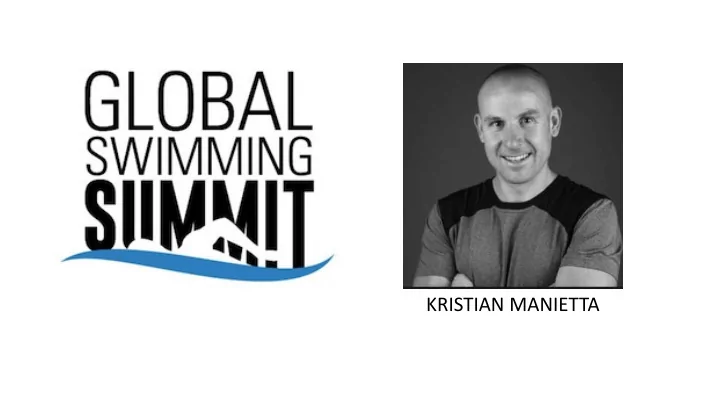
KRISTIAN MANIETTA Kristian Manietta Tri Specific FATBLACK Podcast - - PowerPoint PPT Presentation

kristian manietta kristian manietta
SMART_READER_LITE
LIVE PREVIEW

KRISTIAN MANIETTA Kristian Manietta Tri Specific FATBLACK Podcast - - PowerPoint PPT Presentation

KRISTIAN MANIETTA Kristian Manietta Tri Specific FATBLACK Podcast Triathlete since 2002 Ironman competitor (sub-9 hour) Wife qualified for Kona after first Ironman Coaching stemmed from passion for the sport Likes to ask


slide-1
SLIDE 1

KRISTIAN MANIETTA

slide-2
SLIDE 2

Kristian Manietta

  • Tri Specific
  • FATBLACK Podcast
  • Triathlete since 2002
  • Ironman competitor (sub-9 hour)
  • Wife qualified for Kona after first Ironman
  • Coaching stemmed from passion for the sport
  • Likes to ask “why?”
slide-3
SLIDE 3

Keys to Coaching and Athlete Development

  • Try something first before sharing with others
  • Keep asking “why?”
  • Reach out to other coaches
slide-4
SLIDE 4

Swimming Tips-Triathlon

  • Don’t think of it as the smallest part of the day.
  • Exhausted after swim=compromised bike and run
  • Majority of swimming is indoor
  • Can maximize pool to make it open water based training
  • Realize the differences between the pool and open water
  • Sighting
  • Stroke length
  • Close contact with competition
  • Triathlon swimming is not textbook swimming.
  • “Preparing for the chaos and coming out unscathed.”
slide-5
SLIDE 5

Swimming Tips-Triathlon

  • Triathlon swimming is more reactive
  • Constantly changing environment
  • Build in open water skills closer to the race.
  • Build in transitions from pool to run
  • Add wetsuit for some swims
  • Mass starts in the pool
  • Sighting
  • Focus on mechanics in the pool early in the season.
  • Build an aerobic base.
  • Practice body position and tension.
slide-6
SLIDE 6

What do we spend too much time on?

  • Most age group athletes are “time poor.”
  • Focus on what arm is doing in the water not out of the water.
  • Too much time spent on out of water portion
  • Do drills with speed!
  • Goal is to feel great after the swim
  • Let this goal drive fitness and programming
  • “Swim training is run training.”
  • Run is never fresh in triathlon
slide-7
SLIDE 7

Food for Thought

  • “Swimming is a beautiful thing that gives us instantaneous feedback.

We just don’t listen to it.”

  • Where are you feeling the stroke?
  • How fast is your heart rate?
slide-8
SLIDE 8

Key to Triathlon

  • Maintain form under fatigue
  • Teach form at a slower pace early on
  • Focus more on form with speed after an aerobic base is achieved.
slide-9
SLIDE 9

Drills

  • Use pull buoy to practice body positioning
  • Kick with head in the water and arms stretched out straight overhead

with kickboard (use snorkel)

  • Teaches length
  • Core tension
  • Effective kick for body alignment (swim a straight line)
  • Think about drills from a minimalist approach for maximum impact.
  • Mix in bands
slide-10
SLIDE 10

Most Neglected Part of Triathlon Swimming

  • Sighting
  • This can be trained in a pool.
  • Lack of sighting=More swim distance in a race
  • Comfort with bilateral breathing
  • Navigate chop
  • Stop holding breath!
  • Breath=Nourishment
slide-11
SLIDE 11

Focal Points of Programming

  • Aim for fitness and strength
  • While maintaining good body positioning
  • Don’t get caught up in distance per stroke
  • Too many variables in a race
  • Reactive swimming
slide-12
SLIDE 12

Extra Resource

  • Gerry Rodrigues
  • http://tower26.com/dont-do-these-in-triathlon-swimming/
  • “If you’re not the strongest swimmer, the worst thing you can do is

swim continuously.”

  • Patterning wrong mechanics!
  • 60x25’s can be much more effective compared to 1500 straight
slide-13
SLIDE 13

Want to reach out to Kristian?

  • www.trispecific.com
slide-14
SLIDE 14