LARGE SCALE DEMONSTRATION TRIALING OF METHYL BROMIDE ALTERNATIVES IN - - PDF document

large scale demonstration trialing of methyl bromide
SMART_READER_LITE
LIVE PREVIEW

LARGE SCALE DEMONSTRATION TRIALING OF METHYL BROMIDE ALTERNATIVES IN - - PDF document

LARGE SCALE DEMONSTRATION TRIALING OF METHYL BROMIDE ALTERNATIVES IN FLORIDA STRAWBERRY J.W. Noling University of Florida, IFAS, Citrus Research & Education Center, Lake Alfred, FL 33850 With the depletion of existing supplies and


slide-1
SLIDE 1

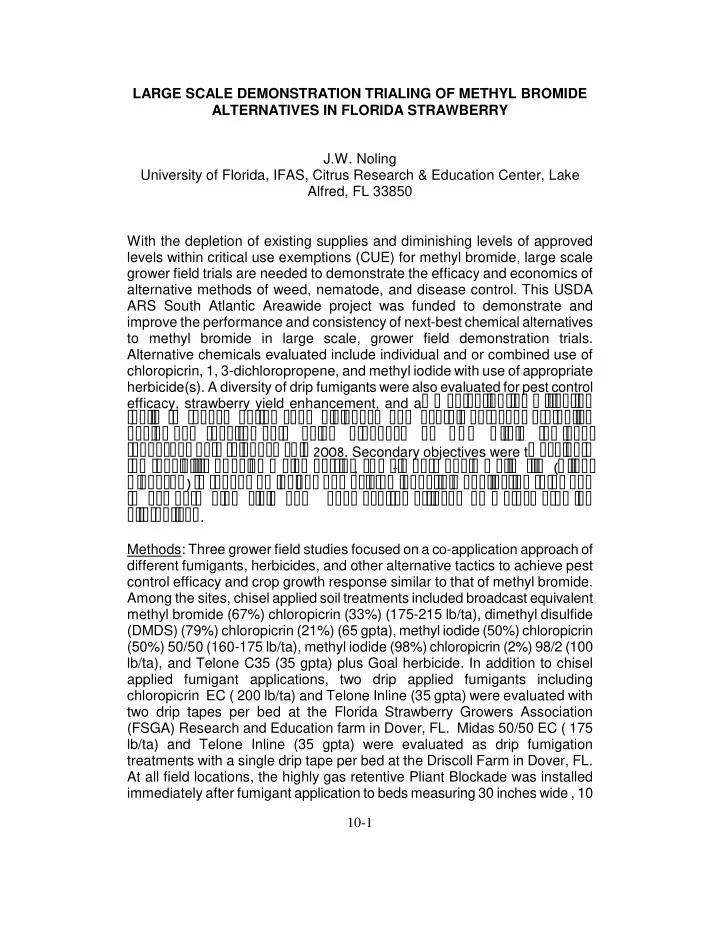
10-1 LARGE SCALE DEMONSTRATION TRIALING OF METHYL BROMIDE ALTERNATIVES IN FLORIDA STRAWBERRY J.W. Noling University of Florida, IFAS, Citrus Research & Education Center, Lake Alfred, FL 33850 With the depletion of existing supplies and diminishing levels of approved levels within critical use exemptions (CUE) for methyl bromide, large scale grower field trials are needed to demonstrate the efficacy and economics of alternative methods of weed, nematode, and disease control. This USDA ARS South Atlantic Areawide project was funded to demonstrate and improve the performance and consistency of next-best chemical alternatives to methyl bromide in large scale, grower field demonstration trials. Alternative chemicals evaluated include individual and or combined use of chloropicrin, 1, 3-dichloropropene, and methyl iodide with use of appropriate herbicide(s). A diversity of drip fumigants were also evaluated for pest control efficacy, strawberry yield enhancement, and a฀ ฀ ฀฀฀ ฀฀฀ ฀ ฀฀ ฀ ฀ ฀฀ ฀ ฀ ฀ ฀ ฀฀฀ ฀ ฀฀ ฀ ฀฀฀ ฀ ฀ ฀ ฀ ฀ ฀฀฀฀฀ ฀฀฀ ฀ ฀฀ ฀฀฀฀ ฀฀ ฀฀ ฀฀฀฀฀ ฀฀฀ ฀฀฀฀ ฀฀ ฀ ฀฀฀ ฀฀฀฀฀ ฀฀ ฀฀ ฀฀฀ ฀ ฀฀ ฀฀฀฀ ฀฀ ฀฀฀ ฀ ฀฀฀฀ ฀ ฀฀ ฀฀฀ ฀ ฀฀฀ ฀฀ ฀฀ ฀฀฀฀฀฀ ฀฀ ฀ ฀ ฀ ฀ ฀ ฀ ฀฀ ฀ ฀ ฀฀ ฀ ฀฀฀฀ ฀ ฀฀฀฀฀฀฀฀ ฀฀฀ ฀ ฀ ฀฀ ฀฀฀฀฀ ฀฀฀ ฀ 2008. Secondary objectives were t฀ ฀฀฀฀ ฀฀฀ ฀ ฀ ฀฀ ฀ ฀฀฀฀ ฀฀ ฀ ฀ ฀ ฀ ฀฀ ฀฀฀ ฀฀ ฀ ฀฀ ฀฀ ฀฀฀ ฀ ฀ ฀฀ , ฀฀฀ ฀

฀ ฀฀฀ ฀ ฀฀฀฀ ฀ ฀ ฀฀ ฀ ฀ ฀ ฀ ฀ ฀ (฀ ฀ ฀ ฀฀฀ ฀ ฀ ฀฀฀฀฀฀) ฀ ฀ ฀ ฀฀฀฀฀ ฀฀ ฀ ฀฀฀ ฀฀฀ ฀฀฀ ฀฀฀ ฀ ฀ ฀฀ ฀ ฀฀฀฀ ฀ ฀ ฀฀ ฀ ฀฀฀฀ ฀ ฀฀฀ ฀ ฀฀ ฀ ฀฀ ฀฀ ฀฀฀ ฀ ฀ ฀฀฀ ฀฀฀ ฀ ฀฀ ฀฀ ฀฀ ฀฀ ฀ ฀฀฀ ฀฀฀฀ ฀฀฀฀ ฀ ฀฀ ฀฀ ฀ ฀ ฀฀฀฀ ฀฀ ฀ ฀฀ ฀฀฀ ฀฀ ฀฀ ฀ ฀฀ ฀฀ ฀ ฀฀ ฀฀฀ ฀ ฀฀฀. Methods: Three grower field studies focused on a co-application approach of different fumigants, herbicides, and other alternative tactics to achieve pest control efficacy and crop growth response similar to that of methyl bromide. Among the sites, chisel applied soil treatments included broadcast equivalent methyl bromide (67%) chloropicrin (33%) (175-215 lb/ta), dimethyl disulfide (DMDS) (79%) chloropicrin (21%) (65 gpta), methyl iodide (50%) chloropicrin (50%) 50/50 (160-175 lb/ta), methyl iodide (98%) chloropicrin (2%) 98/2 (100 lb/ta), and Telone C35 (35 gpta) plus Goal herbicide. In addition to chisel applied fumigant applications, two drip applied fumigants including chloropicrin EC ( 200 lb/ta) and Telone Inline (35 gpta) were evaluated with two drip tapes per bed at the Florida Strawberry Growers Association (FSGA) Research and Education farm in Dover, FL. Midas 50/50 EC ( 175 lb/ta) and Telone Inline (35 gpta) were evaluated as drip fumigation treatments with a single drip tape per bed at the Driscoll Farm in Dover, FL. At all field locations, the highly gas retentive Pliant Blockade was installed immediately after fumigant application to beds measuring 30 inches wide , 10

slide-2
SLIDE 2

10-2 inches in height, with rows spaced on 4 foot centers. Actual per acre fumigant use rates represent 62.5% of the broadcast or reported per treated acre (ta) rates expressed above. Assessments of plant growth were made as appropriate during the course of the season to characterize differences in plant size, health, and vigor. Following chemical treatment, weed densities were monitored and recorded on a periodic basis to determine any differences in weed control. An untreated control was not included as a replicated treatment for comparison in any trial. With the exception of DMDS+PIC, all treatments were arranged within their respective experimental areas as a completely randomized block design with 3 or 4 replications per treatment. Plot sizes varied from 8 to 10 rows or 0.2 to 0.4 acres among the different grower farm locations. Results and Discussion $ In these trials, most alternative fumigants evaluated produced yields which were statistically equivalent to that of methyl bromide chloropicrin. : No significant differences in strawberry yield were

  • bserved between any of the different fumigant treatments evaluated at

either FSGA (Figure 1) or Ferris Farms (Figure 2). At these locations, strawberry yields with the alternative fumigants, including the drip fumigants, produced yields which were within 1 to 7 percent of methyl bromide chloropicrin yields. At Driscoll Farms, strawberry yields displayed a great deal more variation that at other grower farm locations (Figure 3). In this trial, drip applied Midas 50/50 EC produced the lowest (P≤0.05) while chisel applied Midas 50/50 produced the highest strawberry yields observed in the trial compared to methyl bromide chloropicrin. Midas 98/2 (100 lb/ta) produced yields intermediate to that of the other methyl iodide chloropicrin (Midas)

  • treatments. Difficulties in application with the drip applied Midas EC and

Symmetry applied Midas 98/2 treatments at Driscoll may have contributed to the lower yields observed with these treatments. Statistically inseparable, DMDS+Pic and Telone Inline produced strawberry yields which were within 3 percent of the yield observed with methyl bromide chloropicrin. In general no significant (P#0.05) differences in numbers of dead, decline, or weed densities among treatments were observed season long at any of grower demonstration sites. Treatment costs and returns to investment will likely be important economic considerations determining grower use decisions of the different alternative treatments GENERAL SUMMARY: $ Problems with fumigant application appear to be responsible for significant strawberry yield differences were observed among the different fumigant treatments when compared to that of methyl bromide.

slide-3
SLIDE 3

10-3

42.75 39.467 40.76 39.817 41.69

15 30 45 60

Marketable Yield (lb / Plot) Marketable Yield (lb / Plot)

Soil Fumigant Treatment Soil Fumigant Treatment

Means derived from 4 replicate 50 plant plots / treatment

a a a a a a a a a a

MBr 67/33 +Blkade 175 lb/ta

Telone C35

+Blkade 35 gal/ta

Telone Inline

+Blkade 35 gal/ta

MIDAS 50/50

+Blkade 175 lb/ta PIC EC + Blkade 35 gal/ta

Twin Drip Tapes Twin Drip Tapes

Figure 1. Strawberry fruit yield comparisons between soil fumig Figure 1. Strawberry fruit yield comparisons between soil fumigant treatments at ant treatments at FSGA Research Farm, Dover, FL. USDA ARS Area Wide Project: Fa FSGA Research Farm, Dover, FL. USDA ARS Area Wide Project: Fall 2007 ll 2007-

  • 08.

08.

slide-4
SLIDE 4

10-4

84.622 84.903 85.18 85.262

25 50 75 100

Marketable Yield (lb / plot) Marketable Yield (lb / plot)

Soil Fumigant Treatment Soil Fumigant Treatment

Figure 2. Strawberry fruit yield comparisons between soil fumig Figure 2. Strawberry fruit yield comparisons between soil fumigant treatments ant treatments at Ferris Farms, Floral City, FL. USDA ARS Area Wide Project: at Ferris Farms, Floral City, FL. USDA ARS Area Wide Project: Fall 2007 Fall 2007-

  • 08.

08.

Means derived from 6 replicate 50 plant plots / treatment

a a a a a a

MBr 67/33 + Blkade 200 lb/ta DMDS + Pic + Blkade 65 gal/ta Telone C35 + Blkade 33 gal/ta Midas 50/50 + Blkade 160 lb/ta

slide-5
SLIDE 5

10-5

Soil Fumigant Treatment Soil Fumigant Treatment

Figure 3. Strawberry fruit yield comparisons between soil fumig Figure 3. Strawberry fruit yield comparisons between soil fumigant treatments ant treatments at Driscoll Farms, Dover, FL. USDA ARS Area Wide Project: Fal at Driscoll Farms, Dover, FL. USDA ARS Area Wide Project: Fall 2007 l 2007-

  • 08.

08.

20652 20463 20077 18317 21479 19097

16000 17000 18000 19000 20000 21000 22000

Marketable Yield (lb/a) Marketable Yield (lb/a)

a c ab bc abc abc

MBr 67/33 +Blkade 215 lb/ta Telone Inline +Blkade 35 gal/ta MIDAS 50/50 +Blkade 175 lb/ta DMDS + Pic + Blkade 64 gal/ta MIDAS 98/2 Symetry +Blkade 100 lb/ta MIDAS EC +Blkade 175 lb/ta

Means derived from 6 replicate 50 plant plots / treatment