Memphis Walks Shelby Co. Health Department, Office of - - PowerPoint PPT Presentation

memphis walks
SMART_READER_LITE
LIVE PREVIEW

Memphis Walks Shelby Co. Health Department, Office of - - PowerPoint PPT Presentation

Memphis Walks focus is on improving quality of life by supporting improved walkability, promoting increased physical activity, safer communities, and social cohesion via walking, (all with measured results.) University partners: Depts. of


slide-1
SLIDE 1

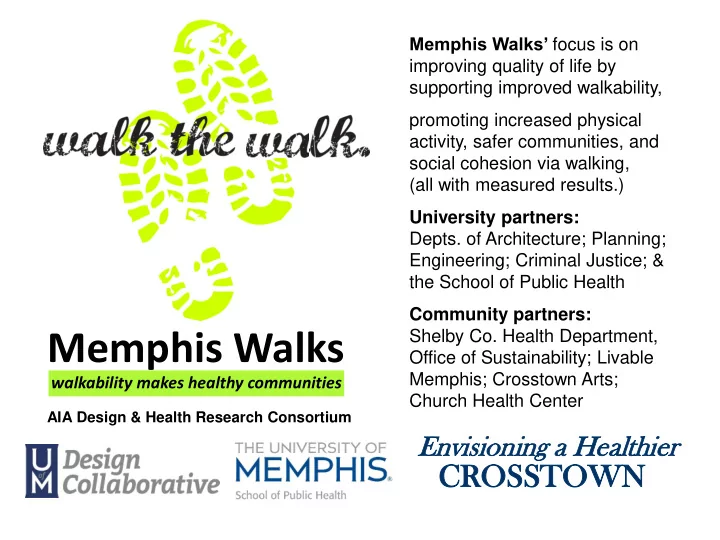
Memphis Walks’ focus is on improving quality of life by supporting improved walkability, promoting increased physical activity, safer communities, and social cohesion via walking, (all with measured results.) University partners:

  • Depts. of Architecture; Planning;

Engineering; Criminal Justice; & the School of Public Health Community partners: Shelby Co. Health Department, Office of Sustainability; Livable Memphis; Crosstown Arts; Church Health Center

Env nvis isionin ioning g a a Heal althi thier

Memphis Walks

walkability makes healthy communities

AIA Design & Health Research Consortium

CRO ROSSTOWN TOWN

slide-2
SLIDE 2

The Need: Memphis

Pedestrian Fatalities: ranks #5 most dangerous large metro area Community/Environmental Indicators: ranks #47 (ACSM) Crime: ranks #3 (FBI) Personal Health: ranks #49 (ACSM Fitness Index) 35% obesity (BRFSS) 37% hypertension (BRFSS) 13% diabetes; 6.6% pre-diabetes (BRFSS) 28% physical inactivity (BRFSS)

slide-3
SLIDE 3

Objective

Address walkability issues of urban communities in

  • rder to promote improved physical health

Why is Walkability Important?

slide-4
SLIDE 4

Crosstown Neighborhood

slide-5
SLIDE 5

Neighborhood Perception Survey

slide-6
SLIDE 6

Neighborhood Perception Survey

slide-7
SLIDE 7

Progress to date

  • University and Community Partner roles
  • Weekly team/community meetings
  • Stakeholder input
  • Survey development
  • Student orientation
slide-8
SLIDE 8

Next xt Steps

  • University Institution Review Board (IRB) approval
  • Community Perceptions Survey: (walkability, crime, safety,

blight, traffic, social engagement, and health status)

  • Environmental Assessments: (demographics, crime

statistics, lighting, pedestrian assessments, traffic issues, pedestrian counts, land use, and physical conditions)

  • Data Analysis; Report outcomes to community
  • Healthy Communities Summit on May 4, 2016