
SLIDE 1
Neuroleptic Malignant Syndrome: A Case Presentation
Janel Liane Bernardo Cala PGY1 Pharmacy Resident September 8, 2017
Neuroleptic Malignant Syndrome: A Case Presentation Janel Liane - - PowerPoint PPT Presentation
Neuroleptic Malignant Syndrome: A Case Presentation Janel Liane Bernardo Cala PGY1 Pharmacy Resident September 8, 2017 Neuroleptic Malignant Syndrome Infrequent (0.02% 3% neuroleptic use), life threatening Most often associated with
Janel Liane Bernardo Cala PGY1 Pharmacy Resident September 8, 2017
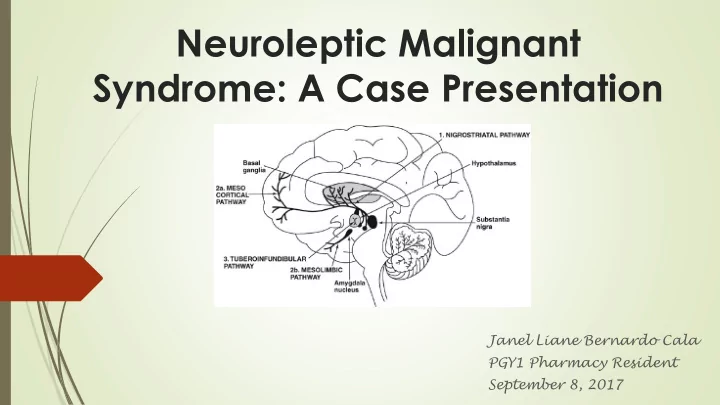
Infrequent (0.02% – 3% neuroleptic use), life threatening Most often associated with high potency neuroleptics, but all classes have been implicated including atypical APs and antiemetics (metoclopramide, promethazine) More likely to develop following initiation of neuroleptic therapy or an increase in the dose of drug Decreased dopamine activity in CNS D2 receptor Blockade Decreased Dopamine availability Onset: can be hours, but mostly 4-14 days after initiation of therapy
Low Potency High Potency Newer Agents Chlorpromazine Thioridazine Haloperidol Perphenazine Pimozide Fluphenazine Clozapine Olanzapine Quetiapine Aripiprazole Risperidone Ziprasidone Less EPS More Anticholinergic More EPS Less Anticholinergic
Higher doses of neuroleptics Greater neuroleptic dose increments over short period (<5 days) Simultaneous use of ≥2 neuroleptic drugs Parenteral administration of neuroleptics (especially IM depot) Male gender Dehydration
Dehydration Electrolyte Imbalances Acute renal failure 2/2 rhabdomyolysis Cardiac arrhythmias Respiratory failure 2/2 chest wall rigidity, aspiration DVT Seizures 2/2 hyperthermia, electrolyte disturbances
Supportive Care Pharmacotherapy Electroconvulsive Therapy
Discontinue neuroleptic agent or precipitating drug Maintain cardiorespiratory stability +/- Mechanical Ventilation +/- Antiarrhythmics IV hydration +/- high volume fluids Urine alkalinization (IV NaHCO3 ) Lower temperature Lower BP (Clonidine) DVT ppx Control agitation (BZDs)
Done under general anesthesia Small electric currents are passed through the brain Triggers a brief seizure changes in brain chemistry reverse illness Facilitates brain DA activity (?) Improves Fever Sweating Level of consciousness For severe and refractory NMS (>48hr)
WK, 35M, presented to MCH ER for Fever, AMS Per Mom: mental status worse this morning,
“speaking like a crazy man”
PMH: Psychosis Allergy: NKDA Recent admission in MMH 2/2 Haldol overdose Home Meds: ergocalciferol 8000 IU/mL; olanzapine 2.5mg qd
HR 128, RR 25, BP 189/101, Tmax 104 Na 166, K 3.4, Cl 128; CO2 21; BUN 27; SCr 1.5 Sugar 873, Lactate 4, WBC 11.6 AG 22, Osm 372, pH 7.38, HCO3 20 CXR suggestive of PNA UA clean; (+) ketones, protein LP not done, mother refused Drug levels negative (salicylate, EtOH, BZD, opioid, APAP) Initial Diagnosis: DKA, Pneumonia (both managed accordingly), new onset DM (A1C 11.9) Home meds restarted
Over the course of a few days, DKA resolved electrolytes normalized WBC trended down quickly Cultures were unremarkable Still spiking high grade fever despite being on adequate antibiotic therapy Vitals were unstable Patient would burst out nonsensical statements intermittently Disoriented to time and place Muscle stiffness is seen; Left hand contracture is noted No facial droop seen
ID was consulted; Pancultures were sent Per ID fever’s etiology is unclear; suggested to take CK levels Olanzapine was discontinued Bromocriptine 2.5 mg TID was started Cooling Blanket, APAP prn Pyrexia started resolving, CK started decreasing, muscle rigidity improving Psych consult Transfer out
Atypical antipsychotic High affinity to 5HT2A/2C; Dopamine D1-D4, Muscarinic 11-6, Histamine H1 and Adrenergic 1 MOA: 5HT2 + D2 antagonism T1/2: 21-54 hr (IR); 30 d (ER) Vd: 1000 L Adverse effects: orthostatic hypotension, EPS, hypertriglyceridemia, weight gain, hyperglycemia 5- 10 mg/d; titrate in increments of 5mg/day at intervals > 1 week; MAX: 20mg/day
Most cases resolve within 2 weeks, usually 7- 11 days Cases of >6 months motor symptoms are reported Risk factors for prolonged cause IM depot antipsychotic injections structural brain disease Most patients recover without neurologic sequelae Patient restarted on neuroleptic agents may or may not have NMS recurrence
Risk factors for recurrence: Early resumption of neuroleptic therapy Use of high potency drugs Parenteral neuroleptics Concomitant use of lithium To restart neuroleptic therapy, Wait at least 2 weeks Use Low potency Start with low doses and titrate slowly Avoid lithium Avoid dehydration Carefully monitor for NMS symptoms
Rajamani, B., Kumar, Y., & Rahman, S. M. F. (2016). Neuroleptic malignant
http://doi.org/10.4103/2249-4863.184660