
SLIDE 1
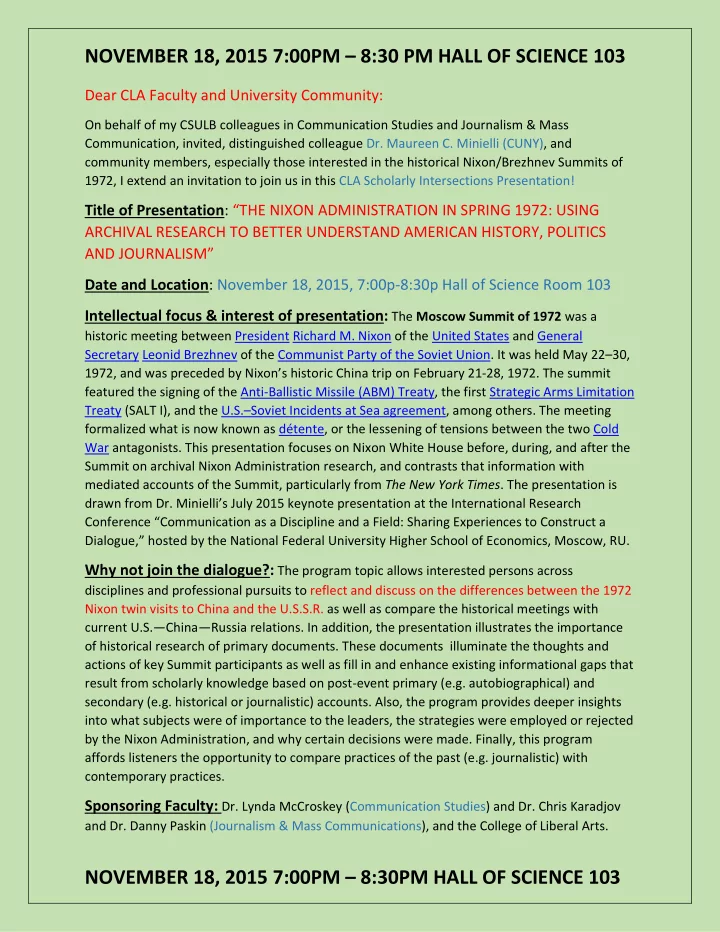
NOVEMBER 18, 2015 7:00PM – 8:30 PM HALL OF SCIENCE 103 NOVEMBER 18, 2015 7:00PM – 8:30PM HALL OF SCIENCE 103
Dear CLA Faculty and University Community:
On behalf of my CSULB colleagues in Communication Studies and Journalism & Mass Communication, invited, distinguished colleague Dr. Maureen C. Minielli (CUNY), and community members, especially those interested in the historical Nixon/Brezhnev Summits of 1972, I extend an invitation to join us in this CLA Scholarly Intersections Presentation!
Title of Presentation: “THE NIXON ADMINISTRATION IN SPRING 1972: USING ARCHIVAL RESEARCH TO BETTER UNDERSTAND AMERICAN HISTORY, POLITICS AND JOURNALISM” Date and Location: November 18, 2015, 7:00p-8:30p Hall of Science Room 103 Intellectual focus & interest of presentation: The Moscow Summit of 1972 was a
historic meeting between President Richard M. Nixon of the United States and General Secretary Leonid Brezhnev of the Communist Party of the Soviet Union. It was held May 22–30, 1972, and was preceded by Nixon’s historic China trip on February 21-28, 1972. The summit featured the signing of the Anti-Ballistic Missile (ABM) Treaty, the first Strategic Arms Limitation Treaty (SALT I), and the U.S.–Soviet Incidents at Sea agreement, among others. The meeting formalized what is now known as détente, or the lessening of tensions between the two Cold War antagonists. This presentation focuses on Nixon White House before, during, and after the Summit on archival Nixon Administration research, and contrasts that information with mediated accounts of the Summit, particularly from The New York Times. The presentation is drawn from Dr. Minielli’s July 2015 keynote presentation at the International Research Conference “Communication as a Discipline and a Field: Sharing Experiences to Construct a Dialogue,” hosted by the National Federal University Higher School of Economics, Moscow, RU.
Why not join the dialogue?: The program topic allows interested persons across
disciplines and professional pursuits to reflect and discuss on the differences between the 1972 Nixon twin visits to China and the U.S.S.R. as well as compare the historical meetings with current U.S.—China—Russia relations. In addition, the presentation illustrates the importance
- f historical research of primary documents. These documents illuminate the thoughts and