
SLIDE 1
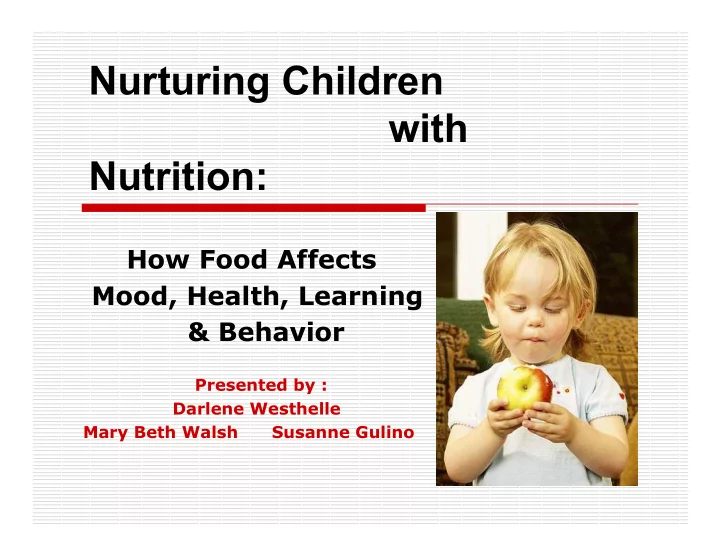
Nurturing Children with Nutrition:
How Food Affects Mood, Health, Learning & Behavior
Presented by : Darlene Westhelle Mary Beth Walsh Susanne Gulino
Nurturing Children with Nutrition: How Food Affects Mood, Health, - - PowerPoint PPT Presentation
Nurturing Children with Nutrition: How Food Affects Mood, Health, Learning & Behavior Presented by : Darlene Westhelle Mary Beth Walsh Susanne Gulino Let s THINK and EVALUATE: How many of these foods are in most children s
Presented by : Darlene Westhelle Mary Beth Walsh Susanne Gulino
Mood Supporters
Vegetables
Fruit
Cold Water Fish
Nuts
Beans
Non-fat yogurt
Eggs (free-range, organic is best)
Whole grains
Foods that produce Negative Mood Effects
Sugar
White flour
Low levels of DHA (formed from Omega 3s) are associated with depression.
Sources of Omega 3s include: salmon, mackerel, sardines, walnuts, flax, pumpkin seeds, leafy greens and hemp seeds.
Hair Skin Nails Blood Organs Bones
Leafy greens provide us with: Omega 3s, Vitamin A (carotenoids), B-complex vitamins, Vitamin C, Vitamin K, iron, calcium, zinc, iodine, magnesium, selenium, potassium, phosphorous and all trace minerals, as well as fiber.
Phytochemical Actions Sources
Lycopene Anti-carcinogenic Tomatoes, red grapefruit Isothiocyanates Inhibit cancer growth Broccoli, cabbage, cauliflower Isoflavones Block hormonally stimulated cancers, lower cholesterol levels Soy beans and soy- derived foods Anthocyanins Antioxidants, lower cholesterol, stimulate immunity Berries, cherries, grapes, currants Terpenoids Antioxidants, antibacterial, prevent stomach ulcers Peppers, cinnamon, horseradish, rosemary, thyme, turmeric
Phytochemical Actions Sources
Flavonoids Anti-oxidants, anti- carcinogenic, protect against heart disease Broccoli, onions, grapes, apples, cherries, tomatoes Phenolic compounds Anti-oxidants, protect against carcinogenic changes Nuts, berries, green tea Sulfides Anti-carcinogenic, inhibit blood clots Garlic, onions, chives
Source: http://app.mcdonalds.com/bagamcmeal?process=flash
Ingredients: Unbleached Enriched Wheat Flour, Water, Whole White Wheat Flour, High Fructose Corn Syrup, Wheat Gluten, Cornmeal, Yeast, Salt, Monoglycerides, Preservatives (Calcium Propionate, Sorbic Acid, Guar Gum, Citric Acid, Soy Flour
READ LABELS!!!
reported that HFCS is no worse than sugar (but that sugar is harmful).
Advanced Food Technology of Rutgers University that were presented at the 234th annual meeting of the American Chemical Society, linked HFCS to diabetes in children.
Sugar*, flour, hydrogenated soybean oil, cocoa, high fructose corn syrup*, whey, corn starch, baking soda, salt, soy lecithin, vanillin (artificial), chocolate
*Two types of sugar ingredients!
From Eat, Drink, and Be Healthy by Walter C. Willet, M.D. with Patrick J. Skerrett
Phytochemical Actions Sources
Lycopene Anti-carcinogenic Tomatoes, red grapefruit Isothiocyanates Inhibit cancer growth Broccoli, cabbage, cauliflower Isoflavones Block hormonally stimulated cancers, lower cholesterol levels Soy beans and soy- derived foods Anthocyanins Antioxidants, lower cholesterol, stimulate immunity Berries, cherries, grapes, currants Terpenoids Antioxidants, antibacterial, prevent stomach ulcers Peppers, cinnamon, horseradish, rosemary, thyme, turmeric
ScienceDaily (Jul. 25, 2006) — Poor nutrition early in life can impair neural development, leading to lower IQ in humans and flawed song learning in birds. Recent evidence indicates that many organisms can offset some of the changes associated with early poor nutrition by modifying their physical development. For example, poorly nourished children can undergo a period of accelerated growth once their diet improves, ultimately appearing normal as an adult. But such compensatory measures may come at a price, with cognitive or other developmental disabilities emerging later in life.