
SLIDE 1
ORAL HYGIENE & DENTAL HEALTH
F O R C H I L D R E N W I T H A U T I S M
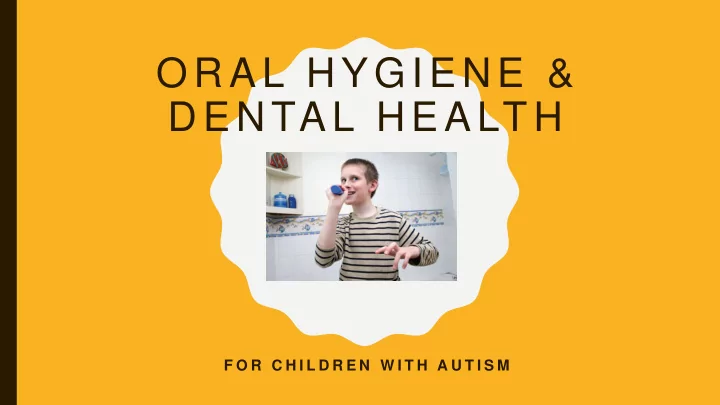
ORAL HYGIENE & DENTAL HEALTH F O R C H I L D R E N W I T H A - - PowerPoint PPT Presentation
ORAL HYGIENE & DENTAL HEALTH F O R C H I L D R E N W I T H A U T I S M Why is maintaining good oral health important? Tooth-brushing Tips Toothbrush Teeth Toothpaste Tongue Water tap & Sink Towel
F O R C H I L D R E N W I T H A U T I S M
‘Toothbrush’ ‘Toothpaste’ ‘Water tap & Sink’ ‘Towel’ ‘Teeth’ ‘Tongue’ ‘Mouth’
Introducing the toothbrush via Systematic Desensitisation
Manual Electric Fingertip Toothbrush Custom handles Every child differs when it comes to which kind of Toothbrush they can tolerate and use effectively. Dental sources offer a range of toothbrushes. Some designed specifically to aid a child’s manual dexterity, providing different bristle textures and custom handles for comfortable grip.
Tooth-brushing Apps Same time everyday
Morning Evening
Step by Step picture guide
to an effective tooth-brushing routine
You may not be able to get a toothbrush into the mouth due to sensory overload. It is important to get fluoride onto the teeth daily. If a toothbrush is out of the question put a smear/pea size amount ( according to age) of toothpaste onto a wet flannel and rub around the teeth.
Smear size 0-3yrs Pea size 3+ yrs
Fluoride is the good stuff in toothpaste. Keep it on the teeth, don’t wash it down the sink!
Most toothpastes tend to be mint flavoured. This can seem quite strong tasting to children with over sensitive mouths and sometimes leaves them with a burning sensation. The foaming agent in toothpaste can also prove too much to cope with. OraNurse have designed a flavour free, non foaming toothpaste which has proven very popular!
Key tips for healthy mouths!
Recommendation! Change your toothbrush every 3-4 months This can be easier if it’s a head on an electric brush as heads tend to be identical. If it’s a manual toothbrush it may be worth bulk buying the same toothbrush style/colour. This could decrease anxiety over change and a good way of disguising the change.
Choosing the right dentist
Check with other professionals or parents in your area for dentists they recommended for children with autism and why. Have they had a good experience? Ask questions Call the dental surgery with a list of questions to learn more about how they support/provide services to children with autism. If the dental surgery of choice can provide treatment for the whole family this can help an autistic child feel more comfortable visiting the dentist and watching other members have their teeth checked first. Family visits Plan ahead for success Some children might like to start with walking into the dental surgery, greeting the front desk staff and leaving again. Also receiving a reinforcement, such as a sticker, immediately.
Make the process as predictable as possible
Visual and sensory supports Pictures outlining the steps of the dental visit. Letting your child know what to expect. Sunglasses may help to reduce and light sensitivity, and headphones may reduce noise sensitivity.
Drinking fizzy drinks and fruit juices through a straw sends the liquid to the back of the mouth bypassing most of the teeth. Snacking on sugary foods between meals Keeping sugary treats for meal times
You don’t need to cut out sugary foods and drinks...just KEEP THEM TO MEAL TIMES
Eating a bag of sweets all at once is better for your teeth than eating them throughout the day….but it might make you feel a bit sick! Try and stick to SUGAR FREE juices.
A cube of cheese after a meal is a great way to neutralise the acids in the mouth Water and milk are great to drink in-between meal times as they aren’t damaging to teeth Fruits low acidity such as blueberries and apples are good sliced up with nuts and raw veg A slice of toast with butter makes a better snack for the after school cravings rather than a bag of crisps or chocolate.