Ow l Farm GHG study W hat can w e do? LC(1 So remember the - - PDF document

ow l farm ghg study w hat can w e do
SMART_READER_LITE
LIVE PREVIEW

Ow l Farm GHG study W hat can w e do? LC(1 So remember the - - PDF document

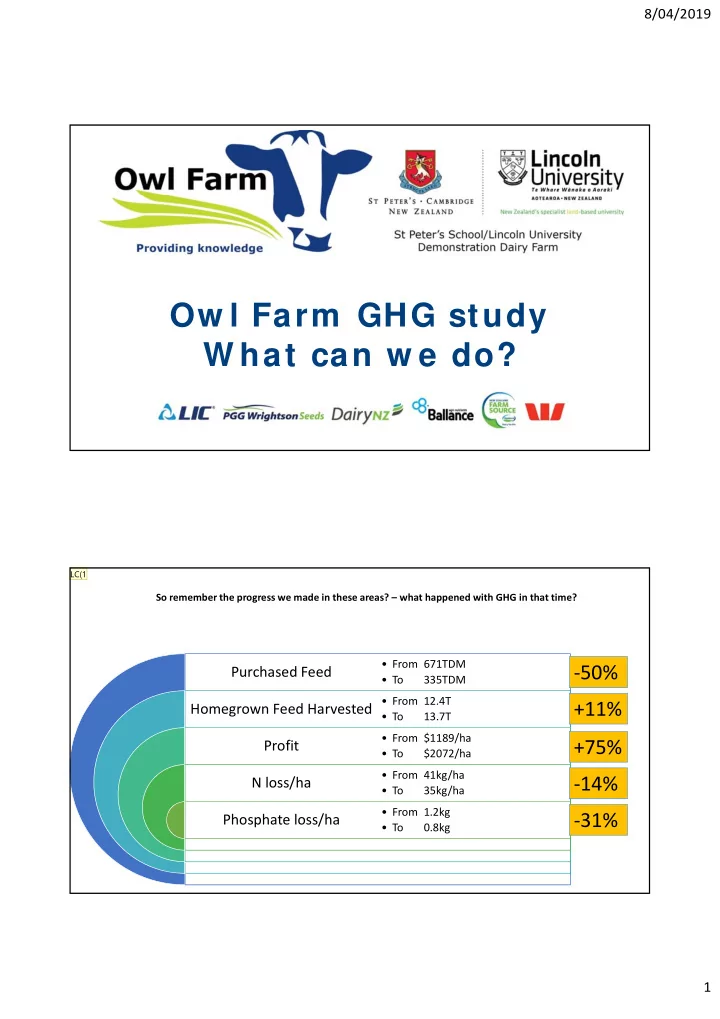
8/04/2019 Ow l Farm GHG study W hat can w e do? LC(1 So remember the progress we made in these areas? what happened with GHG in that time? From 671TDM 50% Purchased Feed To 335TDM From 12.4T +11% Homegrown Feed


slide-1
SLIDE 1

8/04/2019 1

Ow l Farm GHG study W hat can w e do?

Purchased Feed Homegrown Feed Harvested Profit N loss/ha Phosphate loss/ha

  • From 671TDM
  • To

335TDM

  • From 12.4T
  • To

13.7T

  • From $1189/ha
  • To

$2072/ha

  • From 41kg/ha
  • To

35kg/ha

  • From 1.2kg
  • To

0.8kg

‐50% +11% +75% ‐14% ‐31%

So remember the progress we made in these areas? – what happened with GHG in that time?

LC(1

slide-2
SLIDE 2

Slide 25 LC(1 Louise Cook (OwlFarm), 6/11/2018

slide-3
SLIDE 3

8/04/2019 2

14,277 12,738 13,628 12,465 12,230

1,000 1,200 1,400 1,600 1,800 2,000 2,200

14‐15 15‐16 16‐17 17‐18 18‐19F

8,000 9,000 10,000 11,000 12,000 13,000 14,000 15,000 EFS/ha at $6 payout GHG emissions CO2eq/ha

Owl Farm evolution Profit and total Emissions per ha

CO2 equivalents (kg/ha/yr) STD profit/ha $6

Drought Farm systems decision was around profit from efficiency. Co‐benefit has been a reduction in total emissions. Important to note there is a good chunk of variation between years. 14‐15,lots of feed and good payout, but lower efficiency and profit than 16‐17 with same MS/ha 15‐16, no lime applied, less CO2 emissions. Low pasture utilisation, = lower feed eaten/ha = lower MS/ha = lower profit/ha also meant less GHG/ha. Now, less total feed eaten and more efficient system = less emissions and more profit. Current year is more efficient again in feed conversion lower emissions. Lost autumn production due to dry weather will reduce the potential profit.

Emissions Efficiency

This is part of the story – as an industry the amount of milk we can now get from the same food has increased. This dotted line is where our national total Agriculture emissions would be if we hadn’t seen people improve the efficiency of feed required for product. So if a cow eats 1 kg of dry matter – she will create and burp out around 21gms

  • f methane. It’s as simple as that.

If a cow makes one KgMS in a season she could eat anywhere between 11‐ 15kg of DM to do it. So every kilo of milksolids could create between 231‐ 315grams of methane. If she can make the kg of MS from 11kg

  • f feed, instead of 14 on the same farm,

chances are we can see significant profitability increases along side the emissions decrease.
slide-4
SLIDE 4

8/04/2019 3

2,000 4,000 6,000 8,000 10,000 12,000 14,000 16,000 2,000 4,000 6,000 8,000 10,000 12,000 14,000 16,000

14‐15 15‐16 16‐17 17‐18 18‐19F A B

Emissions/ha of the three gases – actual and future model

CO2 emissions x N2O emissions x Methane x

So how does past and Future stack up – Option A with lower feed supply drastically reduces the Methane component of our emissions profile. Further improvements in N loss = less N20 loss and CO2 is improved with no pke Option B sees a larger methane footprint with the same imported feed and driving up homegrown feed on the farm with maize silage. Plus infrastructure makes all bought in and homegrown feed/forage utilisation improved meaning total feed eaten/ha goes up significantly. Nitrous oxide losses are higher or stay at current levels when compared option A – as all the urine through the infrastructure is captured and requires managing. CO2 losses are down a lot, as now a silage wagon isn’t tripping from one of the farm to another feeding out in every paddock.

N Surplus at Owl farm ins yellow has been trending down. At the same time N Loss/ha has been trending down At the same time N2O to atmosphere has been trending down.

slide-5
SLIDE 5

8/04/2019 4

What things have enabled this change?

  • Methane emissions
  • Less bought in feed – more homegrown feed, net drop in feed supply
  • Nitrous Oxide emissions
  • Less nutrient cycling and fewer cows reduce our N Surplus
  • Timing and type of fert. Avoid May June and use Urease inhibitors e.g.
  • Other nutrients drive high N efficiency
  • Critical focus on effluent excellence
  • Carbon dioxide
  • Imported feed carries CO2 liability – less feed, less CO2

When our food wasn’t used efficiently, it was possible to remove some from the system and lift profit. From here, the more efficient we get with any feed we currently we use will likely increase methane emissions AND increase our production. What if we could target doing the same production with less bought in feed? Same emissions, same milk, less cost = more profit. Actively looking at things that affect Nitrogen losses to waterways tends to have a co‐benefit with GHG losses of Nitrous oxide. Ensuring that when N is applied, it’s in a form that minimises loss to atmosphere. Yep, more expensive, but you keep more nutrient for the plant to use while waiting for rain. When applying N in wet conditions, is N the only limiting nutrient? If not – fix any other limiting nutrients to ensure N can be used by plant and isn’t wasted. Wastage = loss to water or loss to atmosphere and money gone begging. Managing effluent applications for high nutrient utilisation is critical. Saturated soils make poor use of nutrients = nutrient loss. Having adequate storage, maintaining equipment and extending effluent areas will see a valuable resource add the most valuable possible whilst reducing nutrient loss up and down Less PKE bought in (half the previous volumes) Less Maize silage bought in and less grass silage bought in mean: less CO2 assigned to the farm for transport costs from outside the farm gate. Less feed fed out, is less trips with the tractor around the farm feeding out that feed. More silage made at home increases homegrown feed to feed out – net total reduction is smaller here.

Take home messages

  • Reducing N Surplus = GHG + River benefit
  • Driving efficiency = Profit gains and reduce GHG (same milk from less feed)
  • Know YOUR numbers
  • Keep good records for feed and N use
  • Further gains on very efficient farms are more difficult