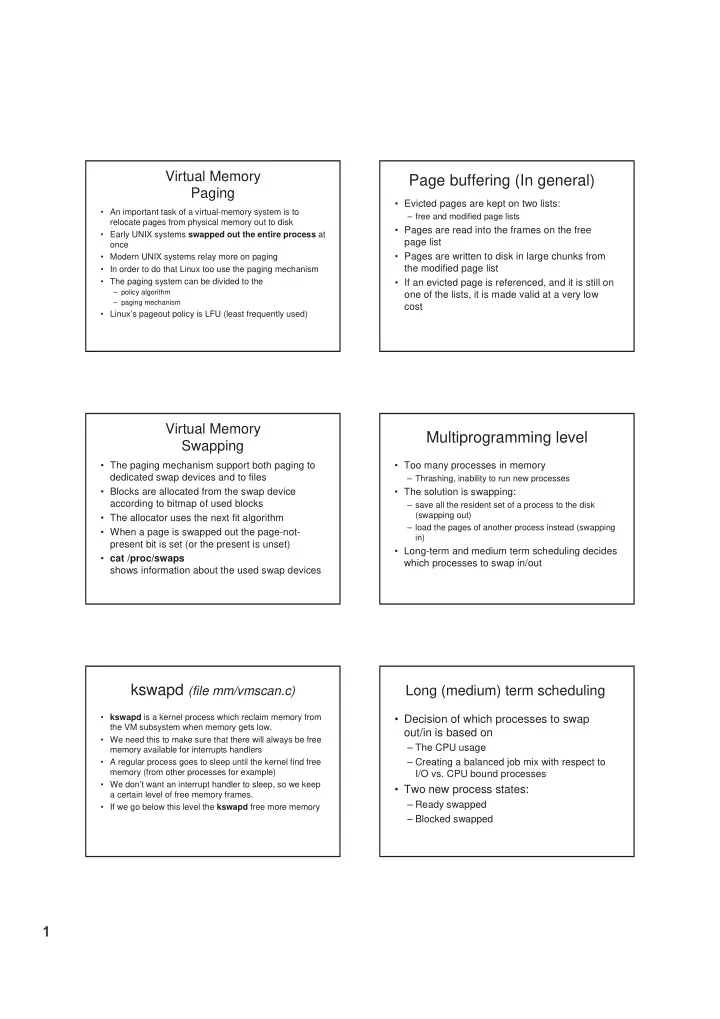

SLIDE 1
- Virtual Memory
Paging
- An important task of a virtual-memory system is to
relocate pages from physical memory out to disk
- Early UNIX systems swapped out the entire process at
- nce
- Modern UNIX systems relay more on paging
- In order to do that Linux too use the paging mechanism
- The paging system can be divided to the
– policy algorithm – paging mechanism
- Linux’s pageout policy is LFU (least frequently used)
Virtual Memory Swapping
- The paging mechanism support both paging to
dedicated swap devices and to files
- Blocks are allocated from the swap device
according to bitmap of used blocks
- The allocator uses the next fit algorithm
- When a page is swapped out the page-not-
present bit is set (or the present is unset)
- cat /proc/swaps
shows information about the used swap devices
kswapd (file mm/vmscan.c)
- kswapd is a kernel process which reclaim memory from
the VM subsystem when memory gets low.
- We need this to make sure that there will always be free
memory available for interrupts handlers
- A regular process goes to sleep until the kernel find free
memory (from other processes for example)
- We don’t want an interrupt handler to sleep, so we keep
a certain level of free memory frames.
- If we go below this level the kswapd free more memory
Page buffering (In general)
- Evicted pages are kept on two lists:
– free and modified page lists
- Pages are read into the frames on the free
page list
- Pages are written to disk in large chunks from
the modified page list
- If an evicted page is referenced, and it is still on
- ne of the lists, it is made valid at a very low
cost
Multiprogramming level
- Too many processes in memory
– Thrashing, inability to run new processes
- The solution is swapping:
– save all the resident set of a process to the disk (swapping out) – load the pages of another process instead (swapping in)
- Long-term and medium term scheduling decides
which processes to swap in/out
Long (medium) term scheduling
- Decision of which processes to swap
- ut/in is based on
– The CPU usage – Creating a balanced job mix with respect to I/O vs. CPU bound processes
- Two new process states: