
SLIDE 1
12/11/2012 1
Putting Putting T Tubes ubes W Within ithin T Tubes: ubes: Enteral Therapeutic Access Enteral Therapeutic Access
Robert E. Kramer, MD Robert E. Kramer, MD
Associate Professor of Pediatrics Associate Professor of Pediatrics Director of Endoscopy Director of Endoscopy Digestive Health Institute Digestive Health Institute Children’s Hospital Children’s Hospital Colorado Colorado University University of Colorado
- f Colorado
Disclosure
I have no financial relationships with any commercial entity to disclose
2
Objectives
- Learn the various types of enteral
access including G, GJ, J and ceccal tubes/buttons
- Recognize the indications and
appropriate usage for various access
- ptions
- Know proper placement and care
techniques to minimize complications
Background
- Wide variety of indications for enteral tube
placement in children
- Determination of most appropriate device for is
dependent on
- Indication
- Anticipated duration
- Need for fundoplication
- Current feeding device
- Anatomic considerations
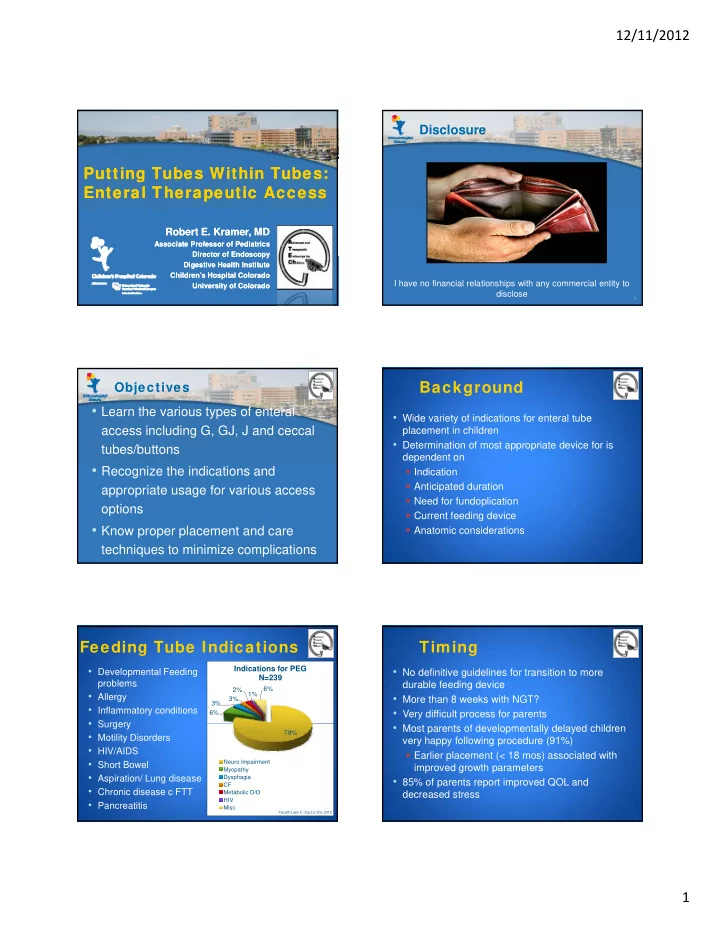
Feeding Tube Indications
- Developmental Feeding
problems
- Allergy
- Inflammatory conditions
- Surgery
6% 3% 3% 2% 1% 6%
Indications for PEG N=239
- Surgery
- Motility Disorders
- HIV/AIDS
- Short Bowel
- Aspiration/ Lung disease
- Chronic disease c FTT
- Pancreatitis
79%
Neuro Impairment Myopathy Dysphagia CF Metabolic D/O HIV Misc
Fiscetti-Leon F, Dig Liv Dis, 2012
Timing
- No definitive guidelines for transition to more
durable feeding device
- More than 8 weeks with NGT?
- Very difficult process for parents
- Most parents of developmentally delayed children
very happy following procedure (91%)
- Earlier placement (< 18 mos) associated with
improved growth parameters
- 85% of parents report improved QOL and