String Matching String matching problem: string T (text) and - - PowerPoint PPT Presentation

string matching
SMART_READER_LITE
LIVE PREVIEW

String Matching String matching problem: string T (text) and - - PowerPoint PPT Presentation

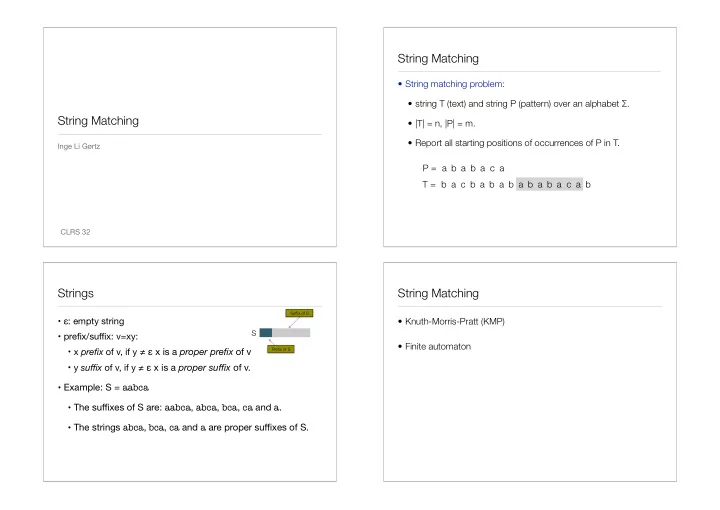
String Matching String matching problem: string T (text) and string P (pattern) over an alphabet . String Matching |T| = n, |P| = m. Report all starting positions of occurrences of P in T. Inge Li Grtz P = a b a b a c a T


slide-1
SLIDE 1

String Matching

Inge Li Gørtz CLRS 32

String Matching

  • String matching problem:
  • string T (text) and string P (pattern) over an alphabet Σ.
  • |T| = n, |P| = m.
  • Report all starting positions of occurrences of P in T.

P = a b a b a c a T = b a c b a b a b a b a b a c a b

Strings

  • ε: empty string
  • prefix/suffix: v=xy:
  • x prefix of v, if y ≠ ε x is a proper prefix of v
  • y suffix of v, if y ≠ ε x is a proper suffix of v.
  • Example: S = aabca
  • The suffixes of S are: aabca, abca, bca, ca and a.
  • The strings abca, bca, ca and a are proper suffixes of S.

Suffix of S

S

Prefix of S

String Matching

  • Knuth-Morris-Pratt (KMP)
  • Finite automaton
slide-2
SLIDE 2

A naive string matching algorithm

a b a b a c a b a c b a b a b a b a b a c a b a b a b a c a a b a b a c a a b a b a c a a b a b a c a a b a b a c a a b a b a c a a b a b a c a a b a b a c a a b a b a c a a a a b a a a b a b a b a c a b b

Improving the naive algorithm

a a a b a b a T = P = a a a b a b a a a a b a a a b a b a b a c a b b

Improving the naive algorithm

a a a b a b a T = P = a a a b a b a a a a b a b a a a a b a a a a a a b a b a a a a b a a a a a a b a a a a b a b a a c a b b

Improving the naive algorithm

a a a b a b a T = P = a a a b a b a a a a b a b a a a a b a b a

slide-3
SLIDE 3

a a a b a a a a b a b a a c a b b

Improving the naive algorithm

a a a b a b a T = P = a a a b a b a a a a b a b a a a a b a b a a a a b a b a a a a b a b a a a a b a b a a a a b a b a a a a b a b a a a a b a b a a a a b a a a a b a b a a c a b b

Improving the naive algorithm

a a a b a b a T = P = a a a b a b a a a a b a b a a a a b a b a a a a b a b a

If we matched 5 characters from P and then fail: compare failed character to 2nd character in P If we matched 3 characters from P and then fail: compare failed character to 3nd character in P If we matched all characters from P: compare next character to 2nd character in P

Improving the naive algorithm

P = a a a b a b a

If we matched 5 characters from P and then fail: compare failed character to 2nd character in P If we matched 3 characters from P and then fail: compare failed character to 3nd character in P If we matched all characters from P: compare next character to 2nd character in P matched

a a a b a b a

#matched

1 2 3 4 5 6 7

if fail compare to

3 2 2

Improving the naive algorithm

P = a a a b a b a

If we matched 5 characters from T and then fail: compare failed character to 2nd character in P If we matched 3 characters from T and then fail: compare failed character to 3nd character in P If we matched all characters from T: compare next character to 2nd character in P matched

a a a b a b a

#matched

1 2 3 4 5 6 7

if fail compare to

3 2 2

a a a b a b a

1 2 3 4 5 6

slide-4
SLIDE 4

Improving the naive algorithm

P = a a a b a b a

If we matched 5 characters from T and then fail: compare failed character to 2nd character in P If we matched 3 characters from T and then fail: compare failed character to 3nd character in P If we matched all characters from T: compare next character to 2nd character in P matched

a a a b a b a

#matched

1 2 3 4 5 6 7

if fail compare to

1 1 2 3 1 2 1 2

a a a b a b a

1 2 3 4 5 6

  • KMP: P = aaababa.

Improving the naive algorithm

a a a b a b a

1 2 3 4 5 6

starting state accepting state

matched

a a a b a b a

#matched

1 2 3 4 5 6 7

if fail go to

1 2 1 1

In state i after reading character j of T: P[1…i] is the longest prefix of P that is a suffix of T[1..j]

P S

Longest suffix of S that is a prefix of P Longest prefix of P that is a suffix of S

  • KMP: P = aaababa.
  • Matching:

Improving the naive algorithm

a a a b a b a

1 2 3 4 5 6 matched

a a a b a b a

#matched

1 2 3 4 5 6 7

if fail go to

1 2 1 1

a a a b a a a b a b a a T =

KMP

  • KMP: Can be seen as finite automaton with failure links:
  • Failure link: longest prefix of P that is a proper suffix of what we have matched until

now.

  • In state i after reading T[j]: P[1..i] is the longest prefix of P that is a suffix of T[1…j].
  • Can follow several failure links when matching one character:

a b a b a a T = a b a b a c a

1 2 3 4 5 6

slide-5
SLIDE 5

KMP Analysis

  • Analysis. |T| = n, |P| = m.
  • How many times can we follow a forward edge?
  • How many backward edges can we follow (compare to forward edges)?
  • Total number of edges we follow?
  • What else do we use time for?

KMP Analysis

  • Lemma. The running time of KMP matching is O(n).
  • Each time we follow a forward edge we read a new character of T.
  • #backward edges followed ≤ #forward edges followed ≤ n.
  • If in the start state and the character read in T does not match the forward

edge, we stay there.

  • Total time = #non-matched characters in start state + #forward edges

followed + #backward edges followed ≤ 2n.

  • Failure link: longest prefix of P that is a proper suffix of what we have

matched until now.

  • Computing failure links: Use KMP matching algorithm.

Computation of failure links

longest prefix of P that is a proper suffix of ‘abab'

a b a b a c a

1 2 3 4 5 6

  • Failure link: longest prefix of P that is a proper suffix of what we have

matched until now.

  • Computing failure links: Use KMP matching algorithm.

Computation of failure links

longest prefix of P that is a suffix of ‘bab'

a b a b a c a

1 2 3 4 5 6

slide-6
SLIDE 6
  • Failure link: longest prefix of P that is a proper suffix of what we have

matched until now.

  • Computing failure links: Use KMP matching algorithm.

Computation of failure links

a b a b a c a

1 2 3 4 5 6

longest prefix of P that is a suffix of ‘bab'

a b a b a c a

1 2 3 4 5 6

Can be found by using KMP to match ‘bab'

  • Computing failure links: As KMP matching algorithm (only need failure links

that are already computed).

  • Failure link: longest prefix of P that is a proper suffix of what we have

matched until now.

Computation of failure links

1 2 3 4 5 6 7

a b a b a c a P = a b a b a c a

1 2 3 4 5 6 Need to match: a, ab, aba, abab, ababa, ababac, ababaca

KMP

  • Computing π: As KMP matching algorithm (only need π values that are

already computed).

  • Running time: O(n + m):
  • Lemma. Total number of comparisons of characters in KMP is at most 2n.
  • Corollary. Total number of comparisons of characters in the preprocessing
  • f KMP is at most 2m.

KMP

  • Computing π: As KMP matching algorithm (only need π values that are

already computed).

  • Running time: O(n + m):
  • Lemma. Total number of comparisons of characters in KMP is at most 2n.
  • Corollary. Total number of comparisons of characters in the preprocessing
  • f KMP is at most 2m.
slide-7
SLIDE 7

Finite Automaton Finite Automaton

  • Finite automaton: alphabet Σ = {a,b,c}. P = ababaca.

a b a b a c a a a a b a b

starting state accepting state

Finite Automaton

  • Finite automaton: alphabet Σ = {a,b,c}. P= ababaca.

a b a b a c a a a a b a b

longest prefix of P that is a proper suffix of ‘abaa' starting state accepting state

a b a a a b a b a c a

P: Matched until now:

Finite Automaton

  • Finite automaton: alphabet Σ = {a,b,c}. P= ababaca.

a b a b a c a

longest prefix of P that is a proper suffix of ‘aa’ = ‘a’ read ‘a’?

a

a a a b a b a c a

P: Matched until now:

slide-8
SLIDE 8

Finite Automaton

  • Finite automaton: alphabet Σ = {a,b,c}. P= ababaca.

a b a b a c a

longest prefix of P that is a proper suffix of ‘ac’ = ‘ ’ read ‘c’?

a c a b a b a c a

P: Matched until now:

a

Finite Automaton

  • Finite automaton: alphabet Σ = {a,b,c}. P= ababaca.

a b a b a c a

longest prefix of P that is a proper suffix of ‘abb’ = ‘ ’ read ‘b’?

a

a b b a b a b a c a

P: Matched until now:

Finite Automaton

  • Finite automaton: alphabet Σ = {a,b,c}. P= ababaca.

a b a b a c a

longest prefix of P that is a proper suffix of ‘abc’ = ‘ ’ read ‘c’?

a

a b c a b a b a c a

P: Matched until now:

Finite Automaton

  • Finite automaton: alphabet Σ = {a,b,c}. P= ababaca.

a b a b a c a

longest prefix of P that is a proper suffix of ‘abaa’ = ‘a’ read ‘a’?

a a

a b a a a b a b a c a

P: Matched until now:

slide-9
SLIDE 9

Finite Automaton

  • Finite automaton: alphabet Σ = {a,b,c}. P= ababaca.

a b a b a c a

longest prefix of P that is a proper suffix of ‘abac’ = ‘ ’ read ‘c’?

a a

a b a c a b a b a c a

P: Matched until now:

Finite Automaton

  • Finite automaton: alphabet Σ = {a,b,c}. P = ababaca.

a b a b a c a a a a b a b b a c b a b a b a b a b a c a b T =

Finite Automaton

  • Finite automaton:
  • Q: finite set of states
  • q0 ∈ Q: start state
  • A ⊆ Q: set of accepting states
  • Σ: finite input alphabet
  • δ: transition function
  • Matching time: O(n)
  • Preprocessing time: O(m3|Σ|). Can be done in O(m|Σ|) using KMP

.

  • Total time: O(n + m|Σ|)

a b a b a c a a a a b a b