
SLIDE 1
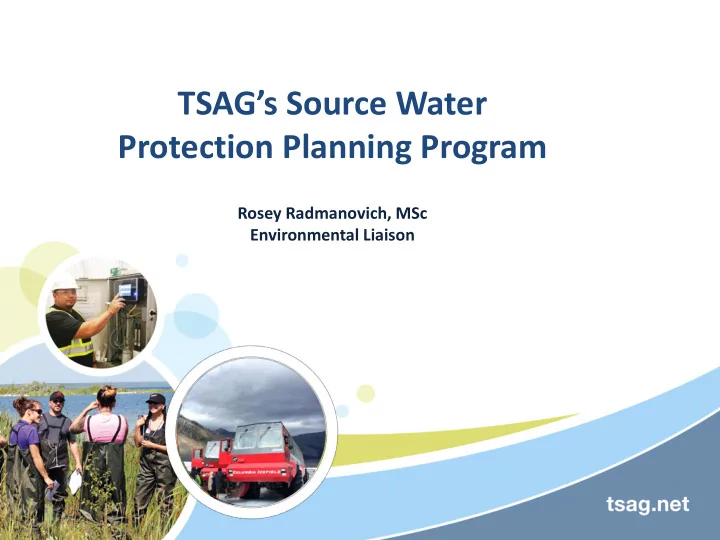
TSAG’s Source Water Protection Planning Program
Rosey Radmanovich, MSc Environmental Liaison
TSAGs Source Water Protection Planning Program Rosey Radmanovich, - - PowerPoint PPT Presentation
TSAGs Source Water Protection Planning Program Rosey Radmanovich, MSc Environmental Liaison What is Source Water? Untreated sources of drinking water Lakes Rivers and streams Aquifers Source Water Protection Planning 101
Rosey Radmanovich, MSc Environmental Liaison
drinking water
– Lakes – Rivers and streams – Aquifers
contamination
– Surface water – Groundwater
approach
– Inventory land uses – Inventory water use
Form working group
Identify risks Actions Implementation Review/ Update
Source Water Protection
being done?
– Testing by CHR – Public works cleans cisterns when needed
done?
– Inventory cisterns – Inspect condition – Fix or replace cisterns as needed – Establish a cistern cleaning crew – Clean cisterns on an annual basis
engagement events to collect feedback on the plan
– Any risks missed – Any additional mitigation actions
End up with a community-based, community- driven plan that outlines all of the risks to water and what the community would like done to protect water
reviews:
– Membership (working group) – Land use assessment – Management actions – Implementation (Steps 1-4)
– Allows prioritization of resources
be taken and when
– Long term plan that lays out a strategy for accessing funding and additional resources
which challenges
community
– Neighbouring communities – Watershed Planning and advisory councils (WPACs) – Other organizations within the province
water protection plans with TSAG
– Decommissioning abandoned water wells – Illegal dumpsite cleanup – Collaboration and partnerships – Coordination with other community plans – Community-based monitoring initiatives
“This funding will support community gatherings, workshops, or other events or outreach activities that will mobilize knowledge, facilitate dialogue and knowledge sharing”
January 22 & 23, 2019 Banff, Alberta
knowledge around water protection and planning
barriers to source water protection
solutions and identify potential solutions to
– Financial – Human resources – Institutional – Social – Technical
plan implementation
collaboration
– Financial – Human resources – Institutional – Social – Technical
management
community gardens
sites as a high source water risk
utilize youth and existing community programs to clean up sites
planning
proposal review
– Working with 3 communities to assess and monitor environmental risks identified in community plans
assessment of illegal dump sites
assessment
water levels
reclamation sites
– Not for profit that promotes understanding and comprehensive management of lakes, reservoirs, and their watersheds
program
– Training – Equipment – Sample analysis costs
provide training support for interested First Nations
“There is no greater medicine than water – it is foundational, our very beginnings, it reminds us where we came from, our first environment in the womb.”
Elder, Chiefs of Ontario 2006
For more information: Rosey Radmanovich, MSc. Environmental Liaison Phone: 780-483-8601 Email: rradmanovich@tsag.net