SLIDE 1
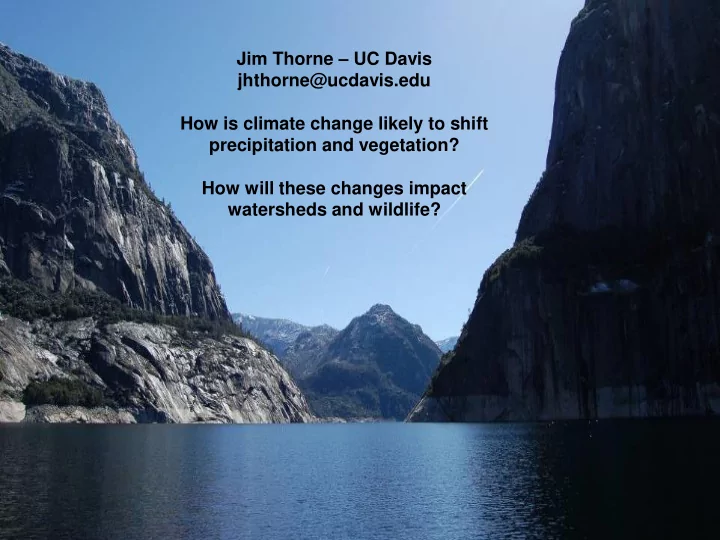
Jim Thorne – UC Davis jhthorne@ucdavis.edu How is climate change likely to shift precipitation and vegetation? How will these changes impact watersheds and wildlife?
SLIDE 2
Annual Average Precipitation and Temperature for California
SLIDE 3
3.6 F 9.0 F 1.8 F 5.4 F 7.2 F >9.0 F
SLIDE 4
SLIDE 5
SLIDE 6
Credit: SF Chronicle Credit: US Geological Survey
SLIDE 7
SLIDE 8
SLIDE 9
Ponderosa Pine Transition Lower Edge
SLIDE 10
Need to optimize the functioning of the watersheds to get more water – People Ecosystems Wildlife & Habitats Need to slow water across the landscapes. Manage Watersheds holistically – Green Black
Particularly in Watersheds that are important for drinking and supply. Generally less water to work with As pressures mount.. All aspects of water retention need work – starting with our watersheds Snowpack Meadows Riparian areas to reduce erosion and landslides Hill slopes – woodlands and forests Valleys
SLIDE 11 California is a Biodiversity Hotspot Vegetation Changes in species mix Species will change locations Zones of stability (climate refugia) Zones of transition Wildlife Zones of stability (climate refugia) Corridors/connectivity
(Whitney Albright)
SLIDE 12
Thank you! jhthorne@ucdavis.edu
SLIDE 13
Questions – Challenges – Risks – Actions Water Landscapes Manage the green for risk reduction Manage the black for resilience Agriculture Urban, People, Infrastructure Forests and Ranchlands Biodiversity