We know cannot live in the past, but the past lives in us CHARLES - - PowerPoint PPT Presentation

we know cannot live in the past but the past lives in us
SMART_READER_LITE
LIVE PREVIEW

We know cannot live in the past, but the past lives in us CHARLES - - PowerPoint PPT Presentation

We know cannot live in the past, but the past lives in us CHARLES PERKINS MY BACKGROUND 6 th and 7 th generation Australian Son of a WW2 Australian veteran and a country girl from NSW Grew up in the affluent 50s and the liberating 60s


slide-1
SLIDE 1
slide-2
SLIDE 2

We know cannot live in the past, but the past lives in us

CHARLES PERKINS

slide-3
SLIDE 3

MY BACKGROUND

 6th and 7th generation Australian  Son of a WW2 Australian veteran and a country girl from NSW  Grew up in the affluent 50s and the liberating 60s and 70s  Childhood a mixture of city and country living  Self admitted surfing tragic  Have recognized behaviours in myself without understanding their origin  Geologist and believer in the philosophy of Gaia  Have lived on four continents  Regard one of the greatest privileges of my life to have lived in Bangladesh

and experienced the wonderful resilience of the Bangladeshies

slide-4
SLIDE 4

THE STORY

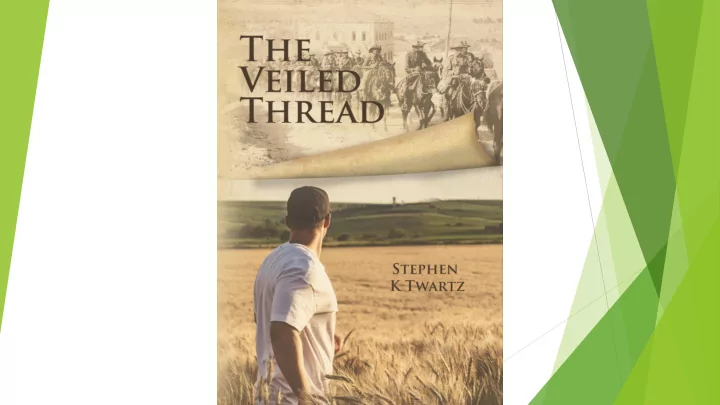
 Inherited trauma  The lives of two men, generations apart  A war  The degradation of one  The Struggle of the Other to Understand the Things that Influenced his

Approach to Life

 Action  Adventure  Drama

slide-5
SLIDE 5

Inherited Trauma - 1

 The idea is:

 trauma can leave a chemical mark on genes  Mark doesn't directly damage the gene;

 No mutation.

 Mark passed down to subsequent generations

 Mechanism by which the gene is converted into functioning

proteins, or expressed in the body and mind altered

 Chemical compounds added to single genes that affect their

activity called epigenetic changes.

 Chemical compounds attach to the DNA and remain as cells

divide – can be passed down through generations.

slide-6
SLIDE 6

Inherited Trauma - 2

 The Greek prefix epi- in epigenetics:

 implies features that are "on top of" or "in addition to" the

traditional genetic basis for inheritance

slide-7
SLIDE 7

Inherited Trauma - 3

 Trauma can be defined as:

 a psychological, emotional response to events or an

experience that is deeply distressing or disturbing.

slide-8
SLIDE 8

Inherited Trauma - 4

 Study of children still in the womb during the Dutch

Hunger Winter at the end of World War II.

 “epigenetic signature” on one of their genes linked to health

factors later in life.

 WWII concentration camp survivors

 Holocaust survivors and their children showed epigenetic

changes on gene linked to stress.

 Critics of the study

slide-9
SLIDE 9

A WAR

 World War 1  Palestine  The Turks  The Australian Light Horse

slide-10
SLIDE 10

THE LIVES of TWO MEN

Generations Apart

 Grandfather  Grandson  They meet  They bond

slide-11
SLIDE 11

THE DEGRADATION OF ONE

 The horror of war  The Great Depression  The descent into a second world war  Ruin

slide-12
SLIDE 12

The Struggle of the Other to Understand the Things that Influenced his Approach to Life

 Disfunction – home, work, relationships  The question – Why is my life like it is?

slide-13
SLIDE 13

EPIGENETICS

slide-14
SLIDE 14

References

Epigenetics explained:

https://www.youtube.com/watch?v=_aAhcNjmvhc

https://www.youtube.com/watch?v=JTBg6hqeuTg

https://www.youtube.com/watch?v=Udlz7CMLuLQ

https://www.youtube.com/watch?v=f1Pf5S8Nbfk

https://www.youtube.com/watch?v=OkAMHQhabkU

https://www.youtube.com/watch?v=SrqmuYvk3iQ Light Horse

http://www.lighthorse.org.au/

https://www.youtube.com/watch?v=rn-7t4fXX7E