Who or what do you see? When was this photograph taken - - PowerPoint PPT Presentation

who or what do you see when was this photograph taken
SMART_READER_LITE
LIVE PREVIEW

Who or what do you see? When was this photograph taken - - PowerPoint PPT Presentation

Who or what do you see? When was this photograph taken what is happening in the photograph? Where was this photograph taken? Why did the


slide-1
SLIDE 1
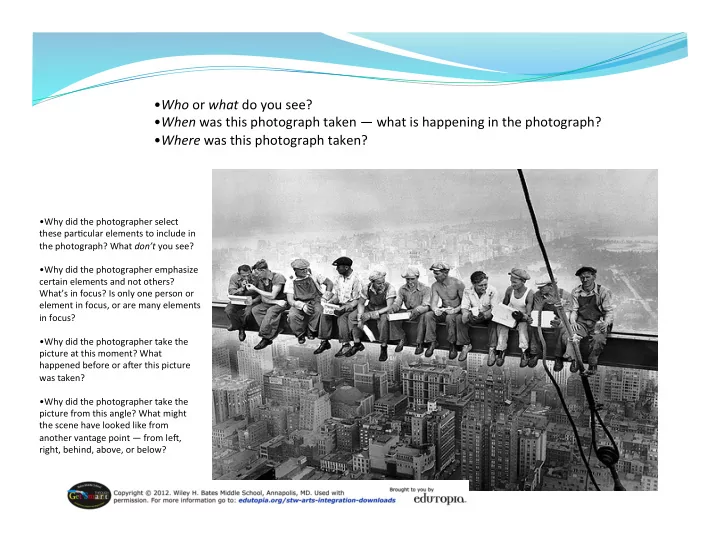
  • Who ¡or ¡what ¡do ¡you ¡see? ¡
  • When ¡was ¡this ¡photograph ¡taken ¡— ¡what ¡is ¡happening ¡in ¡the ¡photograph? ¡
  • Where ¡was ¡this ¡photograph ¡taken?
  • Why ¡did ¡the ¡photographer ¡select ¡

these ¡par8cular ¡elements ¡to ¡include ¡in ¡ the ¡photograph? ¡What ¡don’t ¡you ¡see? ¡ ¡

  • Why ¡did ¡the ¡photographer ¡emphasize ¡

certain ¡elements ¡and ¡not ¡others? ¡ What’s ¡in ¡focus? ¡Is ¡only ¡one ¡person ¡or ¡ element ¡in ¡focus, ¡or ¡are ¡many ¡elements ¡ in ¡focus? ¡

  • Why ¡did ¡the ¡photographer ¡take ¡the ¡

picture ¡at ¡this ¡moment? ¡What ¡ happened ¡before ¡or ¡a@er ¡this ¡picture ¡ was ¡taken? ¡

  • Why ¡did ¡the ¡photographer ¡take ¡the ¡

picture ¡from ¡this ¡angle? ¡What ¡might ¡ the ¡scene ¡have ¡looked ¡like ¡from ¡ another ¡vantage ¡point ¡— ¡from ¡le@, ¡ right, ¡behind, ¡above, ¡or ¡below?

slide-2
SLIDE 2

The POWER OF THE Photographic Composition

Principles ¡of ¡Design ¡and ¡ Elements ¡of ¡Art ¡ ¡are ¡used ¡ making ¡photographs ¡– ¡not ¡ just ¡taking ¡photographs. ¡ The ¡different ¡arrangements ¡– ¡

  • r ¡compositions ¡the ¡

photographer ¡selects-­‑ ¡ creates ¡artistic, ¡interesting, ¡ more ¡visually ¡powerful ¡

  • photographs. ¡
slide-3
SLIDE 3

Emphasis ¡

Focal ¡Point ¡

Balance ¡

Symmetrical ¡ Asymmetrical ¡ Radial ¡ ¡

Contrast ¡

Opposites ¡ Differences ¡

Rhythm/ ¡ Repetition ¡

Repeating ¡ ¡ shapes ¡and ¡ colors ¡

slide-4
SLIDE 4

This ¡photograph ¡shows ¡the ¡following ¡elements ¡and ¡principles: ¡color, ¡contrast, ¡ emphasis, ¡and ¡value. ¡ ¡Value ¡is ¡shown ¡through ¡the ¡different ¡shades ¡of ¡the ¡color ¡

  • range ¡and ¡hues ¡that ¡are ¡bright ¡and ¡really ¡stand ¡out ¡from ¡each ¡other. ¡Contrast ¡

is ¡used ¡in ¡the ¡variation ¡between ¡the ¡light ¡colors ¡(red, ¡orange, ¡yellow) ¡and ¡the ¡ dark ¡colors ¡(black, ¡dark ¡blue-­‑violet, ¡and ¡brown). ¡Emphasis ¡is ¡used ¡in ¡this ¡ photograph ¡by ¡the ¡two ¡dark ¡blue-­‑violet ¡berries ¡hanging ¡on ¡the ¡leaf ¡near ¡the ¡

  • center. ¡
slide-5
SLIDE 5

EMPHASIS ¡or ¡Focal ¡Point ¡

Emphasis in a composition refers to developing points of interest to pull the viewer's eye to important parts of the body of the work. This can be achieved with element of

  • simplicity. ¡
slide-6
SLIDE 6

Balance ¡

Balance is a sense of stability in the body

  • f work. Balance can be created by

repeating same shapes and by creating a feeling of equal weight. ¡ ¡ Symmetrical ¡ Asymmetrical ¡ Radial ¡ ¡

slide-7
SLIDE 7

CONTRAST ¡

Contrast refers to the opposites and differences in the

  • work. You can achieve variety by using different shapes,

textures, colors and values in your work. ¡ ¡

slide-8
SLIDE 8

Repe88on ¡and ¡Rhythm ¡

Rhythm is a type of movement in drawing and

  • painting. It is seen in repeating of shapes and
  • colors. Alternating lights and darks also give a

sense of rhythm. ¡

slide-9
SLIDE 9

Movement ¡ Movement adds excitement to your work by

suggesting action or direction (providing a path for our eyes to follow) when we look at a work of

  • art. ¡
slide-10
SLIDE 10

Emphasis ¡ Focal ¡Point ¡ Balance ¡ Symmetrical ¡ Asymmetrical ¡ Radial ¡ ¡ Contrast ¡ Opposites ¡ Differences ¡ Rhythm/ ¡Repetition ¡ Repeating ¡ ¡shapes ¡and ¡colors ¡ Movement ¡ Providing ¡a ¡path ¡for ¡eyes ¡to ¡follow ¡ Can ¡you ¡ match ¡the ¡ Principle ¡ to ¡the ¡ photo? ¡

slide-11
SLIDE 11

It’s ¡YOUR ¡turn! ¡ ¡ ¡ ¡

Tell ¡a ¡math ¡story ¡through ¡PHOTOGRAPHY ¡ ¡ Use ¡the ¡principles ¡of ¡design ¡to ¡compose ¡a ¡ Photo ¡Story. ¡

Photographs ¡are ¡not ¡simply ¡randomly ¡'taken' ¡but ¡are ¡ in ¡fact, ¡'crafted' ¡using ¡skills ¡of ¡exposure ¡and ¡light ¡ selection ¡as ¡well ¡as ¡compositional ¡skills. ¡Images ¡ are, ¡therefore, ¡composed ¡in ¡order ¡to ¡tell ¡a ¡story. ¡

Emphasis ¡ Focal ¡Point ¡ Balance ¡ Symmetrical ¡ Asymmetrical ¡ Radial ¡ ¡ Contrast ¡ Opposites ¡ Differences ¡ Rhythm/ ¡ Repetition ¡ Repeating ¡ ¡ shapes ¡and ¡ colors ¡