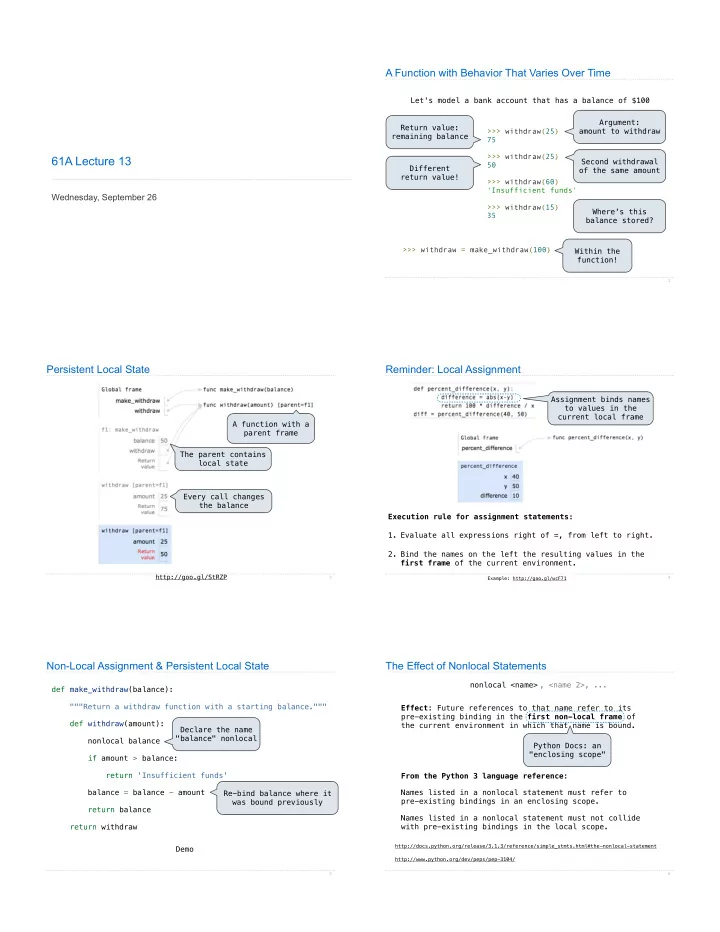

SLIDE 1
61A Lecture 13
Wednesday, September 26
A Function with Behavior That Varies Over Time
2
>>> withdraw(25) 75 >>> withdraw(25) 50 >>> withdraw(60) 'Insufficient funds' >>> withdraw(15) 35 >>> withdraw = make_withdraw(100) Let's model a bank account that has a balance of $100 Argument: amount to withdraw Second withdrawal
- f the same amount
Return value: remaining balance Different return value! Where's this balance stored? Within the function!
Persistent Local State
3
http://goo.gl/StRZP
A function with a parent frame The parent contains local state Every call changes the balance
Reminder: Local Assignment
4
Execution rule for assignment statements:
- 1. Evaluate all expressions right of =, from left to right.
- 2. Bind the names on the left the resulting values in the
first frame of the current environment.
Example: http://goo.gl/wcF71
Assignment binds names to values in the current local frame
Non-Local Assignment & Persistent Local State
5
def make_withdraw(balance): """Return a withdraw function with a starting balance.""" def withdraw(amount): nonlocal balance if amount > balance: return 'Insufficient funds' balance = balance - amount return balance return withdraw Declare the name "balance" nonlocal Re-bind balance where it was bound previously Demo
The Effect of Nonlocal Statements
6
http://www.python.org/dev/peps/pep-3104/
From the Python 3 language reference: Names listed in a nonlocal statement must refer to pre-existing bindings in an enclosing scope. Names listed in a nonlocal statement must not collide with pre-existing bindings in the local scope.
http://docs.python.org/release/3.1.3/reference/simple_stmts.html#the-nonlocal-statement