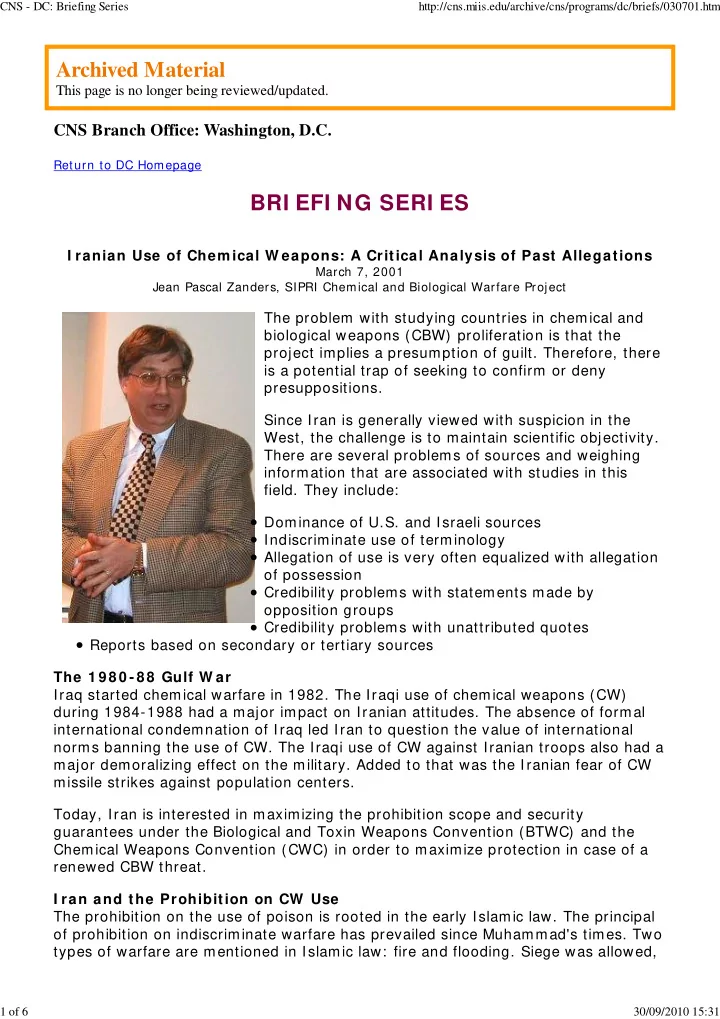

SLIDE 1
Archived Material
This page is no longer being reviewed/updated.
CNS Branch Office: Washington, D.C.
Return to DC Homepage
BRI EFI NG SERI ES
I ranian Use of Chemical W eapons: A Critical Analysis of Past Allegations
March 7, 2001 Jean Pascal Zanders, SIPRI Chemical and Biological Warfare Project
The problem with studying countries in chemical and biological weapons (CBW) proliferation is that the project implies a presumption of guilt. Therefore, there is a potential trap of seeking to confirm or deny presuppositions. Since Iran is generally viewed with suspicion in the West, the challenge is to maintain scientific objectivity. There are several problems of sources and weighing information that are associated with studies in this
- field. They include:
Dominance of U.S. and Israeli sources Indiscriminate use of terminology Allegation of use is very often equalized with allegation
- f possession
Credibility problems with statements made by
- pposition groups
Credibility problems with unattributed quotes Reports based on secondary or tertiary sources The 1 980 - 88 Gulf W ar Iraq started chemical warfare in 1982. The Iraqi use of chemical weapons (CW) during 1984-1988 had a major impact on Iranian attitudes. The absence of formal international condemnation of I raq led Iran to question the value of international norms banning the use of CW. The Iraqi use of CW against Iranian troops also had a major demoralizing effect on the military. Added to that was the Iranian fear of CW missile strikes against population centers. Today, Iran is interested in maximizing the prohibition scope and security guarantees under the Biological and Toxin Weapons Convention (BTWC) and the Chemical Weapons Convention (CWC) in order to maximize protection in case of a renewed CBW threat. I ran and the Prohibition on CW Use The prohibition on the use of poison is rooted in the early Islamic law. The principal
- f prohibition on indiscriminate warfare has prevailed since Muhammad's times. Two