English 351: TEWWG Presentation Assignment Topics (1) - - PDF document

english 351 tewwg presentation assignment topics
SMART_READER_LITE
LIVE PREVIEW

English 351: TEWWG Presentation Assignment Topics (1) - - PDF document

English 351: TEWWG Presentation Assignment Topics (1) Symbols of Silence : Your group will quote passages from the novel to discuss characters


slide-1
SLIDE 1

English ¡351: ¡TEWWG ¡Presentation ¡Assignment ¡– ¡Topics ¡ ¡

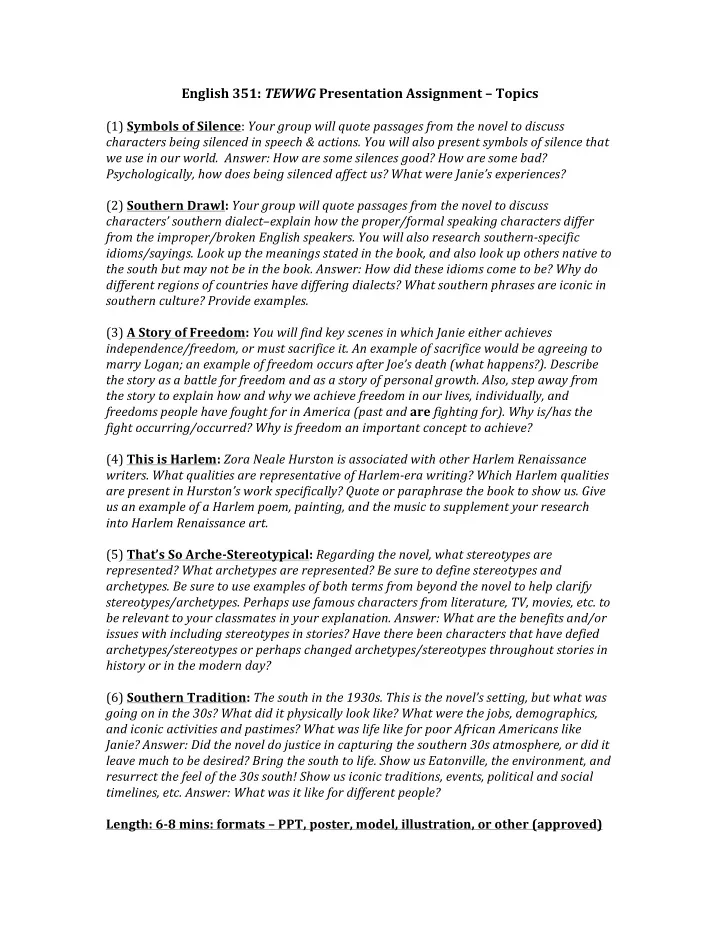
(1) ¡Symbols ¡of ¡Silence: ¡Your ¡group ¡will ¡quote ¡passages ¡from ¡the ¡novel ¡to ¡discuss ¡ characters ¡being ¡silenced ¡in ¡speech ¡& ¡actions. ¡You ¡will ¡also ¡present ¡symbols ¡of ¡silence ¡that ¡ we ¡use ¡in ¡our ¡world. ¡ ¡Answer: ¡How ¡are ¡some ¡silences ¡good? ¡How ¡are ¡some ¡bad? ¡ Psychologically, ¡how ¡does ¡being ¡silenced ¡affect ¡us? ¡What ¡were ¡Janie’s ¡experiences? ¡ ¡ (2) ¡Southern ¡Drawl: ¡Your ¡group ¡will ¡quote ¡passages ¡from ¡the ¡novel ¡to ¡discuss ¡ characters’ ¡southern ¡dialect–explain ¡how ¡the ¡proper/formal ¡speaking ¡characters ¡differ ¡ from ¡the ¡improper/broken ¡English ¡speakers. ¡You ¡will ¡also ¡research ¡southern-­‑specific ¡ idioms/sayings. ¡Look ¡up ¡the ¡meanings ¡stated ¡in ¡the ¡book, ¡and ¡also ¡look ¡up ¡others ¡native ¡to ¡ the ¡south ¡but ¡may ¡not ¡be ¡in ¡the ¡book. ¡Answer: ¡How ¡did ¡these ¡idioms ¡come ¡to ¡be? ¡Why ¡do ¡ different ¡regions ¡of ¡countries ¡have ¡differing ¡dialects? ¡What ¡southern ¡phrases ¡are ¡iconic ¡in ¡ southern ¡culture? ¡Provide ¡examples. ¡ ¡ (3) ¡A ¡Story ¡of ¡Freedom: ¡You ¡will ¡find ¡key ¡scenes ¡in ¡which ¡Janie ¡either ¡achieves ¡ independence/freedom, ¡or ¡must ¡sacrifice ¡it. ¡An ¡example ¡of ¡sacrifice ¡would ¡be ¡agreeing ¡to ¡ marry ¡Logan; ¡an ¡example ¡of ¡freedom ¡occurs ¡after ¡Joe’s ¡death ¡(what ¡happens?). ¡Describe ¡ the ¡story ¡as ¡a ¡battle ¡for ¡freedom ¡and ¡as ¡a ¡story ¡of ¡personal ¡growth. ¡Also, ¡step ¡away ¡from ¡ the ¡story ¡to ¡explain ¡how ¡and ¡why ¡we ¡achieve ¡freedom ¡in ¡our ¡lives, ¡individually, ¡and ¡ freedoms ¡people ¡have ¡fought ¡for ¡in ¡America ¡(past ¡and ¡are ¡fighting ¡for). ¡Why ¡is/has ¡the ¡ fight ¡occurring/occurred? ¡Why ¡is ¡freedom ¡an ¡important ¡concept ¡to ¡achieve? ¡ ¡ (4) ¡This ¡is ¡Harlem: ¡Zora ¡Neale ¡Hurston ¡is ¡associated ¡with ¡other ¡Harlem ¡Renaissance ¡

  • writers. ¡What ¡qualities ¡are ¡representative ¡of ¡Harlem-­‑era ¡writing? ¡Which ¡Harlem ¡qualities ¡

are ¡present ¡in ¡Hurston’s ¡work ¡specifically? ¡Quote ¡or ¡paraphrase ¡the ¡book ¡to ¡show ¡us. ¡Give ¡ us ¡an ¡example ¡of ¡a ¡Harlem ¡poem, ¡painting, ¡and ¡the ¡music ¡to ¡supplement ¡your ¡research ¡ into ¡Harlem ¡Renaissance ¡art. ¡ ¡ ¡ (5) ¡That’s ¡So ¡Arche-­‑Stereotypical: ¡Regarding ¡the ¡novel, ¡what ¡stereotypes ¡are ¡ represented? ¡What ¡archetypes ¡are ¡represented? ¡Be ¡sure ¡to ¡define ¡stereotypes ¡and ¡

  • archetypes. ¡Be ¡sure ¡to ¡use ¡examples ¡of ¡both ¡terms ¡from ¡beyond ¡the ¡novel ¡to ¡help ¡clarify ¡

stereotypes/archetypes. ¡Perhaps ¡use ¡famous ¡characters ¡from ¡literature, ¡TV, ¡movies, ¡etc. ¡to ¡ be ¡relevant ¡to ¡your ¡classmates ¡in ¡your ¡explanation. ¡Answer: ¡What ¡are ¡the ¡benefits ¡and/or ¡ issues ¡with ¡including ¡stereotypes ¡in ¡stories? ¡Have ¡there ¡been ¡characters ¡that ¡have ¡defied ¡ archetypes/stereotypes ¡or ¡perhaps ¡changed ¡archetypes/stereotypes ¡throughout ¡stories ¡in ¡ history ¡or ¡in ¡the ¡modern ¡day? ¡ ¡ (6) ¡Southern ¡Tradition: ¡The ¡south ¡in ¡the ¡1930s. ¡This ¡is ¡the ¡novel’s ¡setting, ¡but ¡what ¡was ¡ going ¡on ¡in ¡the ¡30s? ¡What ¡did ¡it ¡physically ¡look ¡like? ¡What ¡were ¡the ¡jobs, ¡demographics, ¡ and ¡iconic ¡activities ¡and ¡pastimes? ¡What ¡was ¡life ¡like ¡for ¡poor ¡African ¡Americans ¡like ¡ Janie? ¡Answer: ¡Did ¡the ¡novel ¡do ¡justice ¡in ¡capturing ¡the ¡southern ¡30s ¡atmosphere, ¡or ¡did ¡it ¡ leave ¡much ¡to ¡be ¡desired? ¡Bring ¡the ¡south ¡to ¡life. ¡Show ¡us ¡Eatonville, ¡the ¡environment, ¡and ¡ resurrect ¡the ¡feel ¡of ¡the ¡30s ¡south! ¡Show ¡us ¡iconic ¡traditions, ¡events, ¡political ¡and ¡social ¡ timelines, ¡etc. ¡Answer: ¡What ¡was ¡it ¡like ¡for ¡different ¡people? ¡ ¡ Length: ¡6-­‑8 ¡mins: ¡formats ¡– ¡PPT, ¡poster, ¡model, ¡illustration, ¡or ¡other ¡(approved) ¡

slide-2
SLIDE 2

English ¡351: ¡Presentation ¡Rubric ¡ Names: ¡_________________, ¡_________________, ¡_________________, ¡________________, ¡________________ ¡ Worth: ¡/80 ¡

Standard

20 ¡ 18 ¡ 14 ¡ 1 ¡

Demonstrate knowledge of eighteenth-, nineteenth- and early-twentieth- century works

  • f American

literature Students ¡ present ¡factual ¡ information ¡ that ¡shows ¡the ¡ period ¡and ¡ events ¡of ¡the ¡ novel ¡and ¡ answers ¡all ¡of ¡ category ¡ Some ¡ information ¡ may ¡not ¡be ¡ factual ¡or ¡may ¡ not ¡tie ¡in ¡to ¡the ¡ novel, ¡but ¡most ¡ satisfies, ¡and ¡all ¡ category ¡areas ¡ are ¡answered ¡

There ¡are ¡many ¡ factual ¡or ¡ irrelevant ¡errors ¡ in ¡the ¡content ¡ presentation, ¡and ¡ some ¡category ¡ specifications ¡left ¡

  • ut ¡

Content ¡does ¡ not ¡appear ¡ factual, ¡ relevant, ¡and ¡ most ¡category ¡ specifications ¡ are ¡left ¡out ¡

Write informative/ explanatory texts to examine and convey complex ideas and information clearly and accurately through effective selection,

  • rganization, and

content analysis.

Information ¡is ¡ arranged ¡with ¡ a ¡beginning, ¡ middle, ¡and ¡

  • end. ¡Only ¡

relevant, ¡most ¡ important ¡ facts ¡are ¡

  • shown. ¡

Transitions ¡ are ¡quick. ¡A ¡ “story” ¡is ¡told. ¡ Rough ¡ transitions ¡ between ¡

  • information. ¡

Insignificant ¡ additions ¡or ¡ irrelevant ¡

  • details. ¡

Information ¡ may ¡not ¡ always ¡be ¡

  • linear. ¡

Information ¡ ‘bounces ¡ around.’ ¡Many ¡ irrelevant ¡

  • details. ¡Hard ¡to ¡

follow ¡the ¡pace ¡ and ¡assortment ¡

  • f ¡content ¡in ¡
  • PPT. ¡ ¡

Content ¡cannot ¡ be ¡followed. ¡ Clear ¡lack ¡of ¡ research ¡and ¡ lack ¡of ¡synthesis ¡

  • f ¡information. ¡

No ¡“story,” ¡no ¡ sense ¡of ¡appeal ¡

  • r ¡engagement ¡

for ¡audience. ¡ ¡ Present information, findings, and supporting evidence, conveying a clear and distinct perspective, such that listeners can follow the line of reasoning,

Students ¡ speak ¡clearly, ¡ and ¡at ¡an ¡

  • rganized ¡
  • pace. ¡Students ¡

project, ¡make ¡ eye ¡contact, ¡ and ¡portray ¡ information ¡as ¡ if ¡experts ¡on ¡

  • topic. ¡

Students ¡may ¡ show ¡signs ¡of ¡ unclear, ¡ hurried, ¡or ¡ quiet ¡

  • speaking. ¡May ¡

not ¡always ¡ make ¡eye ¡

  • contact. ¡

Perhaps ¡not ¡

  • rehearsed. ¡ ¡

Many ¡areas ¡in ¡ which ¡students ¡ aren’t ¡clear, ¡ aren’t ¡loud ¡ enough, ¡or ¡are ¡ hard ¡to ¡follow. ¡ May ¡not ¡often ¡ make ¡eye ¡ contact ¡or ¡ seem ¡

  • knowledgeable. ¡

Unclear, ¡hard ¡ to ¡follow, ¡and ¡ little ¡or ¡no ¡eye ¡

  • contact. ¡

Students ¡do ¡ not ¡appears ¡to ¡ know ¡the ¡ information ¡

  • presented. ¡

Use technology, including the Internet, to produce writing and present the relationships between information and ideas efficiently as well as to interact and collaborate with others.

Clear ¡evidence ¡

  • f ¡research. ¡

PPT ¡is ¡well ¡ designed, ¡ clear, ¡and ¡ appears ¡crisp ¡ and ¡without ¡

  • errors. ¡Group ¡

established ¡ clear ¡roles. ¡ PPT ¡can ¡be ¡ hard ¡to ¡read, ¡ but ¡is ¡often ¡

  • not. ¡Minor ¡

grammar ¡

  • errors. ¡Group ¡

has ¡some ¡ rough ¡ transitions ¡or ¡

  • hesitations. ¡

PPT ¡is ¡very ¡ unclear ¡and ¡ difficult ¡to ¡

  • read. ¡Many ¡

grammar ¡

  • errors. ¡Group ¡

has ¡many ¡ hesitations ¡or ¡ difficult ¡

  • transitions. ¡

PPT ¡cannot ¡be ¡ read, ¡and/or ¡ grammar ¡ errors ¡are ¡so ¡ severe ¡that ¡it ¡ is ¡hard ¡to ¡

  • understand. ¡

Group ¡shows ¡ no ¡evidence ¡of ¡

  • rehearsal. ¡
slide-3
SLIDE 3

¡ ¡ ¡ ¡ ¡