
SLIDE 1
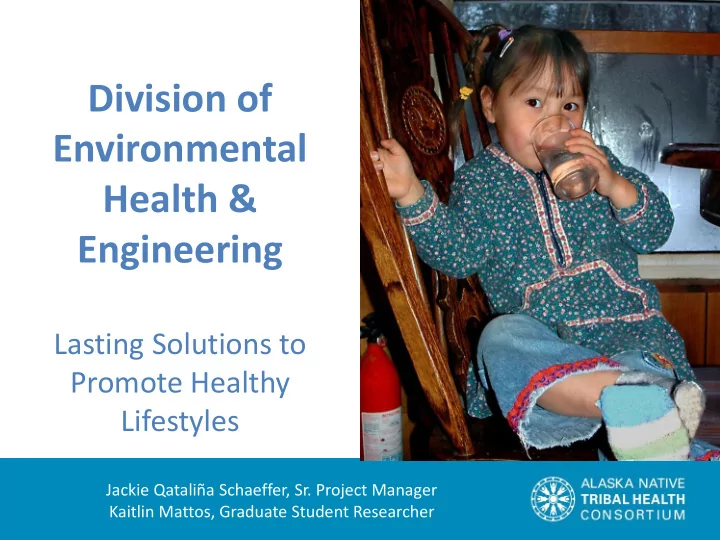
Division of Environmental Health & Engineering
Lasting Solutions to Promote Healthy Lifestyles
Jackie Qataliña Schaeffer, Sr. Project Manager Kaitlin Mattos, Graduate Student Researcher
Environmental Health & Engineering Lasting Solutions to - - PowerPoint PPT Presentation
Division of Environmental Health & Engineering Lasting Solutions to Promote Healthy Lifestyles Jackie Qatalia Schaeffer, Sr. Project Manager Kaitlin Mattos, Graduate Student Researcher Innovative Design, Research and Development
Jackie Qataliña Schaeffer, Sr. Project Manager Kaitlin Mattos, Graduate Student Researcher
Honey Bucket Outhouse P.A.S.S. unit Flush/Haul System Piped
Levels of sanitation service in rural Alaska
Strategy to Eligibility Improved Sanitation Improved Quality of Life
59% 17% 11% 7% 6%
Piped-105 Unserved-31 Wells/Septic-20 Mixed-13 Haul-11
Type of Service - # of communities
infrastructure
region studied
contaminated hands, coughs and sneezes
May 2015 Launch of R&D PASS 1.0 project in Kivalina August 2015 Installations Completed in 9 homes Sep/Dec/Feb 2015/16 1/3/6-month follow-up interviews with homeowners 2016 – 2017 Design modifications completed to PASS 2.0 New seepage pit design, New toilet design June 2017 Launch of R&D PASS in Chalkyitsik, Alatna, Allakaket August 2017 Upgrade to PASS 2.0 in 2 homes in Kivalina November 2017 Installations Completed in 2 homes in Chalkyitsik January 2018 Installations Completed in 3 homes in Alatna January 2018 Installations Completed in 2 homes in Allakaket January 2018 Installation Completed in 1 home in Oscarville August 2018 Upgrades to PASS 2.0 in 6 homes in Kivalina September 2018 Installation of 2 homes in Allakaket to be completed January 2019 R&D complete, Manufacturing/Deployment Phase begins Summer 2019/20 Installation of 45 PASS 2.0 units in Kivalina Installation of units in Mertarvik
NO MORE WASH BASIN!
waste, reduces odors, and ventilates the home – creating better air circulation throughout the home.
is disposed of into a seepage pit and dried solids are disposed of in the landfill. This toilet provides the option to revert to a containerized system if the drainage system freezes in the cold winter months. NO MORE HONEY BUCKET!
chlorination for point-of-use treatment to ensure the water is safe to drink despite its condition upon entering the system.
5.INTEGRATED VENTILATION
drainage pit
retrofitting to current housing infrastructure could require extensive remodels
Opportunities:
water on demand, shower
infrastructure
Modular Water Treatment Plant Modular Laundromat/Washeteria
Materials ONLY: Seepage Pit $600.00 Diverting Toilet $1,926.00 Ventilation $500.00 Water Treatment System & Tank $5,567.00 Rain Catchment System $500.00 Sink, Faucet, & Misc. Plumbing fittings and valves $1,000.00 $10,093.00 TOTAL Variable Costs: Archeological Remodeling Installation Logistics and transportation Design & Engineering (if needed)
Northwest Arctic: Kivalina Interior: Chalkyitsik, Allakaket, Alatna YK Delta: Oscarville, Mertarvik
Kotzebue Bethel Oscarville Fairbanks Allakaket Alatna Chalkyitsik Kivalina
Mertarvik
Northwest Arctic: Kivalina Interior: Chalkyitsik, Allakaket, Alatna YK Delta: Oscarville Elder, Allakaket Elder Home, Allakaket Seepage Pit, Chalkyitsik
Chalkyitsik Home
Complete Install Bath remodel Elder + 3 grandkids
Oscarville Home
Complete Install New Construction 2 Adults, 5 children Design Boards Finished Kitchen
Research Questions 1) How is water used inside and outside of the home? 2) How is waste managed inside and outside of the home? 3) Have the PASS units improved overall health and well-being? 4) How have the PASS units affected household water access, sources, and uses? 5) Does the water component of the PASS units fit into existing community values, traditional knowledge, and practices?
Village Year 1 Control Households Year 1 pre-PASS Year 2 Control Year 2 post-PASS Kivalina 11 22 11 22 Newtok 9 17 9 Mertarvik 17
Sustainability Assessment
Alaska Native Tribal Health Consortium Division of Environmental Health and Engineering 4500 Diplomacy Drive, Suite 454 Anchorage, Alaska 99508 (907) 729-1900 Email: Jackie Qataliña Schaeffer: jdschaeffer@anthc.org