
SLIDE 1
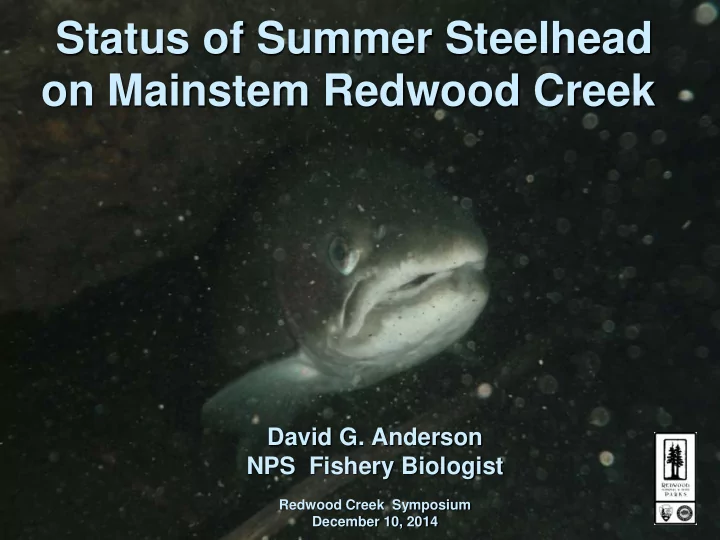
Status of Summer Steelhead
- n Mainstem Redwood Creek
David G. Anderson NPS Fishery Biologist
Redwood Creek Symposium December 10, 2014
on Mainstem Redwood Creek David G. Anderson NPS Fishery Biologist - - PowerPoint PPT Presentation
Status of Summer Steelhead on Mainstem Redwood Creek David G. Anderson NPS Fishery Biologist Redwood Creek Symposium December 10, 2014 Redwood Creek Watershed Redwood Creek Estuary Redwood Creek Summer Steelhead 1968 Fishing Map
David G. Anderson NPS Fishery Biologist
Redwood Creek Symposium December 10, 2014
Redwood Creek Watershed
Redwood Creek Estuary
1968 Fishing Map
not runbacks
Based on summer ovary to total weight ratio
(Oncorhynchus mykiss)
pools associated with cooler tributary inflow
Boulders Woody Debris
Continuing to the present (2014) 34 years
Lacks Creek to Downstream of
Hayes Creek
RNP and Green Diamond
36% of mainstem Redwood Cr
Last week of July First week of August
Mask and Snorkel 5/4 Surfsuits w/Hood Gloves Wading Boots Dive Weights Dry Bags
1990s 2010s
GIS MAPS
Red Ticks - 50 meter intervals for river kilometer UTM Grid – 100 meters GPS – sometimes spotty coverage, and not waterproof
Streamside Grow Things to be aware of : Natural and Human Slips, Trips, & Falls Entanglement Giardia Poison Oak Hypothermia Safety Plan Radios Communication Dive Buddy Awareness
Redwood Creek
‘Rocky Gorge’ area
and above
Lower river
Chinook Steelhead Coho
Threespine Stickleback
Schools of Suckers Sockeye Salmon Cutthroat Trout
redds
Rough-skinned Newt Western Toad Tadpoles
Beaver Scat
Long-lived
Since 1992
5 Dead Summer Steelhead Observed
Mean 17.8°C ≥ 18°C 35% Mean 19.96°C ≥ 18°C 94%
corresponding Redwood Creek temperature measured at the same time.
than eastside tributaries, a pattern repeated in all past surveys
13.0°C Westside 13.6°C Eastside
Drought – Is Low Flow Affecting Summer Steelhead Numbers Observed?
Orick Annual Mean Daily Flow
0.05
SALMON AND STEELHEAD LISTED UNDER THE ENDANGERED SPECIES ACT: SOUTHWEST
least two of the remaining summer-run populations in the DPS, Redwood Creek and Mattole River. Although surveys within these watersheds do not typically encompass all available over-summering habitats, the chronically low numbers seen during surveys in these rivers suggest that both populations are likely at high risk of extinction.”
Questions?