
The Effect of Colouring on Student Stress Levels
TRO Conference, 2017 April Powell, Kaitlin Lindsay and Katlyn Alcorn
Study Purpose
The purpose of this quasi-experimental study is to compare pre- and post-intervention stress assessments in the experimental and control groups to determine the effect of colouring on self-reported stress levels in undergraduate students, aged 18-21, at Brock University who are living away from home.
Why Treat Stress with Colouring?
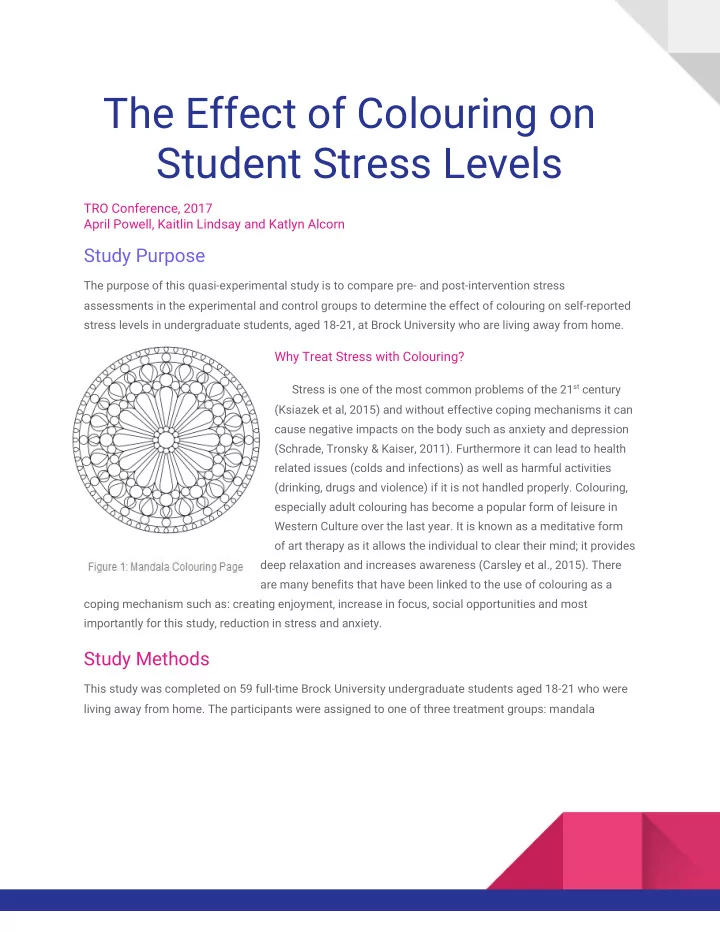
Stress is one of the most common problems of the 21st century (Ksiazek et al, 2015) and without effective coping mechanisms it can cause negative impacts on the body such as anxiety and depression (Schrade, Tronsky & Kaiser, 2011). Furthermore it can lead to health related issues (colds and infections) as well as harmful activities (drinking, drugs and violence) if it is not handled properly. Colouring, especially adult colouring has become a popular form of leisure in Western Culture over the last year. It is known as a meditative form
- f art therapy as it allows the individual to clear their mind; it provides
deep relaxation and increases awareness (Carsley et al., 2015). There are many benefits that have been linked to the use of colouring as a coping mechanism such as: creating enjoyment, increase in focus, social opportunities and most importantly for this study, reduction in stress and anxiety.
Study Methods
This study was completed on 59 full-time Brock University undergraduate students aged 18-21 who were living away from home. The participants were assigned to one of three treatment groups: mandala