
SLIDE 1
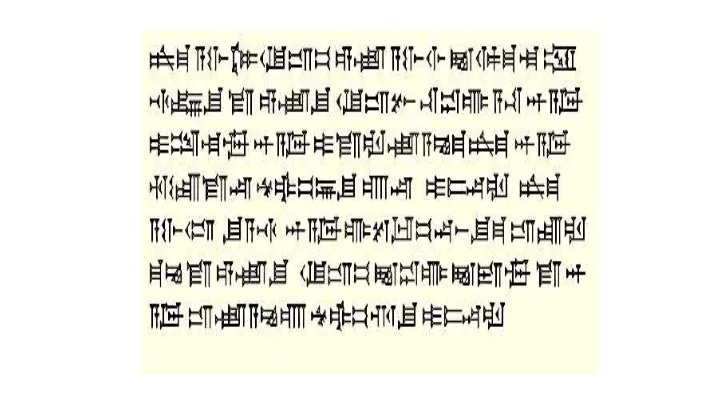
The Universal Declaration of Human Rights written in the ancient - - PowerPoint PPT Presentation
The Universal Declaration of Human Rights written in the ancient Akkadian cuneiform script. Instruction and Classroom oom M Managemen ent for Adults s wi with No or or Limited E d Educational al B Background February 14 and March 20, 2020
The Universal Declaration of Human Rights written in the ancient Akkadian cuneiform script.
Instruction and Classroom
Managemen ent for Adults s wi
with No or
d Educational al B Background
February 14 and March 20, 2020
Presenters
Fatima Chibane Jeantilus Gedeus Kathleen Klose
Assistant
Andrea Pizzotti
ESOL versus Low Literacy Learning
If you can row a boat, does this mean you can swim?
Does riding a horse prepare you for driving a car?
communication.*
*See Robin Lovrien’s webinar on teaching adults with low literacy.
Di Disti tinct d disci ciplines es r req equire d disti tinct m meth thods of instr truction.
Time to Warm up!
ﺔﻣطﺎﻓ
What did you find challenging?
Pre-Presentation Questions
instruction).
literacy students.
Imagine this exercise in Arabic or Akkadian!
Compare
I am a student. You are a student. He is a student. She is a student. I ___ a student. You ___ a student. He ___ a student. She ___ a student.
Stude dents wi with L Limited d Literacy N Need: d:
Th Think ab k abou
eac ach individual al s student. t.
Each ch S Student H Has a Combination o
ilitie ies.
English
speak
comprehension
Literacy
language
association
sound association in a non-Roman alphabet
understanding of sentence structure
In this workshop
centers” for differentiated instruction
classes for low-literacy students
Assessment
Initial Assessment
Step One - For assignment to ESOL or Literacy Program Step Two - For assignment to appropriate literacy class Step Three - For initial grouping within a literacy class
Ongoing Assessment
Daily assessment
Step One: Initi tial Assessment
The initial assessment of all students is done during the intake process. Students are given a simple writing assignment to describe a picture. Those who can’t are asked to copy a few sentences. Students are also asked how many years of education they completed in their home country. (Answers may not be reliable.) Based on their writing sample, handwriting and reported years of schooling, students are assigned to either the ESOL Program or the Literacy Program.
Step Two: Li Literacy Le Level Assessment
The second assessment is done by literacy teachers. READING & WRITING Students are asked to read about 6 questions and write the answers: What is your name? Where do you live? WRITING Students who can do this are then asked to write a description of a simple illustration. SPEAKING & COMPREHENSION Students are asked to talk about a colored illustration of a family or neighborhood scene and to answer some questions about themselves. READING & COMPREHENSION Students are asked to identify letters
sentences and, if they able, to read and discuss a short story.
Assignment to the Appropriate Literacy Class
Step Three: Initi tial C Classroom Assessment
At the beginning of each session, and as new students join the class (we have rolling enrollment), students are assessed a third time to determine their specific individual needs and abilities. Based on these assessments, students can be grouped according to their needs and abilities. Students may be grouped one way for speaking and other way for writing or other targeted skill development.
Ong Ongoing Assessm sment
Working with students in small groups allows us to observe and assess them on a daily basis. Based on ongoing assessment:
We utilize trained volunteers to employ a student-centered approach.
Today’s H Hands-on A Activ ivit itie ies
Literacy Level One – Gedeus Literacy Level Two Plus – Fatima
March 20th H Hands-on A Activ ivit itie ies
Remedial Writing (if applicable) – Kathleen*
As you do the following hands-on activities, think about your students’:
NEEDS ABILITIES
Literacy acy Level One One Ge Gedeu eus
the 3-step method
differentiated instruction in a multi-level class
Accessible Resources
Trays of Materials
Questi tions a s and nd Di Disc scussi ssion
Li Literacy Le Level Two-Th Three ee Fa Fatima
Scaffolding upon skills developed in the Literacy Level One class, you will experience classroom management of differentiated instruction for students at different levels.
Keep sets of hands-on practice materials in an easily accessible place.
Questi tions a s and nd Di Disc scussi ssion
Did id w we c cover your w wis ish lis list?
specifically Arabic speakers
know how to work well with partners.
Students with No Prior Education or Literacy
What did you learn about this today?
Multilevel Classes & Differentiated Instruction
partners
What did you learn about this today?
Initial and Ongoing Assessment
What did you learn about this today?
New Activities, Methods and Strategies for:
What did you learn about this today?
Other er Wishes es
Did you get what you were looking for?
Your Assignment I t Is:
1. Create simple profiles of each student’s needs and abilities. 2. Using these profiles, identify potential ways to group your students in order to target the specific needs of every student. 3. Examine your materials: do they match your students’ needs and abilities? 4. Try the 3-step method with one group of students to introduce, for example:
Po Post-Pres esen entation
Ques estions
instruction).
literacy students.
And Now Y You Will ill . . . . .
Fill out your Post-Presentation Questions. Fill out the workshop evaluation form. Receive our answers to the Post-Presentation Questions.
And we will see you on March 20th.