
SLIDE 1
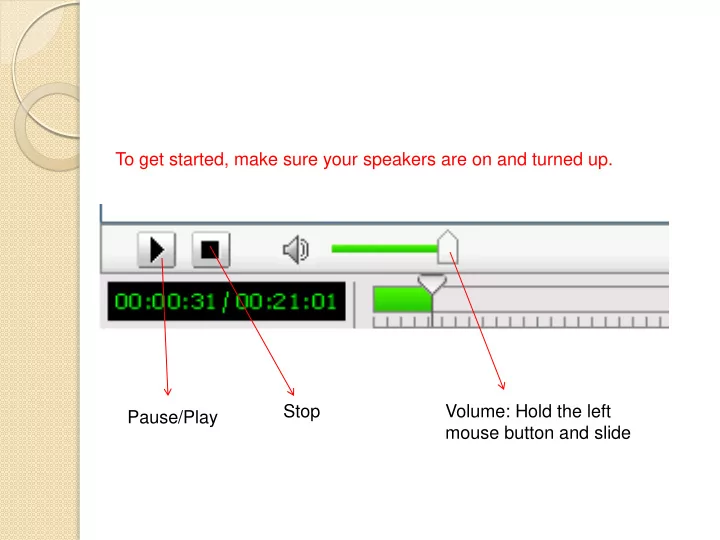
To get started, make sure your speakers are on and turned up. Pause/Play Stop Volume: Hold the left mouse button and slide
To get started, make sure your speakers are on and turned up. Stop - - PowerPoint PPT Presentation
To get started, make sure your speakers are on and turned up. Stop Volume: Hold the left Pause/Play mouse button and slide Civil Rights Compliance Child Nutrition Programs This institution is an equal opportunity provider Sponsors receiving
To get started, make sure your speakers are on and turned up. Pause/Play Stop Volume: Hold the left mouse button and slide
Child Nutrition Programs
This institution is an equal opportunity provider
Food and Nutrition Service (FNS) 113-1 regulations cover these programs: National School Lunch, Breakfast and Special Milk Programs Summer Food Program Food Distribution Program Child Care Food Program
Sponsors receiving USDA funds must follow civil rights regulations and policy:
Civil Rights TRAINING –CN Programs
Civil Rights Regulations direct sponsors on the proper procedures to follow so that benefits of Child Nutrition Programs are made available to all eligible persons in a non- discriminatory manner.
All sponsors receiving Federal $$ must implement Civil Rights
requirements to be eligible for all Child Nutrition Programs.
Food and Nutrition Services (FNS) Instruction 113 is the federal
regulation governing Civil Rights in the Child Nutrition Programs.
Purpose for Civil Right Regulations
Civil Rights TRAINING –CN Programs
What are Civil Rights? “The nonpolitical rights of a citizen; the rights of personal liberty guaranteed to U.S. citizens by the 13th and 14th Amendments to the U.S. Constitution and the acts of Congress.”
Civil Rights TRAINING –CN Programs
What is Discrimination?
The act of distinguishing one person or group
by neglect, or by the effect of actions, or lack
Civil Rights TRAINING –CN Programs
All sponsors and their sites must display in a prominent place the “And Justice For All”, nondiscrimination poster. Inform parents or guardians as well as local minority and grassroots organizations about the availability of benefits and services and the requirements for eligibility and benefits.
Examples: Free/reduce priced meal applications
Parent letter for each enrolled child
Public Notification
Civil Rights TRAINING –CN Programs
Long Nondiscrimination Statement
Civil Rights TRAINING –CN Programs
Short Nondiscrimination Statement
mentioning USDA if the document is 1 page or less in length.
nondiscrimination statement.
Civil Rights TRAINING –CN Programs
The non-discrimination statement must be included in informational materials:
Enrollment forms Menus Employee handbooks Newsletters Brochures Parent handbooks Print or broadcast ads Flyers Websites
A nondiscrimination statement is not required to be imprinted on items such as cups, buttons, magnets, and pens that identify the program, when the size or configuration makes it impractical.
Non-Discrimination Statement
Civil Rights TRAINING –CN Programs
Racial/Ethnic Data Collection
Sites need to establish a system to collect racial and ethnic data. Data must be collected on an annual basis. This data must be kept for three years plus the current year in a secure and confidential manner.
Civil Rights TRAINING –CN Programs
Collection of Racial and Ethnic Data
Sponsor collects data from Free/ Reduced Priced Applications, or staff may make a visual identification of participants’ category. For schools, this data is typically collected at the time of student enrollment or by other student data systems. Civil Right’s website - http://www.doe.in.gov/student- services/nutrition/scn-civil-rights- requirements
Civil Rights TRAINING –CN Programs
Racial Ethnic Annual Data Collection Form
CACFP Sponsors
Civil Rights TRAINING –CN Programs
Racial Ethnic Annual Data Collection Form
SFSP Sponsors
Civil Rights TRAINING –CN Programs
Hispanic or Latino are persons of Cuban, Mexican, Puerto Rican, South, or Central American, or other Spanish culture, or origin regardless of race. Not Hispanic or Latino
2 Ethnic Categories
Civil Rights TRAINING –CN Programs
5 Racial Categories
Black or African American Asian American Indian & Alaska Native White Native Hawaiian or Other Pacific Islander
Civil Rights TRAINING –CN Programs
Reasonable Accommodations
Sponsors must make reasonable accommodations for persons with disabilities.
All sponsors participating in Child Nutrition Programs are required to provide FOOD SUBSTITUTIONS or MODIFICATIONS if:
disability (a disability as defined in federal regulations) that prevents the participant from eating the regularly offered foods, and…
that the participant needs. The Special Diet Statement from the physician must be kept on file at the child care facility and/or school.
Civil Rights TRAINING –CN Programs
Reasonable Accommodations cont.
Limited English Proficiency (LEP) Definition: Individuals who do not speak English as their primary language and have a limited ability to read, speak, write, or understand English.
participants information about program eligibility, benefits, services, and the procedures for filing a complaint, in English and/or in the appropriate translation to non-English speaking persons.
large print, audiotape, etc.) are required.
responsibility to take “reasonable steps” to ensure meaningful access to their programs and activities by persons with LEP.
Civil Rights TRAINING –CN Programs
Civil Rights Complaints
Allege that discrimination has occurred in violation of one
Can Be Either Written or Verbal
Civil Rights TRAINING –CN Programs
Any person alleging discrimination based on any of the protected classes has a right to file a complaint within 180 days of the date of the alleged discriminatory action.
All civil rights complaints, written or verbal, shall be accepted and forwarded to the State Agency. It is necessary that the information provided be sufficient to determine the identity of the agency or individual towards which the complaint is directed and to indicate the possibility of a violation. Anonymous complaints should be handled as any other complaints.
In the event a complainant makes the allegations verbally or through a telephone conversation and refuses or is not inclined to place such allegations in writing, the person to whom the allegations are made shall write up the elements of the complaint for the complainant.
Procedures for Filing a Civil Rights Complaint
Civil Rights TRAINING –CN Programs
Complainants may choose to directly contact the USDA with their complaint, or they may notify the sponsor of their complaint. If a complainant returns a complaint form or provides a verbal complaint, the sponsor must forward the complaint to the State Agency.
Civil Rights TRAINING –CN Programs
Civil Rights Complaint Procedure
Contact information for the complainant. The specific location and name of the entity delivering the service
The nature of the incident or action that led the complainant to feel that discrimination was a factor. The basis on which the complainant feels discrimination exists within any of the protected classes. The names, titles, and business addresses of persons who may have knowledge of the discriminatory action. The date(s) during which the alleged discriminatory actions
Components of Verbal Complaints
Civil Rights TRAINING –CN Programs
All staff who work with Child Nutrition Programs must receive training on all aspects of civil rights compliance annually. Topics: -What is Discrimination?
Retain training records of the people who received civil rights training.
Civil Rights Training
Civil Rights TRAINING –CN Programs
Prominently display the And Justice for All poster. Non-discrimination statement must be on all printed materials available to the public which mention USDA and/or Child Nutrition Program meals and snacks. Collect and maintain Racial/Ethnic Data annually. Make reasonable accommodations for persons with disabilities.
Summary: Civil Rights “Must Do List”
Civil Rights TRAINING –CN Programs
Civil Rights TRAINING –CN Programs
Require one person to take the online Civil Rights Moodle quiz annually. Train staff annually on Civil Rights and document the date the staff was trained and attendees at the training. Develop & fully implement sponsor’s CR Complaint Procedure. Make available to all staff Civil Rights complaint form and Civil Rights Log.
Summary: Civil Rights “Must Do List”
Contact Information
Sarah Kenworthy Indiana Department of Education School and Community Nutrition 115 West Washington Street South Tower, Suite 600 Indianapolis, IN 46204 Phone: 317-232-0857 Toll-free phone:1-800-537-1142 ext. 20857 Email: skenworthy@doe.in.gov SCN website: www.doe.in.gov/food
Civil Rights TRAINING –CN Programs