Welcome Cardiff, WALES, UK Hong Kong Lee Win Yin - - PDF document

welcome
SMART_READER_LITE
LIVE PREVIEW

Welcome Cardiff, WALES, UK Hong Kong Lee Win Yin - - PDF document

Motivational Interviewing Wales, England Introduction & update Aberdeen, Scotland - Fiona Spence Stephen Rollnick PhD Brisbane, Australia Kara Forde Welcome Cardiff,


slide-1
SLIDE 1

1

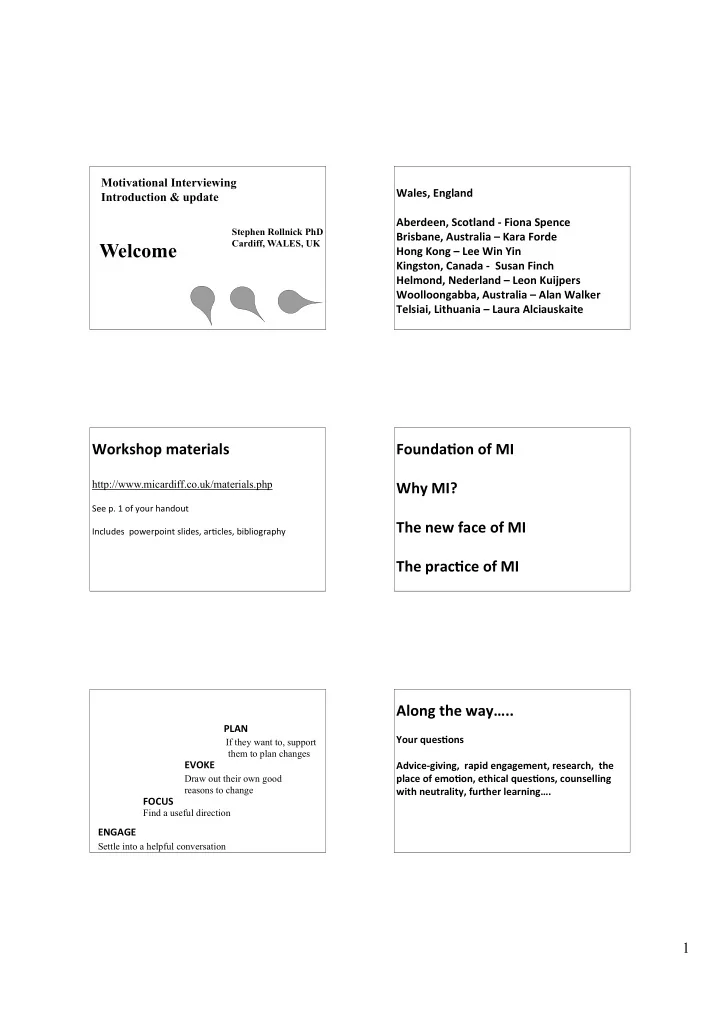
Motivational Interviewing Introduction & update

Stephen Rollnick PhD Cardiff, WALES, UK

¡

Welcome ¡

¡

Wales, ¡England ¡ ¡ Aberdeen, ¡Scotland ¡-­‑ ¡Fiona ¡Spence ¡ Brisbane, ¡Australia ¡– ¡Kara ¡Forde ¡ Hong ¡Kong ¡– ¡Lee ¡Win ¡Yin ¡ Kingston, ¡Canada ¡-­‑ ¡ ¡Susan ¡Finch ¡ Helmond, ¡Nederland ¡– ¡Leon ¡Kuijpers ¡ Woolloongabba, ¡Australia ¡– ¡Alan ¡Walker ¡ Telsiai, ¡Lithuania ¡– ¡Laura ¡Alciauskaite ¡ ¡ ¡ ¡ ¡ ¡ ¡ ¡ ¡ ¡ ¡ ¡ ¡ ¡ ¡

Workshop ¡materials ¡ ¡

http://www.micardiff.co.uk/materials.php

¡ See ¡p. ¡1 ¡of ¡your ¡handout ¡ ¡ Includes ¡ ¡powerpoint ¡slides, ¡ar8cles, ¡bibliography ¡

¡ ¡ ¡ ¡ ¡ ¡ ¡ ¡ ¡ ¡ ¡ ¡ ¡ ¡ ¡ ¡ ¡ ¡ ¡ ¡ ¡ ¡ ¡

¡

FoundaEon ¡of ¡MI ¡ ¡ Why ¡MI? ¡ ¡ The ¡new ¡face ¡of ¡MI ¡ ¡ The ¡pracEce ¡of ¡MI ¡ ¡

ENGAGE ¡ FOCUS ¡ EVOKE ¡ PLAN ¡

Settle into a helpful conversation

¡

Find a useful direction

¡

Draw out their own good reasons to change

¡

If they want to, support them to plan changes

¡

Along ¡the ¡way….. ¡

¡ Your ¡quesEons ¡ ¡ Advice-­‑giving, ¡ ¡rapid ¡engagement, ¡research, ¡ ¡the ¡ place ¡of ¡emoEon, ¡ethical ¡quesEons, ¡counselling ¡ with ¡neutrality, ¡further ¡learning…. ¡ ¡ ¡

¡

¡ ¡ ¡ ¡ ¡

slide-2
SLIDE 2

2

This ¡evening ¡ ¡ ¡ ¡Y ¡Mochyn ¡Du ¡ ¡

¡ ¡ ¡ ¡ ¡ ¡ ¡ ¡ ¡

FoundaEon ¡of ¡MI ¡ ¡ Why ¡MI? ¡ ¡ The ¡new ¡face ¡of ¡MI ¡ ¡ The ¡pracEce ¡of ¡MI ¡ ¡

Inspiration Day about MI

Stephen Rollnick, Professor of Healthcare Communication Cardiff University, WALES, UK.

Coming ¡alongside ¡….. ¡

¡

¡ ¡ ¡ ¡Direct ¡ ¡ ¡-­‑ ¡ ¡ ¡Guide ¡ ¡ ¡-­‑ ¡ ¡ ¡Follow ¡

teach ¡ ¡ ¡draw ¡out ¡ ¡ ¡ ¡ ¡ ¡ ¡ ¡ ¡ ¡listen ¡ instruct ¡ ¡ ¡ ¡ ¡ ¡ ¡ ¡ ¡ ¡ ¡ ¡encourage ¡ ¡ ¡ ¡ ¡ ¡ ¡understand ¡ lead ¡ ¡ ¡ ¡ ¡ ¡ ¡ ¡ ¡ ¡ ¡ ¡ ¡ ¡ ¡ ¡ ¡ ¡moEvate ¡ ¡ ¡ ¡ ¡ ¡ ¡ ¡ ¡ ¡go ¡along ¡with ¡ ¡ ¡ Each ¡style ¡has ¡its ¡place ¡ Guiding ¡is ¡suited ¡to ¡helping ¡someone ¡change ¡ MI ¡is ¡derived ¡from ¡a ¡guiding ¡style ¡

COMMUNICATION ¡STYLES ¡

slide-3
SLIDE 3

3

¡

  • 1. ¡Coming ¡alongside ¡….. ¡

¡

  • 2. ¡A ¡person ¡with ¡strengths ¡

¡

¡

¡

¡

Spot ¡the ¡Difference

¡ ¡ ¡ ¡ ¡ ¡ ¡ ¡ ¡ ¡

¡ The primary presenting problem is severe obesity in a 28 year-old woman who needs to lose weight before surgery. She’s also smokes, get’s little or no exercise and has an unhealthy diet. Her motivation is questionable. The primary presenting problem is severe obesity in a 28 year-old woman who needs to lose weight before surgery. She’s also smokes, get’s little or no exercise and has an unhealthy diet. Her motivation is questionable. Jose is the dependable heart of a lively and large family, and manages the household, the children and a part-time job. Her heath has not been a concern for her until this recent issue of surgery cropped up. She was told to lose weight, and it took two hours to get to this appointment with you. The primary presenting problem is severe obesity in a 28 year-old woman who needs to lose weight before surgery. She’s also smokes, get’s little or no exercise and has an unhealthy diet. Her motivation is questionable. Jose is the dependable heart of a lively and large family, and manages the household, the children and a part-time job. Her heath has not been a concern for her until this recent issue of surgery cropped up. She was told to lose weight, and it took two hours to get to this appointment with you.

Deficits Strengths

slide-4
SLIDE 4

4

Coming ¡alongside ¡….. ¡ ¡ A ¡person ¡with ¡strengths ¡ ¡ the ¡foundaEon ¡of ¡MI ¡

¡

¡

“It ¡can ¡be ¡hard ¡to ¡feel ¡compassion ¡for ¡ ¡a ¡list ¡of ¡ symptoms” ¡ ¡ ¡ “Will ¡you ¡no8ce ¡someone’s ¡strengths ¡if ¡you ¡are ¡making ¡ nega8ve ¡judgments ¡about ¡them?” ¡ ¡ ¡ ¡ ¡ ¡ ¡ ¡ ¡“I ¡treat ¡people, ¡not ¡problems” ¡

¡

¡

QUESTIONS ¡-­‑ ¡OBSERVATIONS ¡

Collaboration Acceptance Compassion

QUESTIONS ¡-­‑ ¡OBSERVATIONS ¡

Collaboration Acceptance Compassion

FoundaEon ¡of ¡MI ¡ ¡ Why ¡MI? ¡Video, ¡discussion ¡in ¡pairs, ¡mini ¡lecture, ¡

exercise, ¡ ¡

¡ The ¡new ¡face ¡of ¡MI ¡ ¡ The ¡pracEce ¡of ¡MI ¡ ¡ Calls ¡for ¡people ¡to ¡change ¡ ¡ all ¡kinds ¡of ¡things ¡ ¡ In ¡all ¡kinds ¡of ¡places ¡

h\ps://www.youtube.com/watch?v=zL1rr8te3zg ¡

slide-5
SLIDE 5

5

Coach, ¡physical ¡ac8vity ¡officer, ¡pharmacist, ¡psychiatrist, ¡ commissioner, ¡occupa8onal ¡health ¡trainer, ¡housing ¡support ¡officer, ¡ die8cian, ¡podiatrist, ¡psychologist, ¡health ¡care ¡researcher, ¡young ¡ adult ¡worker, ¡addic8on ¡doctor, ¡family ¡nurse, ¡public ¡health ¡ prac88oner, ¡health ¡care ¡research ¡assistant, ¡integrated ¡family ¡ support ¡prac88oner, ¡chronic ¡pain ¡doctor, ¡sexual ¡health ¡advisor, ¡ psychotherapist, ¡physical ¡ac8vity ¡co-­‑ordinator, ¡health ¡promo8on ¡ prac88oner, ¡PhD ¡student, ¡contact ¡tracing ¡officer, ¡voluntary ¡ addic8on ¡counsellor, ¡midwife, ¡theatre ¡recovery ¡prac88oner, ¡ addic8on ¡therapist, ¡deputy ¡head ¡teacher, ¡diabetes ¡research ¡nurse, ¡ senior ¡health ¡trainer, ¡clinical ¡veterinary ¡science ¡person, ¡mens ¡ support ¡worker ¡ ¡ ¡ ¡ ¡

¡ ¡ ¡ ¡ ¡ ¡ ¡ ¡ ¡ ¡ ¡ ¡ ¡ ¡ ¡ ¡ ¡ ¡ ¡ ¡ ¡ ¡ ¡ ¡ ¡ ¡ ¡ ¡

And ¡you? ¡ ¡

¡

Take ¡a ¡moment ¡to ¡reflect: ¡ ¡“Why ¡MI ¡for ¡me?” ¡ ¡ In ¡pairs, ¡listen ¡to ¡each ¡others’ ¡observaEons ¡ ¡ ¡ Search ¡for ¡common ¡ground ¡

¡ ¡ ¡ ¡ ¡ ¡ ¡ ¡ ¡

¡

¡ ¡ ¡

¡ ¡ ¡ ¡MoEvaEon ¡to ¡change ¡can ¡be ¡puzzling ¡

¡ ¡ ¡ ¡ ¡ ¡ ¡ ¡ ¡ ¡ ¡ ¡ ¡ ¡ ¡ ¡ ¡ ¡ ¡ ¡ ¡ ¡ ¡ ¡ ¡ ¡ ¡ ¡ ¡ ¡

¡

having had a heart attack would be enough to persuade a man to quit smoking, change his diet, exercise more, and take his medication ¡

¡You ¡would ¡think ¡that….. ¡

¡

having had a heart attack would be enough to persuade a man to quit smoking, change his diet, exercise more, and take his medication hangovers, damaged relationships, an auto crash, and memory blackouts would be enough to convince a woman to stop drinking ¡

¡You ¡would ¡think ¡that….. ¡

¡

¡

¡You ¡would ¡think ¡that….. ¡

¡

the very real threats of blindness, amputations and kidney failure from diabetes would be enough to motivate weight loss and glycemic control

slide-6
SLIDE 6

6

¡

¡You ¡would ¡think ¡that….. ¡

¡

the very real threats of blindness, amputations and kidney failure from diabetes would be enough to motivate weight loss and glycemic control time spent in the dehumanizing privations of prison would dissuade people from re-offending

¡

The ¡righEng ¡reflex ¡

¡ ¡ ¡ ¡ ¡ ¡ AN ¡EXERCISE ¡ ¡ Think ¡about ¡a ¡change ¡that ¡might ¡be ¡relevant ¡for ¡you ¡ ¡ ¡ Something ¡you ¡are ¡thinking ¡about ¡– ¡or ¡perhaps ¡should ¡be ¡ thinking ¡about. ¡Or ¡perhaps ¡someone ¡else ¡thinks ¡you ¡ should… ¡something ¡you ¡feel ¡ambivalent ¡about…. ¡ ¡

  • ­‑ related ¡to ¡health, ¡or ¡quality ¡of ¡life, ¡or ¡work…. ¡
  • ­‑ ¡and ¡something ¡you ¡are ¡fine ¡about ¡talking ¡to ¡somebody ¡

about ¡ ¡

¡ ¡ ¡ ¡ ¡ ¡ ¡ ¡ ¡ ¡ ¡ ¡ ¡ ¡

¡ ¡ ¡ ¡ ¡ ¡ ¡ ¡ ¡

¡

In ¡pairs ¡(a ¡third ¡quiet ¡observer ¡role ¡is ¡OK) ¡ ¡ Take ¡90 ¡seconds ¡to ¡explain ¡what ¡the ¡poten8al ¡change ¡is ¡ about ¡ ¡ You ¡partner-­‑helper ¡listens ¡a[en8vely, ¡but ¡does ¡not ¡speak, ¡ and ¡then: ¡ ¡

¡ ¡ ¡ ¡ ¡ ¡ ¡ ¡ ¡ ¡ ¡ ¡ ¡

¡ ¡ ¡ ¡ ¡ ¡ ¡ ¡ ¡

¡

In ¡pairs ¡(a ¡third ¡quiet ¡observer ¡role ¡is ¡OK) ¡ ¡ Take ¡90 ¡seconds ¡to ¡explain ¡what ¡the ¡poten8al ¡change ¡is ¡ about ¡ ¡ You ¡partner-­‑helper ¡listens ¡a[en8vely, ¡but ¡does ¡not ¡speak, ¡ and ¡then: ¡ ¡ ¡ Try ¡as ¡hard ¡as ¡you ¡can ¡to ¡persuade ¡him/her ¡to ¡change ¡

¡

ConfrontaEon ¡– ¡denial ¡trap: ¡a ¡video ¡illustraEon ¡ ¡

¡ ¡ ¡ ¡ ¡ cas8ng ¡pearls ¡before ¡swine ¡…… ¡ ¡

slide-7
SLIDE 7

7

¡ ¡ ¡ ¡ ¡ ¡ ¡ ¡RighEng ¡reflex

¡ ¡ ¡ ¡ ¡ ¡ ¡ ¡ ¡ ¡ ¡ ¡ ¡ ¡ ¡ ¡ ¡ ¡ ¡ ¡ ¡Ambivalence ¡ ¡ ¡

¡ ¡ ¡

¡

ConfrontaEonal ¡style ¡ ¡ ¡(Direct ¡persuasion) ¡ Evokes ¡sustain ¡talk ¡(denial) ¡

¡ ¡ ¡ ¡ ¡ ¡ ¡ ¡ ¡ ¡ ¡ ¡ ¡ ¡ ¡ ¡Listening ¡

¡ ¡ ¡ ¡ ¡Ambivalence ¡ ¡ ¡ ¡ ¡ ¡ ¡ ¡ ¡ ¡ ¡ ¡ ¡ ¡ ¡ ¡

¡ ¡ ¡

¡

Empathic ¡style ¡ Evokes ¡change ¡talk ¡(moEvaEon) ¡

¡ ¡ ¡ ¡ ¡ ¡ ¡ ¡ ¡ ¡ ¡ ¡ ¡Ambivalence ¡ ¡ ¡ ¡ ¡ ¡ ¡

Sustain ¡talk ¡ ¡ ¡ ¡ ¡ ¡ ¡ ¡ ¡ ¡Change ¡talk ¡ ¡

“I’m not an alcoholic” “Its not that bad..” “Yes but, I need my drink…” “I’m exhausted when I wake up and that’s no good” “Its bad …” “I must make a change”

¡

¡ An ¡accidental ¡meeEng ¡with ¡William ¡Miller ¡

¡ ¡ ¡ ¡ ¡ ¡ ¡ ¡ ¡ ¡ ¡ ¡ ¡ ¡ ¡ ¡ ¡ ¡ ¡ ¡ ¡ ¡ ¡ ¡ ¡ ¡ ¡ ¡ ¡ ¡

¡

CONFRONTATION “You have a problem..”

“Its not that bad..” Your motivation is not high enough “Yes but, I need my drink…” DENIAL You are an alcoholic; denial is part of your illness … “I’m not an alcoholic”

EMPATHIC STYLE

“How do you see things…” “Its bad, but I need my drink” “You're not happy about this” “I’m exhausted when I wake up and that’s no good” MOTIVATION “you want things to change” “I must make a change”

slide-8
SLIDE 8

8

¡

We ¡noEced ¡that: ¡ ¡ Acceptance ¡of ¡a ¡person ¡and ¡curiosity ¡about ¡ moEvaEon ¡were ¡helpful ¡ ¡ They ¡felt ¡safe ¡enough ¡to ¡face ¡change ¡ ¡

¡ ¡ ¡ ¡ ¡ ¡ ¡ ¡ ¡ ¡ ¡ ¡ ¡ ¡ ¡ ¡ ¡ ¡ ¡ ¡ ¡

¡ ¡ ¡ ¡ ¡ ¡ ¡ ¡

People are generally better persuaded by the reasons which they have themselves discovered, than by those which have come into the mind of others.”

Blaise Pascal, Pensées, (1670)

¡

A taste of MI

45

AN ¡EXERCISE ¡ ¡ Think ¡about ¡a ¡change ¡that ¡might ¡be ¡relevant ¡for ¡you ¡ ¡ ¡ Something ¡you ¡are ¡thinking ¡about ¡– ¡or ¡perhaps ¡should ¡be ¡ thinking ¡about. ¡Or ¡perhaps ¡someone ¡else ¡thinks ¡you ¡ should…something ¡you ¡feel ¡ambivalent ¡about…. ¡ ¡

  • ­‑ related ¡to ¡health, ¡or ¡to ¡quality ¡of ¡life ¡
  • ­‑ ¡and ¡something ¡you ¡are ¡fine ¡about ¡talking ¡to ¡somebody ¡

about ¡ ¡

¡ ¡ ¡ ¡ ¡ ¡ ¡ ¡ ¡ ¡ ¡ ¡ ¡ ¡

¡ ¡ ¡ ¡ ¡ ¡ ¡ ¡ ¡

¡

In ¡pairs ¡(a ¡third ¡quiet ¡observer ¡role ¡is ¡OK) ¡ ¡ Take ¡90 ¡seconds ¡to ¡explain ¡what ¡the ¡poten8al ¡change ¡is ¡ about ¡ ¡ You ¡partner-­‑helper ¡does ¡not ¡speak, ¡and ¡then: ¡ ¡

Listener

Ask these two open questions and listen for a while: “Why would you want to make this change?”

“How might you go about it, in order to succeed?”

Give a short summary of the speaker’s motivations for change ¨ Then ask:

¨ “So what do you think you’ll do?”….. and just listen with interest

Practice 2

48

slide-9
SLIDE 9

9

Normal Human Reactions to the Righting Reflex

Invalidated Resist Withdraw

Not respected Arguing Disengaged Not understood Discounting Disliking Not heard Defensive Inattentive Angry Oppositional Passive Ashamed Denying Avoid/leave Uncomfortable Delaying Not return Unable to change Justifying

49

Normal Human Responses to a Listen/Evoke/Empathic Style

Affirmed Accept Approach Understood Open Talk more Accepted Undefensive Liking Respected Interested Engaged Heard Cooperative Activated Comfortable/safe Listening Come back Empowered Hopeful Able to change

50

What kind of reaction do you want?

Open Cooperative Listening Engaged Active Empowered Hopeful Liking Defensive Oppositional Arguing Disengaged Passive Powerless Unable to change Disliking

51

You don’t have to make change happen You can’t You don’t have to come up with all the answers You probably don’t have the best ones You’re not wrestling with people Its more like a dance

¡ ¡ ¡Your ¡role ¡

FoundaEon ¡of ¡MI ¡ ¡ Why ¡MI? ¡ ¡ The ¡new ¡face ¡of ¡MI ¡Mini ¡lecture, ¡examine ¡a ¡

transcript ¡ ¡

¡ The ¡pracEce ¡of ¡MI ¡ ¡

¡ ¡ ¡ ¡ ¡ ¡ ¡ ¡ ¡ ¡ ¡ ¡ ¡ ¡ ¡ ¡ ¡ ¡ ¡ ¡ ¡ ¡ ¡ ¡ ¡ ¡ ¡ ¡ ¡ ¡ ¡ ¡ ¡ ¡ ¡ ¡ ¡ ¡2002 ¡ ¡ ¡ ¡ ¡ ¡ ¡ ¡ ¡ ¡1991 ¡ ¡ ¡ ¡ ¡ ¡ ¡ ¡ ¡ ¡ ¡ ¡ ¡ ¡ ¡ ¡ ¡ ¡ ¡ ¡ ¡ ¡ ¡ ¡ ¡ ¡ ¡ ¡ ¡ ¡ ¡ ¡ ¡ ¡ ¡ ¡ ¡ ¡ ¡ ¡ ¡ ¡ ¡ ¡ ¡ ¡ ¡ ¡ ¡ ¡ ¡ ¡2012 ¡

Three ¡ ¡ediEons ¡of ¡core ¡text ¡

Miller ¡W ¡& ¡Rollnick ¡S ¡ ¡Mo8va8onal ¡Interviewing: ¡ Helping ¡People ¡Change, ¡Guilford ¡Prtess, ¡2012 ¡

Thanks ¡to ¡Jeff ¡Allison ¡for ¡image ¡design ¡

slide-10
SLIDE 10

10

A new face for MI

A new framework (engage, focus, evoke & plan) ¡ ¡ ¡

A new face for MI

A new framework (engage, focus, evoke & plan) A sharper focus on the language of change ¡ ¡ ¡

A new face for MI

A new framework (engage, focus, evoke & plan) A sharper focus on the language of change Compassion ¡ ¡ ¡

True ¡compassion ¡is ¡about ¡not ¡bruising ¡the ¡other ¡persons ¡self ¡respect. ¡ ¡ ¡ ¡ ¡ ¡ ¡ ¡ ¡ ¡ ¡ ¡ ¡ ¡ ¡– ¡Naoki ¡Higashida ¡

A new face for MI

A new framework (engage, focus, evoke & plan) A sharper focus on the language of change Compassion Integration of MI into planning about change ¡ ¡

A new face for MI

A new framework (engage, focus, evoke & plan) A sharper focus on the language of change Compassion Integration of MI into planning about change Any change, not just in behavior (e.g. forgiveness; attitude)

slide-11
SLIDE 11

11

A brief consultation – BMJ video What do you notice?

The interview: Style, relationship, pace Steve: emotional state, aspirations, skills Patient: emotional state, language Which of the four processes did you see?

You walk into an elevator “What exactly is this MI?”

¡ ¡ ¡ The opposite of persuasion when you want to help someone to face change MI is about arranging a supportive conversations in a way that people talk themselves into change, based on what they really want “Motivational interviewing is a collaborative conversation style for strengthening a person’s own motivation and commitment to change” (layperson’s definition in MI3)

¡ ¡ ¡Steve’s ¡elevator ¡talk ¡

A form of counseling in which the person, not you, says why and how they might change. You are curious and patient while they paint a new picture….

¡Steve’s ¡elevator ¡talk ¡ QUESTIONS ¡-­‑ ¡OBSERVATIONS ¡

Collaboration Acceptance Compassion

QUESTIONS ¡-­‑ ¡OBSERVATIONS ¡

Collaboration Acceptance Evocation Compassion

slide-12
SLIDE 12

12

¡

EVOKE: ¡ ¡ ¡

¡ ¡ ¡to ¡elicit, ¡summon ¡ ¡ ¡bring ¡out ¡a ¡new ¡perspecEve….. ¡ ¡ ¡to ¡create ¡anew ¡through ¡imaginaEon ¡ ¡ ¡ ¡ ¡ Settle into a helpful conversation

¡

Settle into a helpful conversation

¡

Find a useful direction

¡

Settle into a helpful conversation

¡

Find a useful direction

¡

Draw out their own good reasons to change

¡

Settle into a helpful conversation

¡

Find a useful direction

¡

Draw out their own good reasons to change

¡

If they want to, support them to plan changes

¡ ENGAGE ¡

Settle into a helpful conversation

¡

Find a useful direction

¡

Draw out their own good reasons to change

¡

If they want to, support them to plan changes

¡

slide-13
SLIDE 13

13

ENGAGE ¡ FOCUS ¡

Settle into a helpful conversation

¡

Find a useful direction

¡

Draw out their own good reasons to change

¡

If they want to, support them to plan changes

¡ ENGAGE ¡ FOCUS ¡ EVOKE ¡

Settle into a helpful conversation

¡

Find a useful direction

¡

Draw out their own good reasons to change

¡

If they want to, support them to plan changes

¡ ENGAGE ¡ FOCUS ¡ EVOKE ¡ PLAN ¡

Settle into a helpful conversation

¡

Find a useful direction

¡

Draw out their own good reasons to change

¡

If they want to, support them to plan changes

¡ ENGAGE ¡ FOCUS ¡ EVOKE ¡ PLAN ¡

Settle into a helpful conversation

¡

Find a useful direction

¡

Draw out their own good reasons to change

¡

If they want to, support them to plan changes

¡

“Shall ¡we ¡work ¡together?” ¡ “what ¡change?” ¡ “Why?” ¡ “How?” ¡

Can it be MI without . . .

Engaging? Focusing? Evoking? Planning? No ¡ No ¡ No ¡ Yes ¡

¡

It becomes MI when . . .

  • 1. The style is empathic – and remains so Engage

AND

  • 2. There is a target for change Focus

AND

  • 3. You are evoking the person’s own motivations Evoke
slide-14
SLIDE 14

14

Goal Definition Core skills Noticing and responding to change talk

¡ ¡ ¡ Quietly ¡clarify ¡ambivalence ¡and ¡elicit ¡change ¡talk ¡

¡ DefiniEon ¡

….a ¡collabora8ve ¡conversa8on ¡style ¡for ¡strengthening ¡a ¡ person’s ¡own ¡mo8va8on ¡and ¡commitment ¡to ¡change ¡ ¡ Purposeful, ¡focused ¡and ¡evoca1ve ¡……. ¡ Language ¡about ¡change ¡…….. ¡

Goal ¡

OARS: Open questions Affirmation Reflection Summary Core Skills

¡

Helen ¡is ¡leaning ¡against ¡the ¡school ¡gates, ¡panEng ¡

¡ A ¡teacher ¡no8ces ¡her. ¡She ¡says ¡she ¡cant ¡breathe. ¡She ¡seems ¡ ¡wobbly, ¡possibly ¡drunk? ¡ ¡ ¡ ¡ Her ¡husband ¡leaves ¡the ¡house ¡early, ¡and ¡says ¡she ¡should ¡pull ¡ ¡her ¡socks ¡up. ¡ ¡The ¡two ¡ ¡boys ¡are ¡very ¡hard ¡work. ¡ ¡ ¡ ¡ Yesterday ¡one ¡of ¡them ¡very ¡nearly ¡ ¡got ¡run ¡over ¡on ¡the ¡way ¡to ¡ ¡school. ¡ ¡He’s ¡overac8ve ¡and ¡ ¡they ¡fight ¡all ¡the ¡8me. ¡A ¡secret ¡drink ¡ ¡is ¡about ¡the ¡only ¡way ¡she ¡feels ¡she ¡can ¡cope ¡with ¡the ¡ ¡panic ¡and ¡get ¡them ¡to ¡school. ¡ ¡ The ¡teacher ¡makes ¡a ¡tel. ¡call, ¡and ¡she ¡walks ¡into ¡your ¡room... ¡ (This ¡could ¡be ¡in ¡just ¡about ¡any ¡sefng) ¡ ¡

Helen ¡will ¡hear ¡some ¡loud ¡and ¡ojen ¡conflicEng ¡voices ¡ ¡for ¡and ¡against ¡change ¡in ¡her ¡mind ¡ ¡

Leave ¡me ¡alone ¡– ¡help ¡me ¡ ¡ I’ll ¡do ¡this ¡on ¡my ¡own ¡– ¡I ¡wish ¡my ¡husband ¡was ¡more ¡suppor8ve ¡ ¡ If ¡I ¡go ¡out ¡I’ll ¡panic ¡– ¡I’ll ¡get ¡on ¡top ¡of ¡this ¡ ¡ A ¡drink ¡will ¡help ¡me ¡– ¡it ¡will ¡make ¡ma[ers ¡worse ¡ …… ¡ …… ¡ …… ¡ …… ¡etc ¡ ¡ ¡ ¡ ¡ ¡

“... ¡He ¡makes ¡me ¡cross. ¡ ¡He ¡leaves ¡the ¡house ¡and ¡says ¡ ‘you’ll ¡be ¡OK’ ¡and ¡its ¡easy ¡for ¡him. ¡I ¡don’t ¡like ¡being ¡like ¡ this ¡but ¡what ¡can ¡I ¡do? ¡I ¡feel ¡I ¡am ¡about ¡to ¡have ¡a ¡heart ¡ a[ack ¡and ¡I ¡go ¡all ¡dizzy, ¡and ¡then……” ¡ ¡

Change ¡talk ¡flickers ¡in ¡a ¡busy ¡conversaEon ¡

slide-15
SLIDE 15

15

“... ¡He ¡makes ¡me ¡cross. ¡ ¡He ¡leaves ¡the ¡house ¡and ¡says ¡‘you’ll ¡be ¡ OK’ ¡and ¡its ¡easy ¡for ¡him. ¡I ¡don’t ¡like ¡being ¡like ¡this ¡but ¡what ¡can ¡I ¡ do? ¡I ¡feel ¡I ¡am ¡about ¡to ¡have ¡a ¡heart ¡a[ack ¡and ¡I ¡go ¡all ¡dizzy, ¡and ¡ then……” ¡

¡

Change ¡talk ¡flickers ¡in ¡a ¡busy ¡conversaEon ¡

“... ¡He ¡makes ¡me ¡cross. ¡ ¡He ¡leaves ¡the ¡house ¡and ¡says ¡‘you’ll ¡be ¡ OK’ ¡and ¡its ¡easy ¡for ¡him. ¡I ¡don’t ¡like ¡being ¡like ¡this ¡but ¡what ¡can ¡I ¡ do? ¡I ¡feel ¡I ¡am ¡about ¡to ¡have ¡a ¡heart ¡a[ack ¡and ¡I ¡go ¡all ¡dizzy, ¡and ¡ then……” ¡

¡

Open ¡quesEon: ¡ ¡ ¡“Why ¡don’t ¡you ¡like ¡being ¡like ¡this?” ¡

  • r ¡

ReflecEon: ¡ ¡ ¡“Youre ¡not ¡happy ¡having ¡these ¡panic ¡a\acks” ¡ ¡ Then ¡more ¡change ¡talk ¡will ¡follow…. ¡ ¡

¡

Recognise, ¡then ¡highlight ¡change ¡talk…. ¡ ¡ ¡ ¡ ¡…. ¡ ¡and ¡evoke ¡more ¡

Predicts better

  • utcome

¡ Your ¡task ¡is ¡to ¡help ¡the ¡person ¡explore ¡-­‑ ¡and ¡arEculate ¡-­‑ ¡ what’s ¡in ¡their ¡own ¡true ¡best ¡interests. ¡ ¡ Speech ¡influences ¡behaviour ¡ ¡ MI ¡is ¡the ¡purposeful ¡evocaEon ¡of ¡change ¡talk ¡ ¡

Back to Helen at the school gates

An MI-consistent conversation “What do you notice?” ¡ ¡ ¡

You: ¡ ¡May ¡I ¡ask ¡you, ¡could ¡we ¡spend ¡a ¡few ¡minutes ¡talking ¡about ¡alcohol, ¡how ¡it ¡helps ¡and ¡ what ¡else ¡you’ve ¡noticed ¡about ¡it? ¡ Client: ¡ ¡well ¡as ¡I ¡said, ¡it ¡calms ¡my ¡nerves, ¡but ¡it ¡cant ¡go ¡on ¡like ¡this ¡forever ¡ You: ¡ ¡although ¡it ¡helps, ¡you’re ¡concerned ¡about ¡it ¡ Client: ¡ ¡well ¡I’m ¡not ¡an ¡alcoholic ¡you ¡know ¡but ¡I ¡cant ¡be ¡drinking ¡with ¡the ¡kids ¡around ¡ You: ¡because ¡you ¡want ¡to ¡be ¡a ¡responsible ¡mother ¡ Client: ¡ ¡yes, ¡they ¡are ¡my ¡No ¡1 ¡priority ¡ You: ¡ ¡and ¡if ¡you ¡drink ¡you ¡ ¡worry ¡you ¡might ¡neglect ¡them ¡ Client: ¡No, ¡never, ¡I ¡wont ¡neglect ¡them, ¡but ¡I ¡get ¡like ¡selCish ¡and ¡I ¡shout ¡at ¡them ¡ ¡ You: ¡ ¡and ¡that’s ¡not ¡fair ¡on ¡them ¡ Client: ¡exactly, ¡but ¡then ¡I ¡get ¡trapped ¡when ¡we ¡leave ¡for ¡school, ¡I ¡either ¡calm ¡my ¡nerves ¡ with ¡a ¡drink ¡or ¡shake ¡like ¡a ¡baby, ¡and ¡that’s ¡not ¡good ¡for ¡them ¡either, ¡to ¡see ¡me ¡like ¡that ¡ You: ¡like ¡you ¡are ¡stuck ¡in ¡a ¡corner, ¡with ¡no ¡way ¡out ¡ ¡ ¡ ¡ Client: ¡well ¡that’s ¡why ¡I’m ¡here ¡I ¡guess, ¡to ¡Cind ¡a ¡way ¡out ¡ You: ¡What ¡will ¡be ¡most ¡helpful ¡for ¡you ¡now? ¡ Client: ¡to ¡see ¡if ¡there ¡is ¡a ¡way ¡to ¡get ¡out ¡of ¡the ¡house ¡without ¡drinking ¡ You: ¡and ¡to ¡get ¡more ¡control ¡over ¡those ¡panicky ¡feelings ¡ Client: ¡yes ¡exactly ¡that’s ¡me, ¡Ive ¡got ¡to ¡do ¡it ¡differently ¡now ¡ ¡ ¡

Where is the change talk? ¡ ¡ ¡

slide-16
SLIDE 16

16

You: ¡ ¡May ¡I ¡ask ¡you, ¡could ¡we ¡spend ¡a ¡few ¡minutes ¡talking ¡about ¡alcohol, ¡how ¡it ¡helps ¡and ¡ what ¡else ¡you’ve ¡noticed ¡about ¡it? ¡ Client: ¡ ¡well ¡as ¡I ¡said, ¡it ¡calms ¡my ¡nerves, ¡but ¡it ¡cant ¡go ¡on ¡like ¡this ¡forever ¡ You: ¡ ¡although ¡it ¡helps, ¡you’re ¡concerned ¡about ¡it ¡ Client: ¡ ¡well ¡I’m ¡not ¡an ¡alcoholic ¡you ¡know ¡but ¡I ¡cant ¡be ¡drinking ¡with ¡the ¡kids ¡around ¡ You: ¡because ¡you ¡want ¡to ¡be ¡a ¡responsible ¡mother ¡ Client: ¡ ¡yes, ¡they ¡are ¡my ¡No ¡1 ¡priority ¡ You: ¡ ¡and ¡if ¡you ¡drink ¡you ¡ ¡worry ¡you ¡might ¡neglect ¡them ¡ Client: ¡No, ¡never, ¡I ¡wont ¡neglect ¡them, ¡but ¡I ¡get ¡like ¡selCish ¡and ¡I ¡shout ¡at ¡them ¡ ¡ You: ¡ ¡and ¡that’s ¡not ¡fair ¡on ¡them ¡ Client: ¡exactly, ¡but ¡then ¡I ¡get ¡trapped ¡when ¡we ¡leave ¡for ¡school, ¡I ¡either ¡calm ¡my ¡nerves ¡ with ¡a ¡drink ¡or ¡shake ¡like ¡a ¡baby, ¡and ¡that’s ¡not ¡good ¡for ¡them ¡either, ¡to ¡see ¡me ¡like ¡that ¡ You: ¡like ¡you ¡are ¡stuck ¡in ¡a ¡corner, ¡with ¡no ¡way ¡out ¡ ¡ ¡ ¡ Client: ¡well ¡that’s ¡why ¡I’m ¡here ¡I ¡guess, ¡to ¡Cind ¡a ¡way ¡out ¡ You: ¡What ¡will ¡be ¡most ¡helpful ¡for ¡you ¡now? ¡ Client: ¡to ¡see ¡if ¡there ¡is ¡a ¡way ¡to ¡get ¡out ¡of ¡the ¡house ¡without ¡drinking ¡ You: ¡and ¡to ¡get ¡more ¡control ¡over ¡those ¡panicky ¡feelings ¡ Client: ¡yes ¡exactly ¡that’s ¡me, ¡Ive ¡got ¡to ¡do ¡it ¡differently ¡now ¡ ¡ ¡

Where are the reflections? ¡ ¡ ¡

You: ¡ ¡May ¡I ¡ask ¡you, ¡could ¡we ¡spend ¡a ¡few ¡minutes ¡talking ¡about ¡alcohol, ¡how ¡it ¡helps ¡and ¡ what ¡else ¡you’ve ¡noticed ¡about ¡it? ¡ Client: ¡ ¡well ¡as ¡I ¡said, ¡it ¡calms ¡my ¡nerves, ¡but ¡it ¡cant ¡go ¡on ¡like ¡this ¡forever ¡ You: ¡ ¡although ¡it ¡helps, ¡you’re ¡concerned ¡about ¡it ¡ Client: ¡ ¡well ¡I’m ¡not ¡an ¡alcoholic ¡you ¡know ¡but ¡I ¡cant ¡be ¡drinking ¡with ¡the ¡kids ¡around ¡ You: ¡because ¡you ¡want ¡to ¡be ¡a ¡responsible ¡mother ¡ Client: ¡ ¡yes, ¡they ¡are ¡my ¡No ¡1 ¡priority ¡ You: ¡ ¡and ¡if ¡you ¡drink ¡you ¡ ¡worry ¡you ¡might ¡neglect ¡them ¡ Client: ¡No, ¡never, ¡I ¡wont ¡neglect ¡them, ¡but ¡I ¡get ¡like ¡selCish ¡and ¡I ¡shout ¡at ¡them ¡ ¡ You: ¡ ¡and ¡that’s ¡not ¡fair ¡on ¡them ¡ Client: ¡exactly, ¡but ¡then ¡I ¡get ¡trapped ¡when ¡we ¡leave ¡for ¡school, ¡I ¡either ¡calm ¡my ¡nerves ¡ with ¡a ¡drink ¡or ¡shake ¡like ¡a ¡baby, ¡and ¡that’s ¡not ¡good ¡for ¡them ¡either, ¡to ¡see ¡me ¡like ¡that ¡ You: ¡like ¡you ¡are ¡stuck ¡in ¡a ¡corner, ¡with ¡no ¡way ¡out ¡ ¡ ¡ ¡ Client: ¡well ¡that’s ¡why ¡I’m ¡here ¡I ¡guess, ¡to ¡Cind ¡a ¡way ¡out ¡ You: ¡What ¡will ¡be ¡most ¡helpful ¡for ¡you ¡now? ¡ Client: ¡to ¡see ¡if ¡there ¡is ¡a ¡way ¡to ¡get ¡out ¡of ¡the ¡house ¡without ¡drinking ¡ You: ¡and ¡to ¡get ¡more ¡control ¡over ¡those ¡panicky ¡feelings ¡ Client: ¡yes ¡exactly ¡that’s ¡me, ¡Ive ¡got ¡to ¡do ¡it ¡differently ¡now ¡ ¡ ¡

¡ ¡ We ¡have ¡inside ¡us ¡our ¡own ¡good ¡reasons ¡to ¡change, ¡and ¡ much ¡of ¡the ¡strength ¡to ¡make ¡it ¡happen ¡ ¡ ¡ ¡ ¡ ¡ ¡ ¡ ¡ ¡ ¡ We ¡have ¡inside ¡us ¡our ¡own ¡good ¡reasons ¡to ¡change, ¡and ¡ much ¡of ¡the ¡strength ¡to ¡make ¡it ¡happen ¡ ¡ ¡ Its ¡how ¡you ¡draw ¡out ¡this ¡moEvaEon ¡and ¡strength ¡ ¡ ¡ that ¡could ¡improve ¡outcomes ¡ ¡ ¡ ¡ ¡ ¡ ¡ ¡ ¡ ¡ ¡ We ¡have ¡inside ¡us ¡our ¡own ¡good ¡reasons ¡to ¡change, ¡and ¡ much ¡of ¡the ¡strength ¡to ¡make ¡it ¡happen ¡ ¡ ¡ Its ¡how ¡you ¡draw ¡out ¡this ¡moEvaEon ¡and ¡strength ¡ ¡ ¡ that ¡could ¡improve ¡outcomes ¡ ¡ ¡ MI ¡involves ¡guiding ¡the ¡person ¡towards ¡change ¡ ¡(purposefully ¡& ¡respeclully) ¡ ¡ ¡

slide-17
SLIDE 17

17

Founda8on ¡of ¡MI ¡ ¡ Origins ¡

¡ ¡

The ¡new ¡face ¡of ¡MI ¡ ¡ The ¡pracEce ¡of ¡MI ¡ ¡ The ¡pracEce ¡of ¡MI ¡ ¡

Core ¡skills ¡ ¡ ¡ ¡Lecture, ¡demo, ¡exercises, ¡video, ¡discussion ¡ ¡ Engage, ¡Focus, ¡Evoke ¡& ¡Plan ¡ ¡ ¡ ¡Lectures, ¡demo, ¡exercises, ¡video ¡and ¡more ¡ ¡ ¡ ¡ ¡ Core skills

OARS: Open questions Affirmation Reflection Summary Core Skills

¡

OARS: Open questions (O) Affirmation (a) Reflection (r) Summary (S) O, r, r, r, a, O, r,r, O, r,r,r,a, S

Meaning Words Words Meaning Three Places a Communication Can Go Wrong Speaker Listener

2 1 3

slide-18
SLIDE 18

18

Meaning Words Words Meaning The Function of Reflection Speaker Listener

2 1 3 Reflection 103

Listeners

  • Ask: Do you mean that you __________?
  • The speaker may answer only “Yes” or

“No” (no elaboration)

  • When the listeners have asked at least five

questions and you have some sense of what the speaker meant, rotate: the next person (to the speaker’s right) becomes the speaker.

105

Reflections

  • Are statements rather than questions
  • Make a guess about the client’s meaning

(rather than asking)

  • Yield more information and better

understanding

  • Often a question can be turned into a reflection

106

Listeners

  • First, think (but don’t speak) this question:

– Do you mean that you ______________?

  • Erase the words, “Do you mean that”
  • Make it a statement (inflect down at the end)
  • And you’ve got a reflection
  • It makes a guess about what the person means
  • The speaker then replies: essentially yes or no, and

elaborate a bit what you do mean

  • And now the listeners reflect the new information

Practice 2

107

When to Rotate Roles

  • When the listeners have offered at least five

reflections and have a sense that they understand what the speaker meant

  • Then the next person becomes the speaker and

you repeat the exercise

  • Go around again if needed

Practice 2

108

slide-19
SLIDE 19

19

Levels of Reflection

Simple Reflections . . .

add little or nothing to what the person has said: repeat or slight rephrase

Complex Reflections . . .

make a guess about meaning that has not been directly stated: paraphrase, metaphor, reflection of feeling, continuing the paragraph, etc.

109

Getting Moving: OARS

OPEN Questions AFFIRM REFLECT SUMMARIZE

110

¡ ¡AFFIRMATION ¡

Appreciate a strength or positive action Should be both true and genuine Express positive regard and caring Strengthens engagement Diminish defensiveness You’re a strong person, a real survivor ¡ ¡

¡ ¡AFFIRMATION ¡ ¡-­‑ ¡ ¡some ¡examples ¡

You're a strong person, a real survivor Despite those troubles, you got through And you tried to be honest And that wasn’t easy ¡ ¡

OARS: Open questions (O) Affirmation (a) Reflection (r) Summary (S)

You: ¡ ¡May ¡I ¡ask ¡you, ¡could ¡we ¡spend ¡a ¡few ¡minutes ¡talking ¡about ¡alcohol, ¡how ¡it ¡helps ¡and ¡ what ¡else ¡you’ve ¡noticed ¡about ¡it? ¡ Client: ¡ ¡well ¡as ¡I ¡said, ¡it ¡calms ¡my ¡nerves, ¡but ¡it ¡cant ¡go ¡on ¡like ¡this ¡forever ¡ You: ¡ ¡although ¡it ¡helps, ¡you’re ¡concerned ¡about ¡it ¡ Client: ¡ ¡well ¡I’m ¡not ¡an ¡alcoholic ¡you ¡know ¡but ¡I ¡cant ¡be ¡drinking ¡with ¡the ¡kids ¡around ¡ You: ¡because ¡you ¡want ¡to ¡be ¡a ¡responsible ¡mother ¡ Client: ¡ ¡yes, ¡they ¡are ¡my ¡No ¡1 ¡priority ¡ You: ¡ ¡and ¡if ¡you ¡drink ¡you ¡ ¡worry ¡you ¡might ¡neglect ¡them ¡ Client: ¡No, ¡never, ¡I ¡wont ¡neglect ¡them, ¡but ¡I ¡get ¡like ¡selCish ¡and ¡I ¡shout ¡at ¡them ¡ ¡ You: ¡ ¡and ¡that’s ¡not ¡fair ¡on ¡them ¡ Client: ¡exactly, ¡but ¡then ¡I ¡get ¡trapped ¡when ¡we ¡leave ¡for ¡school, ¡I ¡either ¡calm ¡my ¡nerves ¡ with ¡a ¡drink ¡or ¡shake ¡like ¡a ¡baby, ¡and ¡that’s ¡not ¡good ¡for ¡them ¡either, ¡to ¡see ¡me ¡like ¡that ¡ You: ¡like ¡you ¡are ¡stuck ¡in ¡a ¡corner, ¡with ¡no ¡way ¡out ¡ ¡ ¡ ¡ Client: ¡well ¡that’s ¡why ¡I’m ¡here ¡I ¡guess, ¡to ¡Cind ¡a ¡way ¡out ¡ You: ¡What ¡will ¡be ¡most ¡helpful ¡for ¡you ¡now? ¡ Client: ¡to ¡see ¡if ¡there ¡is ¡a ¡way ¡to ¡get ¡out ¡of ¡the ¡house ¡without ¡drinking ¡ You: ¡and ¡to ¡get ¡more ¡control ¡over ¡those ¡panicky ¡feelings ¡ Client: ¡yes ¡exactly ¡that’s ¡me, ¡Ive ¡got ¡to ¡do ¡it ¡differently ¡now ¡ ¡ ¡

slide-20
SLIDE 20

20

¡ ¡REFLECTION ¡(or ¡reflecEve ¡listening) ¡

Statements ¡ ¡ Curious ¡hypotheses ¡ ¡ ¡ Voice ¡intonaEon ¡down ¡at ¡end ¡ ¡

¡ ¡REFLECTION ¡(or ¡reflecEve ¡listening) ¡

Statements ¡ ¡ Curious ¡hypotheses ¡ ¡ ¡ Voice ¡intonaEon ¡down ¡at ¡end ¡ ¡ “Its…” ¡ ¡“Its ¡like….” ¡“You….” ¡ ¡“You ¡feel…” ¡ ¡“and….” ¡ “and ¡you….” ¡ ¡

¡ ¡REFLECTION ¡(or ¡reflecEve ¡listening) ¡

Statements ¡ ¡ Curious ¡hypotheses ¡ ¡ ¡ Voice ¡intonaEon ¡down ¡at ¡end ¡ ¡ “Its…” ¡ ¡“Its ¡like….” ¡“You….” ¡ ¡“You ¡feel…” ¡ ¡“and….” ¡ “and ¡you….” ¡ ¡ You ¡try ¡to ¡capture ¡the ¡essence ¡ ¡ Used ¡purposefully ¡to ¡evoke ¡change ¡talk ¡

¡ ¡SUMMARIZE ¡ ¡

“…let me summarize what you’ve told me so far and see if I’ve missed something important. You came in because you are concerned about your panic attacks and drinking, and it scared you . . . . . . . . .” Engagement ++ Help with transition Keeps you focused!

¡ ¡EXERCISE

¡

“My ¡favourite ¡place” ¡ Speaker:

My favorite place is….. I like it because … (then give listener space to talk)

Listener:

Open question to start, and a few in between As many reflections as you can End with a careful summary after 2-3 minutes

¡ ¡

VIDEO ¡DEMONSTRATION ¡

¡ Tough ¡challenge ¡ ¡ A ¡soj ¡style ¡& ¡MI ¡helps ¡the ¡client ¡face ¡it ¡ ¡

¡

slide-21
SLIDE 21

21

The ¡pracEce ¡of ¡MI ¡ ¡

Core ¡skills ¡ ¡ ¡ ¡Lecture, ¡demo, ¡exercises, ¡video, ¡discussion ¡ ¡ Engage, ¡Focus, ¡Evoke ¡& ¡Plan ¡ ¡ ¡ ¡Lectures, ¡demo, ¡exercises, ¡video ¡and ¡more ¡ ¡ ¡ ¡ ¡ ENGAGE ¡ FOCUS ¡ EVOKE ¡ PLAN ¡

“Shall ¡we ¡work ¡together?” ¡ “what ¡change?” ¡ “Why?” ¡ “How?” ¡

¡

ENGAGE

You’re a strong person, a real survivor ¡ ¡

ENGAGE ¡ FOCUS ¡ EVOKE ¡ PLAN ¡

Settle into a helpful conversation

¡

Find a useful direction

¡

Draw out their own good reasons to change

¡

If they want to, support them to plan changes

¡

¡ ¡ I do not believe that I have had an interview with anybody in twenty-five years in which the person to whom I was talking was not annoyed during the early part of the interview by my asking stupid questions. Harry Stack Sullivan

Psychiatrist: ¡Champion ¡of ¡a ¡social ¡view ¡of ¡loneliness ¡& ¡ mental ¡illness ¡

A ¡video ¡

¡ ¡ Engagement ¡not ¡the ¡top ¡priority ¡ ¡ ¡ Holding ¡on ¡to ¡the ¡swing ¡with ¡one ¡arm ¡ ¡ ¡ ¡ With ¡thanks ¡to ¡Trudy ¡Johnson ¡ ¡

slide-22
SLIDE 22

22

How ¡many ¡clients/paEents ¡drij ¡through ¡systems ¡ without ¡adequate ¡engagement? ¡ ¡

3 ¡minutes, ¡3 ¡months ¡or ¡never ¡ ¡ Antennae ¡– ¡no8cing ¡ ¡ Engagement ¡is ¡not ¡rushing ¡into ¡things, ¡anything ¡ ¡ Restraint ¡ ¡ Sharper ¡skills, ¡less ¡8me ¡

¡ A ¡few ¡stories ¡ ¡ Engaging: ¡TentaEve ¡DefiniEon ¡ ¡ ¡

to establish and maintain a shared sense of helpful connection ¡

¡ ¡ ¡ ¡

¡

¡ ¡ ¡ ¡ ¡ ¡ ¡ ¡ ¡ ¡ ¡ ¡ ¡ ¡ ¡ ¡ ¡ ¡ ¡ ¡ ¡ ¡ ¡ ¡ ¡ ¡ ¡ ¡

Into ¡pracEce ¡ ¡

¡

  • 1. Video ¡observaEon ¡

¡

  • 2. PracEce ¡with ¡case ¡scenarios ¡

¡

¡

¡ ¡ ¡ ¡ ¡ ¡ ¡ ¡ ¡ ¡ ¡ ¡ ¡ ¡ ¡ ¡ ¡ ¡ ¡

Helen ¡is ¡leaning ¡against ¡the ¡school ¡gates, ¡panEng ¡

¡ A ¡teacher ¡no8ces ¡her. ¡She ¡says ¡she ¡cant ¡breathe. ¡She ¡seems ¡ ¡wobbly, ¡possibly ¡drunk? ¡ ¡ ¡ ¡ Her ¡husband ¡leaves ¡the ¡house ¡early, ¡and ¡says ¡she ¡should ¡pull ¡ ¡her ¡socks ¡up. ¡ ¡The ¡two ¡ ¡boys ¡are ¡very ¡hard ¡work. ¡ ¡ ¡ ¡ Yesterday ¡one ¡of ¡them ¡very ¡nearly ¡ ¡got ¡run ¡over ¡on ¡the ¡way ¡to ¡ ¡school. ¡ ¡He’s ¡overac8ve ¡and ¡ ¡they ¡fight ¡all ¡the ¡8me. ¡A ¡secret ¡drink ¡ ¡is ¡about ¡the ¡only ¡way ¡she ¡feels ¡she ¡can ¡cope ¡with ¡the ¡ ¡panic ¡and ¡get ¡them ¡to ¡school. ¡ ¡ The ¡teacher ¡makes ¡a ¡tel. ¡call, ¡and ¡she ¡walks ¡into ¡your ¡room... ¡ (This ¡could ¡be ¡in ¡just ¡about ¡any ¡sefng) ¡ ¡

Observing ¡the ¡video ¡

¡ ¡ Pairs ¡ ¡ Each ¡pair ¡chooses ¡spirit ¡or ¡technique ¡ ¡ ¡ ¡

¡

¡ ¡ ¡ ¡ ¡ PracEce ¡with ¡case ¡scenario ¡

Pairs ¡& ¡observer ¡ Establish ¡roles, ¡prac88oner ¡choose ¡case ¡ ¡ ¡ PracEEoner ¡ ¡ ¡Engage ¡for ¡all ¡you ¡are ¡worth ¡ ¡ ¡Goal: ¡capture ¡person’s ¡experience ¡and ¡needs ¡ ¡Slow ¡down ¡pace, ¡be ¡frank ¡about ¡inten8ons ¡ ¡Try ¡not ¡to ¡change ¡direc8on, ¡solve ¡problem, ¡be ¡clever ¡ ¡OQ, ¡r, ¡r, ¡r, ¡OQ, ¡r,r,r,….. ¡Summary, ¡and ¡ask: ¡“Have ¡I ¡got ¡you?” ¡ ¡Stop ¡there! ¡ ¡ Client: ¡try ¡not ¡to ¡talk ¡all ¡the ¡8me! ¡ ¡ ¡ Observer: ¡One ¡thing ¡you ¡really ¡liked ¡(no ¡coaching) ¡& ¡musical ¡score ¡

¡ ¡ ¡

slide-23
SLIDE 23

23

ENGAGE ¡

“Settle into a helpful conversation”

¡

  • 1. Just be nice and friendly?

¡

  • 2. Better & better

¡

  • 3. A service-wide challenge

¡

Rapid engagement & the 20% rule ¡

ENGAGE ¡

DEMONSTRATION

¡

Listen for all I am worth! ¡ Helen ¡is ¡leaning ¡against ¡the ¡school ¡gates, ¡panEng ¡

¡ A ¡teacher ¡no8ces ¡her. ¡She ¡says ¡she ¡cant ¡breathe. ¡She ¡seems ¡ ¡wobbly, ¡possibly ¡drunk? ¡ ¡ ¡ ¡ Her ¡husband ¡leaves ¡the ¡house ¡early, ¡and ¡says ¡she ¡should ¡pull ¡ ¡her ¡socks ¡up. ¡ ¡The ¡two ¡ ¡boys ¡are ¡very ¡hard ¡work. ¡ ¡ ¡ ¡ Yesterday ¡one ¡of ¡them ¡nearly ¡ ¡got ¡run ¡over ¡on ¡the ¡way ¡to ¡ ¡school. ¡ ¡He’s ¡overac8ve ¡and ¡ ¡they ¡fight ¡all ¡the ¡8me. ¡A ¡drink ¡ ¡is ¡about ¡the ¡only ¡way ¡she ¡feels ¡she ¡can ¡cope ¡with ¡the ¡ ¡panic ¡and ¡get ¡them ¡to ¡school. ¡ ¡ The ¡teacher ¡makes ¡a ¡tel. ¡call, ¡and ¡she ¡walks ¡into ¡your ¡room... ¡ (This ¡could ¡be ¡in ¡just ¡about ¡any ¡sefng) ¡ ¡

¡

FOCUS

You’re a strong person, a real survivor ¡ ¡

ENGAGE ¡ FOCUS ¡ EVOKE ¡ PLAN ¡

Settle into a helpful conversation

¡

Find a useful direction

¡

Draw out their own good reasons to change

¡

If they want to, support them to plan changes

¡ FOCUS ¡

“Find a useful direction” ¡

  • 1. Who’s direction?

¡

  • 2. Multiple options are common

¡

  • 3. Agenda mapping as a skill

¡

slide-24
SLIDE 24

24

FOCUS ¡ Finding ¡a ¡useful ¡direcEon ¡

  • 1. Its obvious
  • r
  • 2. Options – agenda mapping
  • r
  • 3. Unclear – explore

¡

Construct ¡development ¡

Dr-­‑patient ¡ ¡ Communication ¡ Medical ¡ ¡ Education ¡ Health ¡Behaviour ¡ ¡ Change/ ¡MI ¡

  • 1. ¡Patient ¡agenda

¡

  • 2. ¡Clinician ¡agenda

¡

  • 3. ¡Prioritising

¡

  • 4. ¡Agree ¡focus

¡

  • 6. ¡Collaboration

¡

  • 5. ¡Engagement

¡

Agenda ¡mapping ¡

  • 1. Identify ¡talk ¡topics ¡-­‑ ¡theirs ¡

¡ask-­‑listen-­‑log ¡

  • 2. Identify ¡talk ¡topics ¡– ¡yours ¡

¡permission-­‑raise ¡

  • 3. Summarise ¡and ¡Prioritise ¡
  • 4. Agree ¡order ¡

¡ ¡ ¡ ¡ ¡ NOTE: ¡Return ¡to ¡this ¡as ¡needed ¡

shared focus

boys panic alcohol

Helen ¡is ¡leaning ¡against ¡the ¡school ¡gates, ¡panting ¡

¡ A ¡teacher ¡notices ¡her. ¡She ¡says ¡she ¡cant ¡breathe. ¡She ¡seems ¡ ¡wobbly, ¡possibly ¡drunk? ¡ ¡ ¡ ¡ Her ¡husband ¡leaves ¡the ¡house ¡early, ¡and ¡says ¡she ¡should ¡pull ¡ ¡her ¡socks ¡up. ¡ ¡The ¡two ¡ ¡boys ¡are ¡very ¡hard ¡work. ¡ ¡ ¡ ¡ Yesterday ¡one ¡of ¡them ¡nearly ¡ ¡got ¡run ¡over ¡on ¡the ¡way ¡to ¡ ¡school. ¡ ¡He’s ¡overactive ¡and ¡ ¡they ¡Cight ¡all ¡the ¡time. ¡A ¡drink ¡ ¡is ¡about ¡the ¡only ¡way ¡she ¡feels ¡she ¡can ¡cope ¡with ¡the ¡ ¡panic ¡and ¡get ¡them ¡to ¡school. ¡ ¡ The ¡teacher ¡makes ¡a ¡tel. ¡call, ¡and ¡she ¡walks ¡into ¡your ¡room... ¡ ¡ (This ¡could ¡be ¡in ¡just ¡about ¡any ¡setting) ¡

FOCUS ¡

Agenda mapping ¡

  • 1. Permission
  • 2. Step back - identify topics
  • 3. Invite person to produce new ones
  • 4. Raise your own (including difficult subjects)
  • 5. Agree order
  • 6. Return to this as needed

¡

Thanks to Nina Gobat for suggesting the term “agenda mapping” ¡

slide-25
SLIDE 25

25

Agenda mapping ¡

DEMO She has diabetes. Very brief routine consultation. What's the focus going to be? diet, exercise, smoking, drinking, medication?

¡

EVOKE

You’re a strong person, a real survivor ¡ ¡

ENGAGE ¡ FOCUS ¡ EVOKE ¡ PLAN ¡

Settle into a helpful conversation

¡

Find a useful direction

¡

Draw out their own good reasons to change

¡

If they want to, support them to plan changes

¡ EVOKE ¡

“Draw out their own good reasons to change” ¡

  • 1. Defining heart of MI

¡

  • 2. Ear for language: change talk

¡

Contemplation Preparation Action (Pre-)

EVOKE ¡

Preparatory change talk (D.A.R.N.) ¡

DESIRE to change (want, like, wish . . ) ABILITY to change (can, could . . ) REASONS to change (if . . then) NEED to change (need, have to, got to . .) ¡

slide-26
SLIDE 26

26

EVOKE ¡

Mobilizing Change Talk (C.A.T.S.)

Reflects resolution of ambivalence ¡

COMMITMENT (intention, decision, promise) ACTIVATION (willing, ready, preparing) TAKING STEPS

¡

PLAN

You’re a strong person, a real survivor ¡ ¡

ENGAGE ¡ FOCUS ¡ EVOKE ¡ PLAN ¡

Settle into a helpful conversation

¡

Find a useful direction

¡

Draw out their own good reasons to change

¡

If they want to, support them to plan changes

¡ PLAN ¡

“If they want to, support them to plan changes” ¡

  • 1. Righting reflex & other familiar

challenges

¡

  • 2. Multiple routes are common

¡

  • 3. Path mapping as a skill

¡

The ¡pracEce ¡of ¡MI ¡ ¡

Core ¡skills ¡ ¡ ¡ ¡Lecture, ¡demo, ¡exercise, ¡video, ¡discussion ¡ ¡ Engage, ¡Focus, ¡Evoke ¡& ¡Plan ¡ ¡ ¡ ¡Lectures, ¡demo, ¡video ¡and ¡more ¡ ¡ Your ¡state ¡of ¡mind ¡ ¡ ¡ ¡Exercise, ¡video, ¡our ¡shared ¡observaEons ¡ ¡

Your ¡state ¡of ¡mind ¡ ¡

How ¡easy ¡will ¡it ¡be ¡for ¡you ¡to ¡slow ¡ ¡ the ¡pace ¡down ¡during ¡interviews? ¡ ¡ ¡ ¡Dr ¡Ng’s ¡story ¡ ¡

www.vimeo.com/67088727 ¡ ¡

slide-27
SLIDE 27

27

¡ ¡ ¡ ¡ ¡ ¡EXTRAS ¡

¡ ¡ ¡ ¡ ¡

¡ ¡ ¡ ¡ ¡ ¡ ¡InformaEon-­‑giving ¡ ¡ ¡ ¡You ¡want ¡to ¡give ¡informaEon ¡to ¡a ¡paEent ¡about ¡

the ¡need ¡for ¡lifestyle ¡change: ¡

¡ Exercise: ¡ ¡ ¡Using ¡the ¡spirit ¡of ¡MI, ¡what ¡principles ¡will ¡guide ¡

you? ¡

¡

¡ Elicit: ¡what ¡paEent ¡knows ¡ ¡ Provide: ¡informaEon ¡ ¡ Elicit: ¡what ¡paEent ¡might ¡do ¡

Elicit-­‑Provide-­‑Elicit ¡ ¡ ¡(E.P.E.) ¡

¡ ¡ ¡ ¡ ¡ ¡ ¡Advice ¡that ¡is ¡consistent ¡with ¡MI ¡ ¡ ¡ ¡ ¡ ¡Engage, ¡Eming, ¡permission ¡choice ¡ ¡(autonomy, ¡minimizing ¡language) ¡ ¡ ¡ ¡ ¡

“After ¡all, ¡when ¡you ¡seek ¡advice ¡from ¡someone ¡it’s ¡certainly ¡ not ¡because ¡you ¡want ¡them ¡to ¡give ¡it. ¡ ¡You ¡just ¡want ¡them ¡to ¡be ¡ there ¡while ¡you ¡talk ¡to ¡yourself” ¡ Terry ¡Pratchett ¡

slide-28
SLIDE 28

28

“After all, when you seek advice from someone it’s certainly not because you want them to give it. You just want them to be there while you talk to yourself”.

Terry Pratchett, 1948 –

¡

You: ¡ ¡So ¡you ¡want ¡to ¡change, ¡but ¡you ¡are ¡not ¡sure ¡where ¡to ¡begin ¡ Client/paEent: ¡No, ¡I ¡have ¡to ¡make ¡some ¡kind ¡of ¡change ¡ ¡ Y: ¡You ¡seem ¡unsure ¡about ¡what ¡to ¡focus ¡on ¡ Cl: ¡ ¡Yes, ¡that’s ¡right ¡I ¡mean ¡do ¡I ¡ ¡do ¡something ¡about ¡the ¡alcohol ¡or ¡do ¡some ¡ relaxa8on ¡or ¡something ¡for ¡the ¡panic ¡a[acks? ¡ ¡ Y: ¡May ¡I ¡offer ¡you ¡some ¡advice? ¡ ¡ Cl: ¡That’s ¡really ¡what ¡I ¡need ¡because ¡I ¡get ¡so ¡confused ¡I ¡do ¡ ¡ Y: ¡ ¡From ¡my ¡experience ¡its ¡important ¡to ¡tackle ¡the ¡drinking ¡because ¡that ¡can ¡ develop ¡into ¡a ¡problem ¡all ¡of ¡its ¡own, ¡but ¡you ¡do ¡have ¡other ¡op8ons ¡here ¡ ¡ Cl: ¡You ¡mean ¡I ¡must ¡stop ¡drinking? ¡ ¡Oh ¡no! ¡ Y: ¡Let’s ¡see ¡what ¡makes ¡sense ¡to ¡you: ¡drinking ¡a ¡li[le ¡less ¡alcohol ¡some8mes ¡ helps, ¡or ¡drinking ¡at ¡other ¡8mes, ¡but ¡not ¡when ¡you ¡feel ¡panicky. ¡Some ¡people ¡ just ¡decide ¡to ¡stop, ¡at ¡least ¡for ¡a ¡while. ¡ ¡I ¡wonder ¡what ¡might ¡work ¡for ¡you? ¡ ¡ Cl: ¡Well ¡I’m ¡not ¡an ¡alcoholic, ¡so ¡why ¡cant ¡I ¡drink ¡some8mes ¡when ¡I ¡am ¡ relaxing? ¡ ¡I ¡don’t ¡know. ¡If ¡I ¡stop ¡all ¡morning ¡drinking, ¡then ¡that ¡could ¡be ¡good, ¡ but ¡what ¡do ¡I ¡do ¡about ¡the ¡panic…….. ¡ ¡ ¡

¡ ¡ ¡ ¡ ¡

¡ ¡ ¡Puong ¡all ¡the ¡skills ¡together ¡

¡ ¡

AN ¡EXERCISE ¡ ¡ Think ¡about ¡a ¡change ¡that ¡might ¡be ¡relevant ¡for ¡you ¡ ¡ ¡ Something ¡you ¡are ¡thinking ¡about ¡– ¡or ¡perhaps ¡should ¡be ¡ thinking ¡about. ¡Or ¡perhaps ¡someone ¡else ¡thinks ¡you ¡ should… ¡ ¡

  • ­‑ related ¡to ¡health, ¡or ¡to ¡quality ¡of ¡life ¡
  • ­‑ ¡and ¡something ¡you ¡are ¡fine ¡about ¡talking ¡to ¡somebody ¡

about ¡ ¡

¡ ¡ ¡ ¡ ¡ ¡ ¡ ¡ ¡ ¡ ¡ ¡ ¡ ¡

¡ ¡ ¡ ¡ ¡ ¡ ¡ ¡ ¡

¡

In ¡pairs ¡(a ¡third ¡quiet ¡observer: ¡record ¡miusical ¡score) ¡ ¡ Take ¡90 ¡seconds ¡to ¡explain ¡what ¡the ¡poten8al ¡change ¡is ¡ about ¡ ¡ You ¡partner-­‑helper ¡listens ¡a[en8vely, ¡but ¡does ¡not ¡speak, ¡ and ¡then: ¡ ¡

¡ ¡ ¡ ¡ ¡ ¡ ¡ ¡ ¡ ¡ ¡ ¡ ¡

¡ ¡ ¡ ¡ ¡ ¡ ¡ ¡ ¡

¡

In ¡pairs ¡(a ¡third ¡quiet ¡observer ¡role ¡is ¡OK) ¡ ¡ Take ¡90 ¡seconds ¡to ¡explain ¡what ¡the ¡poten8al ¡change ¡is ¡ about ¡ ¡ You ¡partner-­‑helper ¡listens ¡a[en8vely, ¡but ¡does ¡not ¡speak, ¡ and ¡then: ¡ ¡ Use ¡core ¡skills ¡to ¡support ¡this ¡person ¡to ¡consider ¡

  • change. ¡
slide-29
SLIDE 29

29

¡ ¡ ¡ ¡ ¡ ¡ ¡ ¡ ¡ ¡ ¡ ¡ ¡

¡ ¡ ¡ ¡ ¡ ¡ ¡ ¡ ¡

¡

¡ Slow ¡the ¡pace ¡down ¡a ¡lot ¡ Curious ¡approach ¡– ¡the ¡solu8on ¡is ¡inside ¡them! ¡ ¡ ¡ ¡ “How ¡important ¡is ¡this?” ¡ ¡(listen, ¡slow ¡down…) ¡ ¡ “How ¡confident ¡do ¡you ¡feel?” ¡(listen, ¡slow ¡down) ¡ ¡ Summarise ¡(catch ¡the ¡change ¡talk) ¡ ¡ Ask: ¡“What ¡would ¡you ¡like ¡to ¡do?” ¡ ¡

QUESTIONS ¡-­‑ ¡OBSERVATIONS ¡

Collaboration Acceptance Evocation Compassion Absolute ¡Worth ¡ Autonomy ¡ Accurate ¡Empathy ¡ AfKirmation ¡

Inspiration Day about MI

¡ ¡ “MI ¡is ¡a ¡powerful ¡ingredient ¡in ¡the ¡fuel ¡ ¡that ¡drives ¡good ¡pracEce” ¡ ¡

David ¡Olds, ¡Founder ¡of ¡Nurse ¡Family ¡Partnership ¡

¡ ¡

¡ ¡

¡ ¡ ¡ ¡ ¡ ¡ ¡ ¡ ¡ ¡ ¡ ¡ ¡ ¡ ¡ ¡ ¡ ¡ ¡ ¡ ¡ ¡ ¡ ¡ ¡ ¡ ¡ ¡ ¡ ¡ I do not believe that I have had an interview with anybody in twenty-five years in which the person to whom I was talking was not annoyed during the early part of the interview by my asking stupid questions. Harry Stack Sullivan ¡

¡ ¡

¡ ¡ ¡ ¡ ¡

slide-30
SLIDE 30

30

¡Self ¡teaching ¡and ¡small ¡groups ¡

¡

  • 1. ¡David ¡Rosengren ¡Building ¡mo9va9onal ¡interviewing ¡

skills” ¡(see ¡amazon) ¡ ¡

  • 2. ¡Chicago ¡Interview ¡& ¡Edinburgh ¡Interview ¡

¡www.jeffallison.co.uk ¡ ¡ ¡ ¡ ¡

“My ¡Favourite ¡place” ¡ ¡ Me: ¡just ¡talk ¡– ¡not ¡too ¡fast, ¡not ¡too ¡slow… ¡ leave ¡spaces…. ¡ You: ¡OQ, ¡r,r,r,r,r,r,r, ¡OQ,r,r,r ¡Summarise ¡ ¡ SWITCH ¡AROUND ¡ ¡ QUESTIONS: ¡ ¡

  • 1. ¡What ¡went ¡well? ¡ ¡2. ¡Challenges? ¡

¡

¡

¡ ¡ ¡

EXTRAS ¡

¡ ¡ ¡ ¡ ¡ ¡ ¡ ¡ ¡ ¡ ¡ ¡ ¡ ¡ ¡ ¡ ¡ ¡ ¡ ¡ ¡ ¡ ¡ ¡ ¡ ¡ ¡ ¡ ¡

¡

¡ ¡ ¡ ¡ ¡ ¡ ¡ ¡ ¡ ¡ ¡ ¡ ¡Helpfulness ¡ ¡ ¡ ¡

¡ ¡ ¡ ¡ ¡ ¡ ¡ ¡ ¡ ¡ ¡ ¡ ¡ ¡ ¡ ¡ ¡ ¡ ¡ ¡ ¡ ¡ ¡

¡

Helen ¡is ¡leaning ¡against ¡the ¡school ¡gates, ¡panEng ¡

¡ A ¡teacher ¡no8ces ¡her. ¡She ¡says ¡she ¡cant ¡breathe. ¡She ¡seems ¡ ¡wobbly, ¡possibly ¡drunk? ¡ ¡ ¡ ¡ Her ¡husband ¡leaves ¡the ¡house ¡early, ¡and ¡says ¡she ¡should ¡pull ¡ ¡her ¡socks ¡up. ¡ ¡The ¡two ¡ ¡boys ¡are ¡very ¡hard ¡work. ¡ ¡ ¡ ¡ Yesterday ¡one ¡of ¡them ¡very ¡nearly ¡ ¡got ¡run ¡over ¡on ¡the ¡way ¡to ¡ ¡school. ¡ ¡He’s ¡overac8ve ¡and ¡ ¡they ¡fight ¡all ¡the ¡8me. ¡A ¡secret ¡drink ¡ ¡is ¡about ¡the ¡only ¡way ¡she ¡feels ¡she ¡can ¡cope ¡with ¡the ¡ ¡panic ¡and ¡get ¡them ¡to ¡school. ¡ ¡ The ¡teacher ¡makes ¡a ¡tel. ¡call, ¡and ¡she ¡walks ¡into ¡your ¡room... ¡ (This ¡could ¡be ¡in ¡just ¡about ¡any ¡sefng) ¡ ¡

slide-31
SLIDE 31

31

PracEEoners ¡ ¡ ¡ ¡

What ¡would ¡you ¡want ¡to ¡do? ¡ ¡

¡ ¡ The ¡client ¡ ¡ ¡

What ¡would ¡you ¡like, ¡and ¡not ¡like? ¡

¡ ¡

¡ ¡ ¡ ¡ ¡ ¡ ¡ ¡ ¡ ¡ ¡ ¡ ¡ ¡ ¡ ¡ ¡ ¡ ¡

QUESTIONS ¡-­‑ ¡OBSERVATIONS ¡

Collaboration Acceptance Compassion

QUESTIONS ¡-­‑ ¡OBSERVATIONS ¡

Collaboration Acceptance Compassion

www.mionepercent.org

Our Positive Beadwork income generation project supports more than 130 families and we have turned our attentions to the Early Childhood Development needs of our more than 600 pre- school children. Much of what we do is seen as ‘developing models of care’ or ‘charity’. We are more inclined to see our work as ‘doing what must be done’. Paul Roux, Kidzpositive Board & Sennior paediatrician in the Department of Paediatrics of the School of Child and Adolescent Health, Groote Schuur Hospital and the University of Cape Town ) The funding climate is ‘tough’ people say. But my firmest belief is that a few committed people can change the world. And so we ignore all of the naysayers and forge ahead, one day at a time. And so we at PATA are overjoyed to hear of your interest and enthusiasm about our work. Your willingness to help others, to look ‘without’, to join hands with us is heart-warming and affirming for us. Thank you. Let’s make change happen together. Daniella Mark (Executive Director, PATA)

You: ¡ ¡So ¡you ¡want ¡to ¡change, ¡but ¡you ¡are ¡not ¡sure ¡where ¡to ¡begin ¡ Client/paEent: ¡No, ¡I ¡have ¡to ¡make ¡some ¡kind ¡of ¡change ¡ ¡ Y: ¡You ¡seem ¡unsure ¡about ¡what ¡to ¡focus ¡on ¡ Cl: ¡ ¡Yes, ¡that’s ¡right ¡(Engagement) ¡I ¡mean ¡do ¡I ¡ ¡do ¡something ¡about ¡the ¡alcohol ¡

  • r ¡do ¡some ¡relaxa8on ¡or ¡something ¡for ¡the ¡panic ¡a[acks? ¡ ¡

Y: ¡May ¡I ¡offer ¡you ¡some ¡advice? ¡(Permission) ¡ Cl: ¡That’s ¡really ¡what ¡I ¡need ¡because ¡I ¡get ¡so ¡confused ¡I ¡do ¡(Timing) ¡ Y: ¡ ¡From ¡my ¡experience ¡its ¡important ¡to ¡tackle ¡the ¡drinking ¡because ¡that ¡can ¡ develop ¡into ¡a ¡problem ¡all ¡of ¡its ¡own, ¡but ¡you ¡do ¡have ¡other ¡op8ons ¡here ¡ (choice) ¡ Cl: ¡You ¡mean ¡I ¡must ¡stop ¡drinking? ¡ ¡Oh ¡no! ¡ Y: ¡Let’s ¡see ¡what ¡makes ¡sense ¡to ¡you ¡(autonomy): ¡drinking ¡a ¡li[le ¡less ¡ some8mes ¡helps ¡(minimizing ¡language), ¡or ¡drinking ¡at ¡other ¡8mes, ¡but ¡not ¡ when ¡you ¡feel ¡panicky. ¡Some ¡people ¡just ¡decide ¡to ¡stop, ¡at ¡least ¡for ¡a ¡while ¡ (choice). ¡ ¡I ¡wonder ¡what ¡might ¡work ¡for ¡you? ¡(autonomy) ¡ Cl: ¡Well ¡I’m ¡not ¡an ¡alcoholic, ¡so ¡why ¡cant ¡I ¡drink ¡some8mes ¡when ¡I ¡am ¡ relaxing? ¡ ¡I ¡don’t ¡know. ¡If ¡I ¡stop ¡all ¡morning ¡drinking, ¡then ¡that ¡could ¡be ¡good, ¡ but ¡what ¡do ¡I ¡do ¡about ¡the ¡panic…….. ¡ ¡ ¡

The ¡foundaEon ¡for ¡MI ¡

¡

¡ ¡Helping ¡that ¡is ¡strengths-­‑based ¡

¡ ¡

“It ¡can ¡be ¡hard ¡to ¡feel ¡compassion ¡for ¡ ¡a ¡list ¡of ¡symptoms” ¡ ¡ ¡ “Will ¡you ¡no8ce ¡someone’s ¡strengths ¡if ¡you ¡are ¡making ¡nega8ve ¡ ¡judgments ¡about ¡them?” ¡ ¡

¡

¡ ¡ ¡ ¡ ¡ ¡“I ¡treat ¡people, ¡not ¡problems” ¡ ¡

¡

slide-32
SLIDE 32

32

¡ ¡ ¡ ¡ ¡ ¡ ¡Back to the school gates An Exercise: “What’s going wrong?”

¡ ¡

Client: I panic, I just feel so full of shakes that I take a drink before I leave the house Counsellor: Yes it will be good to drink less. How much do drink these days? Client: Well, I’m not an alcoholic its just that I need it before I leave the house Couns: How much would you say you drink each week, even if its just a guess? Client: Well you know, I don’t know, I only drink wine so maybe just a few glasses a day, sometimes more; I need it to calm down really Couns: Yes, I see that’s probably at least around 20-30 glasses a week. Do you drink even when you go to collect the children? Client: I don’t like to drink as much as I do, but when I am nervous, then I take a drink but its really not very much Couns: yes, and how often does this happen when you are with the children? Client: Well I don’t always take wine before I go out to get the kids, but you have no idea how terrified I get, its like walking through a mist out there. Today I had to hang on to a lamppost to keep steady, and not faint. Its just horrible. Couns: and did you have a drink before you came out? Client: Just a little one to be honest but I’m not an alcoholic you know ¡

¡ ¡ ¡ ¡ ¡ ¡ ¡Back to the school gates An Exercise: “What’s going wrong?”

  • 1. What is the counsellor’s style?
  • 2. Feelings after that conversation - You? Client?
  • 3. What progress is the client making? ¡

¡ ¡

Client: I panic, I just feel so full of shakes that I take a drink before I leave the house Counsellor: Yes it will be good to drink less. How much do drink these days? Client: Well, I’m not an alcoholic its just that I need it before I leave the house Couns: How much would you say you drink each week, even if its just a guess? Client: Well you know, I don’t know, I only drink wine so maybe just a few glasses a day, sometimes more; I need it to calm down really Couns: Yes, I see that’s probably at least around 20-30 glasses a week. Do you drink even when you go to collect the children? Client: I don’t like to drink as much as I do, but when I am nervous, then I take a drink but its really not very much Couns: yes, and how often does this happen when you are with the children? Client: Well I don’t always take wine before I go out to get the kids, but you have no idea how terrified I get, its like walking through a mist out there. Today I had to hang on to a lamppost to keep steady, and not faint. Its just horrible. Couns: and did you have a drink before you came out? Client: Just a little one to be honest but I’m not an alcoholic you know ¡