
SLIDE 1
Wild M eat on the M enu
shannon randolph stanford university march 31, 2010
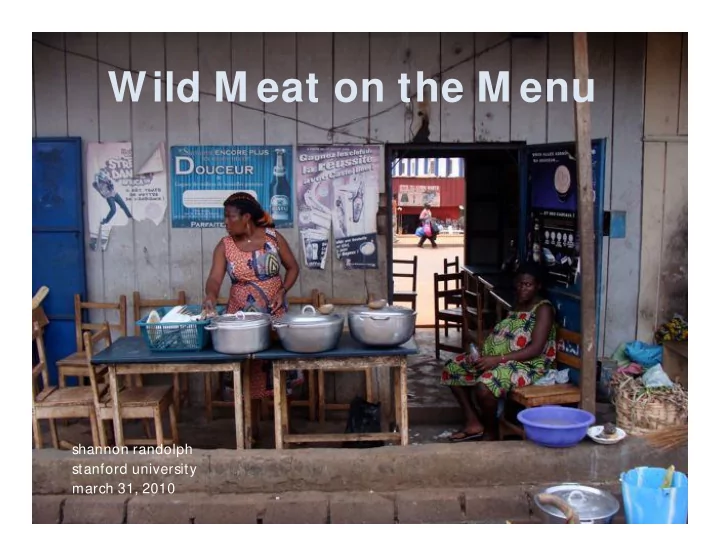
Wild M eat on the M enu shannon randolph stanford university march - - PowerPoint PPT Presentation
Wild M eat on the M enu shannon randolph stanford university march 31, 2010 Outline Why did I do this study? How did we collect the data? What did we find in the markets and restaurants? How can we make use of this for
shannon randolph stanford university march 31, 2010
indicate that networks aren’t based in these markets.
enforcement.
telecommunications results in viral like growth of wildlife trade.
–
Amend wild meat collection permitting law to incentivize Class C species traders into regulated realm:
125,000 f/ CFA for Class C species 250,000 f/ CFA for Class B and C species
–
Issue permits with unique seal to discourage illegal permitting beyond quotas.
–
Conduct 10 strategic, randomly-timed market and restaurant raids aimed to prosecute illegal Class A and B trade and unpermitted Class C trade.
–
Institute incentives program to award law enforcers bringing wildlife offenses to prosecution.
–
Initiate three strikes penalties rule for businesses (e.g. CAM RAIL, bus agencies) transporting wildlife parts and meat.
– Establish nodes in urban areas to inform about illegal large-scale
traders and Class A in particular.
– Conduct long-term monthly independent monitoring of urban
trade through informants and anonymous leads.
– Support already successful, independent private investigations of
Class A species meat, live animal and trophy trade.
– Place billboards and posters in public places of each Class A animal
and legal consequences of selling these.
– Establish and advertise an anonymous hotline to report
information regarding illegal or corrupt trade/ related wildlife law enforcement.
– Pair promotional give-away program at city entrances with discreet
private car monitoring and prosecution program.
Support Cameroonian and international student research in business, social and natural sciences to:
and compare to stated meat sold
for political or social gain
(Political Science student at U Yaounde I currently undertaking this study)