SLIDE 1 10/29/2020 1
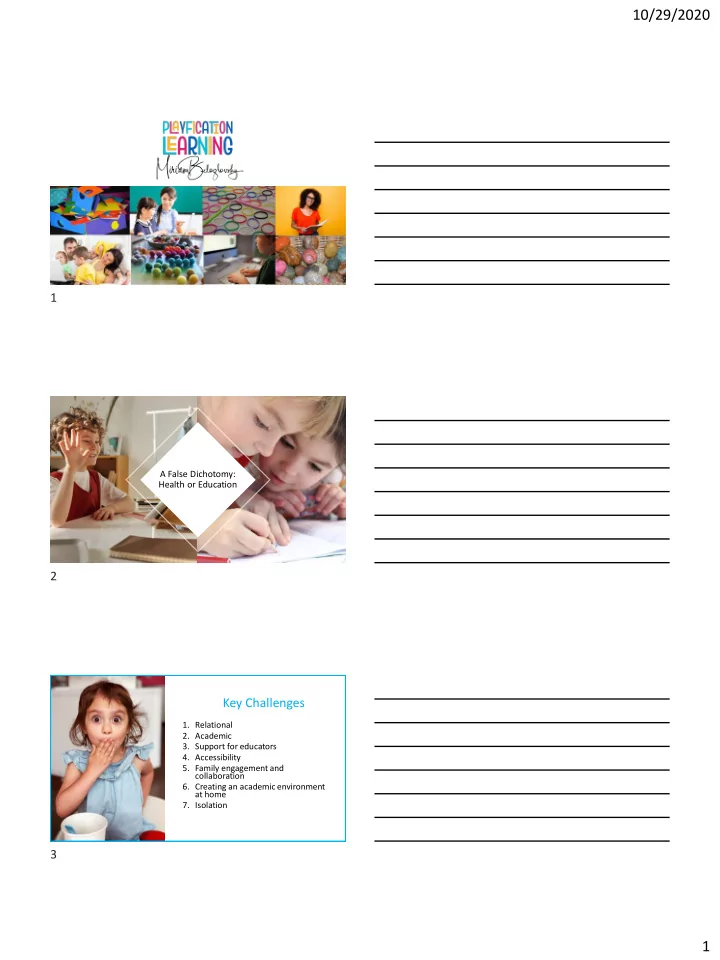
A False Dichotomy: Health or Education
- 1. Relational
- 2. Academic
- 3. Support for educators
- 4. Accessibility
- 5. Family engagement and
collaboration
- 6. Creating an academic environment
at home
Key Challenges 1 2 3
SLIDE 2 10/29/2020 2
Take Care of Yourself
feelings:
- Loss
- Fear
- Disequilibrium
- Draw on your
creativity and experience
defined space for – Your Physical and Emotional self
Edu ducator
Sup uppor
- rt
- Ask for help
- You don’t need to know everything – Share
funds of knowledge
- Become a researcher with children
4 5 6
SLIDE 3 10/29/2020 3
The Power of
- ur Profession
- Engage your creativity
- Be innovative
- Take risks
- Embrace the challenge
7 8 9
SLIDE 4 10/29/2020 4
Rela elationships Fir irst
- With children
- With Peers
- With Families
- With Colleagues
Lesson
Mr
Promote a welcoming environment where children thrive
10 11 12
SLIDE 5 10/29/2020 5
Create Rituals and Routines
Children need to know that the person they see on the screen cares about them!
Focus on What is Essential
- Decide on the knowledge children
absolutely need to acquire and what skills they need to grow and develop
- Create opportunities for active
exploration
- Invite children to share their
discoveries
13 14 15
SLIDE 6 10/29/2020 6
Take Care of Families
rules
- Invite them to learn with
the children
dynamics
Know the children and families.
- Learn about their values,
histories, and traditions
- Send surveys ahead of time,
spend time just learning about each other
- Decide ahead of time what
you are willing to share about yourself
Limit Screen Time
16 17 18
SLIDE 7 10/29/2020 7
Access to Technology
Families may have
computer that is being shared by more than one person
Connectivity
Offer flexibility or alternatives for students to access materials online, for instance sharing PDFs instead of videos that require more bandwidth
Focus on children’s interest and Ideas Let them play! 19 20 21
SLIDE 8 10/29/2020 8
Collecting Loose Parts at Home
Go on walks and collect the gifts of nature
Collecting Loose Parts at Home
Go on a scavenger hunt at home and find ordinary
- bjects to use in play and
learning Invite families to collect loose parts around the house that children can use to:
- Build
- Design
- Create
- Explore their feelings
and ideas
Types of Loose Parts Found at Home
22 23 24
SLIDE 9
10/29/2020 9
Using Loose Parts to Promote Learning
Use leaves for exploring scientific thinking
Using Loose Parts to Promote Learning
Use rocks to compare and contrast attributes
Using Loose Parts to Promote Learning
Water bottles to explore light and refraction
25 26 27
SLIDE 10
10/29/2020 10
Using Loose Parts to Promote Learning
Use cups, paper plates and cardboard tubes to explore engineering
Using Loose Parts to Promote Learning
Use cans to explore building and construction
Using Loose Parts to Promote Learning
Cooking utensils to explore sound, pitch and rhythm – Precursors to reading
28 29 30
SLIDE 11
10/29/2020 11
Using Loose Parts to Promote Learning
Use loose parts to explore storytelling
Using Loose Parts to Promote Learning
Explore the meaning of print
Using Loose Parts to Promote Learning
Use tile and glass beads to explore design thinking
31 32 33
SLIDE 12
10/29/2020 12
Using Loose Parts to Promote Learning
Use paper to explore the elements of art
Using Loose Parts to Promote Learning
Explore mathematical thinking
Using Loose Parts to Promote Learning
Invite children to take photos of their collections to share with the class on the next virtual meeting
34 35 36
SLIDE 13
10/29/2020 13
Playing with Loose Parts –
Making Connections to Standards and curriculum Support children’s development of mathematical and scientific thinking
Allow children to practice their first literacy behaviors and language in ways that make sense to them. Roskos & Neuman
37 38 39
SLIDE 14 10/29/2020 14
Provide an avenue to express experiences, insights, and discoveries.
Foster valuable dispositions that strengthen children’s intellectual and academic capacities
Most Importantly: We must stay true to
children learn best through play!
40 41 42
SLIDE 15
10/29/2020 15
With your passion for teaching, your commitment to Children and our support, together we can create engaging and creative virtual learning! Join us and register to get our newsletter! https://www.playficationlearning.com/
43