2020-2022 Zero Waste Action Plan David Herberholz Kellie Kish - - PowerPoint PPT Presentation

2020 2022 zero waste action plan
SMART_READER_LITE
LIVE PREVIEW

2020-2022 Zero Waste Action Plan David Herberholz Kellie Kish - - PowerPoint PPT Presentation

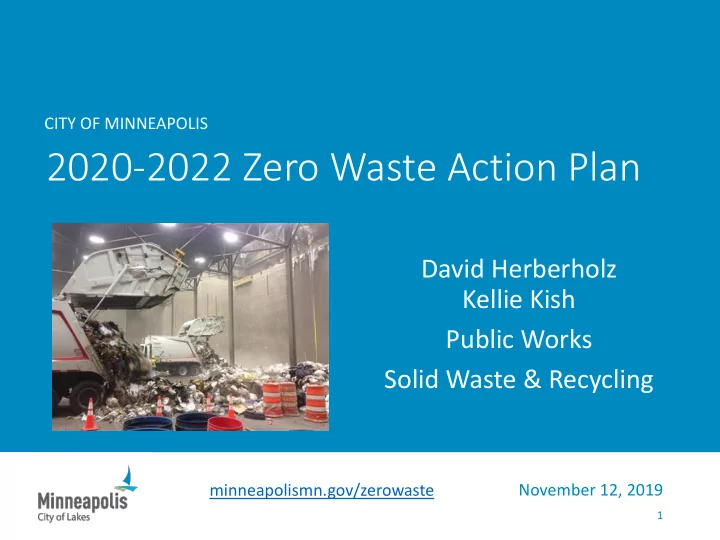
CITY OF MINNEAPOLIS 2020-2022 Zero Waste Action Plan David Herberholz Kellie Kish Public Works Solid Waste & Recycling minneapolismn.gov/zerowaste November 12, 2019 1 Timeline June 2015 Council adopted recycling and composting goals


slide-1
SLIDE 1

CITY OF MINNEAPOLIS

2020-2022 Zero Waste Action Plan

David Herberholz Kellie Kish Public Works Solid Waste & Recycling

1

November 12, 2019 minneapolismn.gov/zerowaste
slide-2
SLIDE 2

Timeline

2

June 2015 Council adopted recycling and composting goals

  • Sept. & Oct.

2016 Engagement meetings for residential, multi-family and commercial sectors May 2017 City’s Commercial Waste Study released

  • Sept. 7, 2017

Draft zero-waste plan released to public Dec 8, 2017 Zero Waste Plan approved by Council May, 2018 3 year Zero Waste Action Plan engagement meetings Nov, 2018 Hennepin County adopted changes to Solid Waste Ordinance 13 Nov, 2019 Zero Waste Action Plan updated

slide-3
SLIDE 3

Why zero waste?

  • City adopted recycling and

composting goals of 50% by 2020 and 80% by 2030. Achieve zero-percent increase in total waste generated from 2010 levels.

  • Keep valuable materials out of waste-to-energy facility

and landfills

  • Reduces greenhouse gases
  • Increases economic activity
  • ($3.48 billion in total estimated gross economic activity, MPCA 2001

data)

  • Creates jobs
  • (10 jobs in recycling for every 1 job in disposal)
  • SW&R directed to take lead on ZWAP in partnership with

Health, Regulatory Services, and CPED.

3

slide-4
SLIDE 4

4

Construction & Demolition Debris (C&D) is a separate section in the ZWP as it crosses all sectors.

slide-5
SLIDE 5

5

slide-6
SLIDE 6

Focus for 2020-2022 Action Plan

  • Data collection
  • Establish baseline and evaluate progress
  • Develop understanding of existing conditions
  • Current waste diversion programs
  • Opportunities for improvements
  • Promote resources available to incentivize

waste diversion

  • Solid Waste Management Taxes

and Fees

  • Hennepin County resources
  • Free technical assistance, signage,

grant programs and more

6

slide-7
SLIDE 7

Action items for all sectors

7

  • 1. Education and outreach for waste reduction,

reuse/repair, recycling, organics, etc.

  • 2. Promote Hennepin County assistance, resources

and grants

  • 3. Encourage to use Hennepin County styled signage
slide-8
SLIDE 8

Residential action items

8

  • Residential capture rate study
  • Evaluate amount of available materials being diverted
  • South Transfer Station study
  • Create a voucher program for residents

participating in organics program to have access to finished compost

slide-9
SLIDE 9

Commercial and multi- family action items

9

  • Actively enforce existing ordinances
  • Modify hauler license to identify what materials are

collected by each hauler

  • Evaluate hauler reporting to the state
  • Organics
  • Evaluate building code requirements for organics

collection plans (or chutes) at multi-family and mixed- use buildings that have chutes (2020)

  • Evaluate option to require organics program upon

request of a certain number of residents (2020)

  • Evaluate adding additional organics drop-off sites (2020)
slide-10
SLIDE 10

Next steps

  • Will work with partners to not duplicate efforts
  • Residents, businesses, haulers and other

stakeholders will continue to be engaged before new strategies are implemented

10

slide-11
SLIDE 11

CITY OF MINNEAPOLIS

Questions?

David Herberholz Kellie Kish Public Works Solid Waste & Recycling

11

November 12, 2019 minneapolismn.gov/zerowaste