SLIDE 1
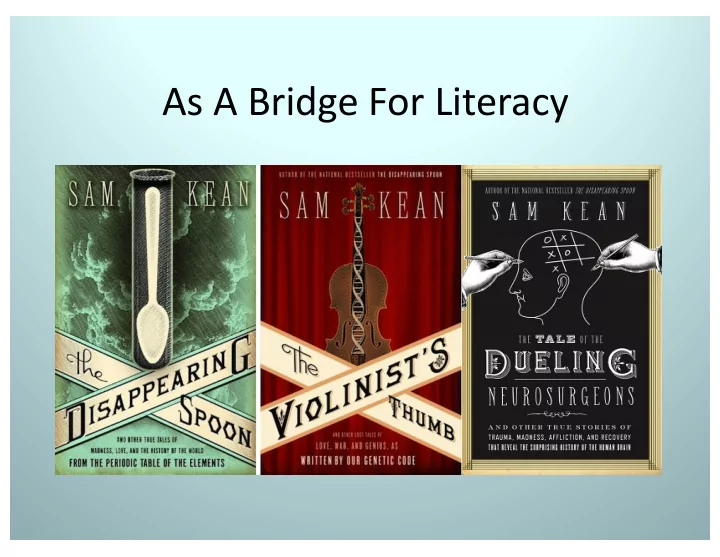
As A Bridge For Literacy
SLIDE 2
Reading About DNA As An Extension This is not a presentation about any single tech tool (clickers) – It is supposed to be about how a technology has unlocked another world that can bridge our disciplines-
SLIDE 3 Do Any Of These Interest You?
1- Can you be addicted to cat urine 2- Who were the other humans ? 3- Can there be a Champanzee ? 4- Can you get your sister arrested for murder ? 5- Can twins have different dads ? 6- Darwin’s ‘finches’ ? 7- Can I turn into The Hulk or Spiderman ? 8- Is Bigfoot real ? 9- Are you my mother ? (mitochondrial DNA) 10- Am I eating Shrimp or Shramp ? 11- President Jefferson’s children ? 12- Why am I lactose intolerant ? 13- Native Americans & the introduction of alcohol 14- What did The Plague have to do with the development of Europe ? 15- How related are you to Kevin Bacon 16- Is there a DNA basis for Race ? 17- When was North America actually settled ? 18- What killed Napoléon's soldiers ? 19- Genetic diversity of humans in the Valley of Mexico 20- How accurate, really is DNA (for crime cases etc..)
SLIDE 4
Darwin’s Finches
SLIDE 5
Or Are They ? Tanagers ?
SLIDE 6
Some (a lot) of people carry a gene which codes for a disease called Sickle Cell – This gene can protect you from malaria – So – People who come from parts of the world where malaria is prevalent tend to carry the gene in higher frequencies (math)
SLIDE 7
The Biology Of Skin Color Melanin
SLIDE 8
The Biology Of Skin Color
SLIDE 9
The Biology Of Skin Color Vitamin D Deficiency
SLIDE 10 DNA As A Cross-Curricular Bridge
(history; stats; writing; art; social, cultural)
- a. Common Knowledge About DNA
- b. How has technology changed how
we can study DNA ?
- c. How can we use this to link our
classrooms together?
SLIDE 11
Picture of mother and child in an embrace after what is termed ‘China’s Pompeii’.
SLIDE 12
DNA proved that the child and the mother are not directly related-
SLIDE 13
The Boy King
SLIDE 14
King Tut Was Disabled, Malarial, and Inbred "Frail boy" needed cane, says study, which also found oldest genetic proof of malaria.
SLIDE 15 Roy Criner TX, was sentenced with circumstantial evidence to 99 years for the rape & murder of a 16 year old
- girl. Years later, DNA testing excluded him from being the
contributor of genetic material found on the girl. He remained in prison because the appeals judges had no confidence that DNA evidence would have weight over witness testimony. After a reporter found additional evidence that implicated another person, Criner was finally set free.
SLIDE 16
Family Matters : The ‘Other Humans’
SLIDE 17
Everyone living outside of direct Africa origins today has a small amount of Neanderthal in them, carried as a living relic of these ancient encounters. A team of scientists comparing the full genomes of the two species concluded that most Europeans and Asians have between 1 to 4 percent Neanderthal DNA. Indigenous sub-Saharan Africans have no Neanderthal DNA because their ancestors did not migrate through Eurasia
SLIDE 18
Super-Quick DNA Background
SLIDE 19
Super-Quick DNA Extraction
SLIDE 20
How Do You ‘See’ Your Results ? A very cool process which copies the DNA millions of times
SLIDE 21
What Might We Do With This Process & The Knowledge That It Unlocks ?
SLIDE 22
We are testing food (fish) at the store (H-Mart) to see what it is -
SLIDE 23
In our example it’s sharks/rays – First of all – What is it !?
SLIDE 24
Why would we study this ? Students can study the ecological impact of fishing- Are organisms endangered ? How many are left ? How diverse are they ?
SLIDE 25
What’s ‘a’ next step ?
Students can study the paternity of organisms Do two babies in the same uterus have different dads ?
SLIDE 26
What’s the math behind this ? Given a regular phone number 771-1981 How many ‘possible’ phone numbers could you get from this configuration ?
SLIDE 27
What happens when we run out of phone numbers ?
SLIDE 28
What happens when we run out of phone numbers ? We just add area code – Each code 630 or 778 lets you restart the numbers
SLIDE 29
DNA codes can be thought of as ‘phone numbers’ Just as each phone number reaches a person- Each DNA number reaches a species – (if not an individual)
SLIDE 30
The DNA Phone Number A T C G Each place only has four ‘digits’ So a 7 place digit DNA code ATC-CGTA
SLIDE 31
So a 7 place digit DNA code ATC-CGTA Codes for how many variations? 4x4x4x4x4x4x4
SLIDE 32
Typically the length of the sequence that we look at is 400 to 600 bp So 4 to 400th power ?
SLIDE 33
This allows us to look at a relatively small piece of DNA and determine what species a sample is and then by using multiple samples – What individual a sample is -
SLIDE 34
The Database Is HUUUGEEE Which means that we could not even begin to do these types of study without some control over the data – This is where computers enter the story-
SLIDE 35
Here is a DNA sequence from the samples that our students worked with -
SLIDE 36
TACCTAATCTTTGGTGCCTGAGCAGGTATAGTCGGAACTGGCCTAAG TCTTTTAATTCGAGCAGAGTTGAGCCAGCCCGGATCACTTCTAGGTG ATGATCAGATTTATAATGTCCTTGTTACAGCCCATGCCTTAGTAATAAT CTTTTTTATGGTTATACCAATTATAATTGGAGGGTTTGGCAATTGACTC GTCCCTTTAATGATTGGCTCTCCAGACATAGCCTTTCCCCGCATGAAT AATATGAGCTTTTGACTTTTACCACCTTCATTTCTTCTTCTCCTAGCCT CCGCTGGAGTTGAAGCTGGGGCGGGGACAGGTTGAACTGTCTACC CCCCTCTAGCAGGCAATCTAGCCCACGCGGGGGCCTCCGTAGACTTA ACAATTTTCTCTCTCCATTTGGCAGGTATCTCCTCCATCCTAGCTTCCA TTAACTTCATCACCACAATTATTAACATAAAACCCCCAGCAATCTCTCA ATACCAAACACCTCTATTCGTATGATCAATCCTTGTTACAACTGTCTTA CTTCTTATAGCCCTCCCAGTTCTAGCAGCTGGCATTACTATGCTTCTCA CAGATCGTAACCTCAATACAACTTTCTTTGACCCAGCAGGAGGAGG AGACCCCATTCTTTACCAGCACCTGTTCTGATTTTTTGGG
SLIDE 37
This sample was taken from a fish purchased at H-Mart- DNA was extracted and then copied and then sequenced – Students were given the raw sample data and what did they do with it ?
http://blast.ncbi.nlm.nih.gov/Blast.cgi
SLIDE 38
SLIDE 39
SLIDE 40 How Is Alcohol Metabolized ?
You need two enzymes – Alcohol Dehydrogenase (ADH) & Acetaldehyde Dehydrogenase (ALDH) Native Chinese and Japanese populations produce a lot of ADH. 85% of their population produces unusual high activities of this enzyme. Where Caucasians score less than 21%, African Descent Americans less than 10% and Native Americans as well as Asian Indians 0%. Don’t jump to any conclusions yet -- Now about half of the Chinese and Japanese (Koreans way less by the way) lack the normal amount of this second enzyme (ALDH). The result is that in many cases a byproduct builds up very fast when these individuals start drinking. First of all because of the big amount of ADH and second because of the lack of ALDH 2. This is very unfortunate since this byproduct makes you way more sick than ethanol
- itself. This genetic disadvantage is the reason that you can’t hold your liquor. A clear
sign of a high acetaldehyde-level is that the face turns extremely red.
SLIDE 41
SLIDE 42
SLIDE 43
SLIDE 44
Tsutomu Yamaguchi-san, the first officially recognized survivor of BOTH atomic blasts in Japan.
SLIDE 45 How Closely Are We Related To Kevin Bacon ?
Genetic studies tend to support the ‘out
- f Africa’ model. The highest levels of
genetic variation? in humans are found in Africa. In fact there is more genetic diversity in Africa compared with the rest of the world put together. In addition, the origin of modern DNA in the mitochondria (the ‘powerhouses’ of
- ur cells) has been tracked back to just
- ne African woman who lived between
50,000 and 500,000 years ago – 'Mitochondrial Eve'.
SLIDE 46 You Can Get Your Sister Caught
This might be a little messed up (kind of like time travel) Scenario: If your sister commits a crime And she leaves DNA at the scene of the crime But- She is not in any DNA database (never been caught) It is possible to ‘tell’ the computer to look for a theoretical sibling
- f known sample taken from the crime –
There are lots of DNA databases out there -- Then a list is generated and even though you are innocent you could be visited by law enforcement asking you if you have a sibling and details about them -
SLIDE 47
A Single Letter Out Of Billions
Tay-Sachs A terrible condition where the neurons in the brain are choked by too much of a malformed protein- This protein is made incorrectly because of single error in a single letter in a strand of DNA that you inherited – There are more than a few variations of Tay-Sachs and they are prevalent in multiple groups of people (culture) What’s weird is that this terrible condition actually confers resistance to another disease called TB or tuberculosis so there is a genetic reason why this condition continues to persist in our genetic code -
SLIDE 48 Do Any Of These Interest You?
http://www.forbes.com/sites/kristinakillgrove/2015/10/27/mysteries-of-the- black-death-shroud-of-turin-and-origins-of-early-americans-solved-with- dna/#184402ae7584 http://news.nationalgeographic.com/news/2010/02/100216-king-tut-malaria- bones-inbred-tutankhamun/#/12801.ngsversion.1421960076665.jpg http://forensicoutreach.com/library/5-real-life-cases-where-dna-profiling- changed-everything/ https://genographic.nationalgeographic.com/neanderthal/ http://thebrainscoop.tumblr.com/post/139191025076/darwins-tanagers-dyk- darwins-finches-arent http://www.yourgenome.org/stories/evolution-of-modern-humans