
SLIDE 1
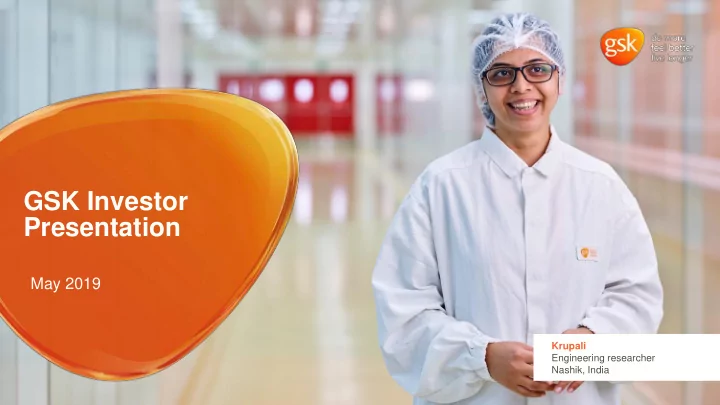
Krupali Engineering researcher Nashik, India
GSK Investor Presentation
May 2019
GSK Investor Presentation May 2019 Krupali Engineering researcher - - PowerPoint PPT Presentation
GSK Investor Presentation May 2019 Krupali Engineering researcher Nashik, India Cautionary statement regarding forward-looking statements This presentation may contain forward-looking statements. Forward- looking statements give the Groups
Krupali Engineering researcher Nashik, India
GSK Investor Presentation
May 2019
This presentation may contain forward-looking statements. Forward-looking statements give the Group’s current expectations or forecasts of future events. An investor can identify these statements by the fact that they do not relate strictly to historical or current facts. They use words such as ‘anticipate’, ‘estimate’, ‘expect’, ‘intend’, ‘will’, ‘project’, ‘plan’, ‘believe’, ‘target’ and other words and terms of similar meaning in connection with any discussion of future
performance or results of current and anticipated products, sales efforts, expenses, the outcome of contingencies such as legal proceedings, dividend payments and financial results. Other than in accordance with its legal or regulatory obligations (including under the Market Abuse Regulations, UK Listing Rules and the Disclosure Guidance and Transparency Rules of the Financial Conduct Authority), the Group undertakes no obligation to update any forward-looking statements, whether as a result of new information, future events or otherwise. Investors should, however, consult any additional disclosures that the Group may make in any documents which it publishes and/or files with the US Securities and Exchange Commission (SEC). All investors, wherever located, should take note
reliance on the forward-looking statements. Forward-looking statements are subject to assumptions, inherent risks and uncertainties, many of which relate to factors that are beyond the Group’s control
materially from those expressed or implied in any forward-looking statement. Such factors include, but are not limited to, those discussed under Item 3.D ‘Risk factors’ in the Group’s Annual Report on Form 20-F for FY 2018. Any forward-looking statements made by or on behalf of the Group speak only as of the date they are made and are based upon the knowledge and information available to the Directors on the date of this presentation. A number of adjusted measures are used to report the performance of our business, which are non-IFRS measures. These measures are defined and reconciliations to the nearest IFRS measure are available in our first quarter 2019 earnings release and Annual Report on Form 20-F for FY 2018. All expectations and targets regarding future performance and the dividend should be read together with “Assumptions related to 2019 guidance and 2016-2020 outlook” on page 36 of our first quarter 2019 earnings release.
Cautionary statement regarding forward-looking statements
2
Three centuries of innovation
Business Units Regions
Group: revenue breakdown 2018
Revenues of £30.8bn (+5% CER)
4 Source: GSK Full year 2018 results release – February 2019 All growths at constant exchange rates (CER). Breakdown percentages are approximate
£7.7bn (25%) £17.3bn (56%) Pharma (+2%) Consumer (+2%) £5.9bn (19%) Vaccines (+16%) £12.0bn (39%) US (+9%) International (+4%) £8.0bn (26%) Europe (-1%) £10.9bn (35%)
Our Pharmaceuticals business has a broad portfolio of innovative and established medicines with commercial leadership in respiratory and HIV. Our R&D approach focuses on science related to the immune system, use of genetics and advanced technologies.
Immune system T-cells attacking a cancer cell
Key Products Triumeq/Tivicay HIV Trelegy COPD Nucala Severe Asthma
Sales turnover 2018
Herpes zoster virus of shingles
Key Products Shingrix Shingles Infanrix/Pediarix Paediatric Bexsero, Menveo Meningitis
Sales turnover 2018
Our Vaccines business has a broad portfolio and innovative pipeline of vaccines to help protect people throughout life. We deliver over two million vaccine doses per day to people living in over 160 countries.
Novamin, a key technology in Sensodyne Repair and Protect
Key brands Sensodyne Oral health Voltaren Pain relief Panadol Pain relief
Sales turnover 2018
Our Consumer Healthcare business develops and markets an innovative portfolio of consumer preferred and expert recommended brands in the Oral health, Pain relief, Respiratory, Skin health, Nutrition and Digestive categories.
3 long-term priorities
8
We commit to use our science and technology to address health needs, make our products affordable and available and to be a modern employer.
We aim to achieve industry- leading growth by investing effectively in our business, developing our people and delivering flawlessly.
We invest in scientific and technical excellence to develop and launch a pipeline of new products that meet the needs of patients, payers and consumers.
2018: delivered improved operating performance and reshaped portfolio
Trust
Performance Innovation
Restructuring Pharma business New leadership and culture Focus on launch execution New R&D approach with a focus on immunology, genetics and technology Business Development – Tesaro, 23andMe, Merck† alliance Pipeline strengthening with increased oncology focus Buy out of Novartis stake; proposed new Consumer JV with Pfizer* Divestment of non-core assets
9
† Transaction with Merck KGaA, Darmstadt, Germany expected to close Q1 2019* Transaction to create the JV is expected to close in the second half of 2019, subject to approvals
2019: focus on delivering business priorities
10
New world-leading Consumer Healthcare company with category
leading power brands and science based innovation
New global Pharmaceuticals and Vaccines company with
R&D focused on science of the immune system, genetics and advanced technologies
Trust
Performance
health business
Innovation
2019 focus
– Drive operating performance – Progress pipeline – Successful integration
Pharmaceuticals: revenue breakdown 2018
Revenues of £17.3bn (+2% CER)
12
Therapy Areas Regions
£6.9bn (40%) Respiratory (+1%) Established Pharmaceuticals (-4%) £4.7bn (27%) HIV (+11%) £5.1bn (30%) £0.5bn (3%) Immuno-inflammation (+28%) US (+1%) £7.5bn (43%) International (+5%) Europe (+1%) £4.1bn (24%) £5.7bn (33%)
Source: GSK Full year 2018 results release – February 2019 All growths at constant exchange rates (CER). Breakdown percentages are approximate
Increasing focus and prioritisation to support future growth
13
Focus resources on key products Building our capability in Specialty
New talent with Specialty experience Co-location of development and commercial in Oncology Tesaro transaction Changes to our policy for working with healthcare professionals US China Trelegy Nucala HIV Zejula Shingrix Bexsero
Investing in priority markets
Transaction with Tesaro accelerates GSK’s oncology presence
14
Immediate Oncology infrastructure
Solid tumour field force, with ~250 sales representatives in US and major EU markets Oncology focused infrastructure (eg regulatory, payer management)
Leading PARP inhibitor for
Leading position in 2nd line maintenance therapy of ovarian cancer OC market evolving rapidly
Complements ongoing GSK build in oncology
Catalyst for broader change Lifecycle combinations eg ICOS Talent acquisition
26 39 43 49 54 63 64 73 Q317 Q217 Q417 Q118 Q119 Q418 Q218 Q318
Zejula Quarterly Sales ($m)
Emerging Markets: focus on nine key markets and simplifying the business model
15
9 key markets New Export business model Clustering smaller markets
Two thirds of sales Strong growth potential Investing in customer facing resource
China Brazil India Mexico
Argentina
Russia GCC
Pakistan
Turkey
25% of sales Solid growth potential Optimising back office support
EM EAST
LSP
CARICAM
Colombia North Africa
<10% of sales Limited near term growth potential Distribution model to improve profitability
Africa CIS
Middle East Export Asia DC
LSP = Latina South Pacific (Chile, Peru, Ecuador) EM East = Vietnam, Philippines, Thailand, Malaysia, Sri Lanka Asia DC = Bangladesh, Laos, Papua New Guinea, Myanmar, Cambodia
Revenues of £6.9bn (+1% CER)
Respiratory: revenue breakdown 2018
17
Products Regions
£2.4bn (35%) Ellipta portfolio (+32%) Seretide/Advair (-21%) £2.0bn (30%)
£0.6bn (8%)
Other Nucala (+66%) £1.9bn (27%) £1.5bn (22%) £3.4bn (49%) £2.0bn (29%) US (-3%) Europe (+4%) International (+7%)
Source: GSK Full year 2018 results release – February 2019 All growths at constant exchange rates (CER) . Breakdown percentages are approximate
New portfolio offsetting decline in Advair/Seretide
The changing shape of the respiratory portfolio
18 Source: GSK Full year 2015, 2016, 2017 and 2018 results releases – February 2016, February 2017, February 2018 and February 2019
30% 30% 28% 27% 32% 25% 22% 19% 32% 28% 23% 16% 15% 23% 30% 8% 2015 6,991 Ellipta portfolio Nucala 2016 2018 2017 Advair US 6% Seretide RoW Other
100%
5,741 6,510 6,928 5%
Growth CER
+2% +3% +1%
New portfolio provides platform for continued market leadership
19
Trelegy: driving continued leadership
Demonstrated superiority in COPD
IMPACT published in NEJM 18th April 2018
Approved in US April 2018 Positive CHMP opinion in EU Sept 2018
Significant exacerbation reduction with TRELEGY in COPD
Usual care in COPD5
Symbicort2 Trelegy Relvar/Breo1 Anoro1 Anoro Incruse Relvar/Breo Spiriva3 Stiolto4
1.IMPACT: TRELEGY demonstrated a 15% reduction in moderate/severe exacerbations vs BREO and 25% vs ANORO 2.FULFIL: TRELEGY demonstrated a benefit over SYMBICORT on lung function/SGRQ 3.201316: INCRUSE demonstrated a benefit on lung function over SPIRIVA 4.204990: ANORO demonstrated a benefit on lung function over STIOLTO 5.SALFORD LUNG STUDY: BREO demonstrated a benefit on moderate/severe exacerbations vs. usual care 6.Annual rate of on-treatment moderate and severe exacerbations (IMPACT) 7.Annual rate of on-treatment exacerbations at week 24 (FULFIL) SYMBICORT is a trademark of AstraZeneca; SPIRIVA and STIOLTO are trademarks of Boehringer Ingelheim
15%
reduction vs Breo6
25%
reduction vs Anoro6
35%
reduction vs Symbicort7
20
35% 45% 55% 65%
Respiratory: continued strong growth from new products in Q119
21
Nucala: competitive new SEA patients starts
Continued strong growth; Q1 sales of £152 million, +41% CER Solid share of new patient starts, a key area of focus as an estimated <25% of suitable patients currently receive therapy Implementation of HCP programmes in US; aim to replicate in
At-home self-administration approval expected in 2019
Nucala Competitor X
Trelegy: steady volume growth
Steady growth continues after first full year on market; Q1 sales
Launched in 30 markets to date, including recent Japan launch; China approval and launch expected later 2019 CAPTAIN study data in asthma met primary endpoint; plan to submit for regulatory review after full dataset is available
Source: TRx data from IQVIA
k 5k 10k 15k 20k 25k 30k
Total TRx Volume (US)
Source: IQVIA NBRx data factored for indication and business within retail (Xponent) and non-retail (DDD)
Nucala new patient injection share (US)
HIV patient pool continues to increase
23
1.8 million new infections in 20171 21.7 million people living with HIV were accessing antiretroviral therapy in 20171 >37 million HIV+ globally, estimated 9.4 million don’t know their status1 Over £22b ARV market size
PLHIV will continue to need new treatments throughout their lifetime…
Revenues of £4.7bn (+11% CER)
HIV: revenue breakdown 2018
24
Products Regions
£1.6bn (35%) £2.6bn (56%) Tivicay (+19%) Triumeq (+9%) Juluca (>100%) Other
£0.3bn (6%)
£2.9bn (62%) Europe (+6%) US (+10%) £1.2bn (25%) £0.6bn (13%) International (+20%)
Source: GSK Full year 2018 results release – February 2019 All growths at constant exchange rates (CER). Breakdown percentages are approximate
A competitive and innovative pipeline
25
PREVENTION
cabotegravir (744LAP) †
SEARCH FOR REMISSION AND CURE
Collaborations
ADVANCED THERAPEUTICS
Tivicay (dolutegravir)
LEGACY ARV PORTFOLIO
Epzicom/Kivexa (abacavir/lamivudine) Celsentri/Selzentry (maraviroc)
DOLUTEGRAVIR REGIMENS
Triumeq (dolutegravir/abacavir/ lamivudine)
Attachment inhibitor for highly experienced patients†
fostemsavir
New MOA
Combinectin (GSK3732394)*ǂ Maturation inhibitor portfolio*ǂ Allosteric integrase inhibitor *ǂ Capsid inhibitor*ǂ
Medicines approved for prescription
† Investigational assets not currently approved for prescriptionNEW TREATMENT PARADIGM TWO-DRUG REGIMENS Juluca (dolutegravir/rilpivirine) Dovato (dolutegravir/lamivudine) Long-acting treatment regimens†
cabotegravir + rilpivirine
HIV: growth and innovation
Leading core agent in HIV treatment
26
– Dolutegravir is #1 core agent globally – 500,000 patients worldwide taking a dolutegravir based regimen – Unmatched trial results; superiority in 5 studies and data in broad populations
vs. efavirenz vs. raltegravir vs. darunavir vs. atazanavir vs. lopinavir Superior
(naive)
Superior
(experienced)
Superior
(naive)
Superior
(women/naive)
Superior
(experienced)
SINGLE, FLAMINGO, SAILING, ARIA and DAWNING were non-inferiority studies with a pre- specified analysis for superiority. Table shows primary endpoint outcomes.
(women / naive)
*Patient Pathways survey presented at IAS 2017 DHHS: Department of Health and Human Services; EACS: European AIDS Clinical Society
ViiV Healthcare’s 2DR portfolio
Juluca ViiV Healthcare’s first 2DR once-daily, single pill for maintenance of suppression that combines DTG + RPV SWORD DTG + 3TC The next step in the 2DR journey, DTG + 3TC 2DR for treatment-naïve and switch patients GEMINI 1 & 2 TANGO
CARLA*
The long-acting 2DR
ATLAS FLAIR ATLAS2M
*Internal name representing cabotegravir + rilpivirine
HIV: 2DR portfolio
27
2018 Q1 2019 Q1
Other HIV Tivicay Triumeq Juluca
HIV growth of 4% CER in Q119 with DTG portfolio growth at +7% CER
28
Dolutegravir US total share at around 26.6%
0% 5% 10% 15% 20% 25% 30%
Tivicay Triumeq DTG Total Juluca Competitor 26.6% 17.5% 12.4% 12.4% 1.8%
Juluca, our first 2DR, driving overall growth
CER growth
+7% DTG Total HIV £1,121m +4% Total HIV £1,048m
Source: IQVIA NPA w/e 4 April 2019
Upcoming Milestones
Momentum building behind 2DR strategy with Dovato launch and further data flow through 2019
29
Dovato cabotegravir + rilpivirine
April/Q3 2019 US/EU filings Q3 2019 ATLAS2M (8 week dosing) study readout Q1 2020 Anticipated US approval 2021-22 Prevention study data (CAB PrEP)
fostemsavir
H2 2019 US filing Q3 2019 GEMINI I&II 96-week study readout Q3 2019 Anticipated EU FDC approval Q3 2019 TANGO switch study readout Q4 2019 SALSA switch study begins Ongoing Phase IIIB/IV programme
Dovato US launch drives 2DR momentum
FDC: fixed dose combination
Phase 2
3326595* (PRMT5 inhibitor) cancer fostemsavir (AI) HIV mepolizumab COPD/HES/nasal polyps Benlysta + Rituxan SLE** cabotegravir** LA + rilpivirine* LA HIV 3389404/3228836* (HBV ASO) HBV 3772847* (IL33r antagonist) asthma 2982772 (RIP1k inhibitor) pso/RA/UC 2586881* (rhACE2) acute lung injury/PAH 2140944 (gepotidacin, topoisomerase IV inhibitor) antibacterial 2330811 (OSM antagonist) systemic sclerosis 2881078 (SARM) COPD muscle weakness 1795091 (TLR4 agonist) cancer 2862277 (TNFR1 antagonist) acute lung injury 3174998* (OX40 agonist) cancer 525762 (molibresib, BET inhibitor) cancer 2330672 (linerixibat, IBAT inhibitor) cholestatic pruritus
Phase 1 Pivotal/Registration
3358699* (BET targeted inhibitor) RA 2831781* (LAG3) ulcerative colitis 3858279* (CCL17 inhibitor) OA 2636771 (PI3kb inhibitor) cancer 2983559 (RIP2k inhibitor) IBD 3036656* (leucyl t-RNA inhibitor) TB 3640254 (HIV maturation inhibitor) HIV 3511294* (IL5 LA antagonist) asthma 2292767 (PI3kd inhibitor) respiratory diseases 3810109* (broadly neutralizing antibody) HIV
Vaccines
GR121619* (oxytocin) postpartum haemorrhage
31
3537142* (NYESO1 ImmTAC) cancer 3439171* (HPGD2 inhibitor) muscle repair 3145095 (RIP1k inhibitor) pancreatic cancer 3368715* (PRMT1 inhibitor) cancer TSR-033* (LAG3) cancer 2269557 (nemiralisib PI3Kd inhibitor) APDS *In-license or other alliance relationship with third party **Additional indications also under investigation ^ RSV for older adults and maternal are in Ph1/2 study Note: For oncology where phase 1 studies are conducted in patients, the shift from phase1 to phase 2 is defined when expansion cohorts are started. TSR-022* (TIM-3 antagonist ) cancer Zejula* (PARP inhibitor) ovarian cancer maintenance** dostarlimab* (PD-1 antagonist ) cancer Trelegy* (FF, UMEC and VI) asthma 3359609* (ICOS receptor agonist) cancer belantamab mafodotin * (BCMA ADC) multiple myeloma 3196165* (GM-CSF inhibitor) RA daprodustat (HIF-PHI) anemia 3377794* (NY-ESO-1 TCR) cancer
Pipeline is advancing well
Today: 45 medicines, 34 immunomodulators, and 13 vaccines
M7824* (bintrafusp alfa, TGFβ trap/anti-PDL1 bispecific) NSCLC** Rotavirus – Phase 3 MMR – Phase 3 (US) Ebola – Phase 2 COPD – Phase 2 Hepatitis C – Phase 2 Malaria (next gen) – Phase 2 MenABCWY – Phase 2 Shigella – Phase 2 HIV – Phase 2 Tuberculosis – Phase 2 RSV paediatric – Phase 2 RSV older adults – Phase 1^ RSV maternal – Phase 1^ Immuno-modulator Non Immuno-modulator Vaccine 3745417 (STING agonist) cancer
– GSK’165 (aGMCSF) Phase III start in rheumatoid arthritis – Approval for DTG+3TC in HIV – Regulatory submissions CAB+RPV and fostemsavir in HIV – Invest and leverage the potential of Zejula (PRIMA study) – Invest in GSK’916 (BCMA), submit pivotal DREAMM-2 data – Optimise value of TSR-042 and first regulatory filing – Support the development of M7824
32
Strengthening oncology Advancing other promising medicines Accelerating culture change
– Embed new leadership, governance and culture
Key data read outs
– Updated PFS data from DREAMM-1 to be published in leading journal – TSR-042 (dostarlimab) in endometrial cancer data to be presented at medical conference – Trelegy CAPTAIN study in asthma to support regulatory submission
1H 2019
Executing BD development opportunities
– 23andMe, TESARO, M7824 and pursuing others
Optimising the pipeline
– GSK‘916 (BCMA) DREAMM-2 4L monotherapy multiple myeloma – GSK’609 (ICOS) data to be presented at medical conference – Zejula PRIMA study in 1L maintenance ovarian cancer
2H 2019
R&D priorities for 2019
✓ ✓ ✓
1H 2019 2H 2019 1H 2020 2H 2020 1H 2021
Anticipated submission
cabotegravir+rilpivirine LA HIV treatment2 fostemsavir (attachment inhibitor) HIV mepolizumab HES mepolizumab NP belimumab+rituximab SLE Zejula 4L ovarian cancer sNDA (QUADRA) Trelegy asthma Zejula 1L ovarian cancer (PRIMA) cabotegravir HIV PrEP belantamab mafodotin (BCMA) 4L MM monotherapy Zejula + dostarlimab 2L+PROC sNDAPivotal data
Trelegy asthma belantamab mafodotin (BCMA) 4L MM monotherapy mepolizumab NP belimumab+rituximab SLE mepolizumab HES cabotegravir HIV PrEP Zejula 1L ovarian cancer (PRIMA) GSK’863 (daprodustat) anemia* dostarlimab recurrent MSI-H tumours (inc MSI-H endometrial cancer) and recurrent MSS endometrial cancer (GARNET) Zejula + dostarlimab 2L+PROC ovarian cancer (MOONSTONE)PoC data
GSK’294 (IL5 LA antagonist) asthma* GSK’772 (RIP1 kinase) UC GSK’811 (oncostatin M) SSc** GSK’781 (LAG3) UC* GSK’109 (bNAb N6LS) HIV GSK’772 (RIP1 kinase) RA GSK’254 (maturation inhibitor) HIV GSK’078 (SARM) COPD muscle weakness GSK’091 (TLR4) + ICOS/pembro cancer combo therapy* GSK’847 (IL33R) asthma GSK’595 (PRMT5) cancer monotherapy3 belantamab mafodotin (BCMA) 1L MM combo therapy*** GSK’656 (leucyl t-RNA) tuberculosis GSK’404 (HBV ASO) hepatitis B Zejula + bev. 1L ovarian cancer (OVARIO) GSK’998 (OX40) + GSK’091 (TLR4) cancer combo therapy* GSK’762 (BET inh) mCRPC combo therapy Zejula vs Zejula + bev. recurrent ovarian cancer (AVANOVA)1 Zejula + dostarlimab + bev. 2L+PROC ovarian cancer (OPAL) GSK’794 (NY-ESO) NSCLC & MM mono/combo therapy GSK’762 (BET inh) hem malignancies monotherapy dostarlimab recurrent MSS endometrial cancer (GARNET) belantamab mafodotin (BCMA) 2L MM combo therapy mono/combo therapy GSK’609 (ICOS) +CTL4 cancer combo therapy GSK’881 (ACE2) PAH belimumab+rituximab Sjogren’s syndrome TSR-022 NSCLC (AMBER) GSK’762 (BET inh) ER+ breast combo therapy COPD vaccine RSV older adults vaccine33
Upcoming milestones that will inform our progress
✓ ✓ ✓
aAnnounced *Interim/ Preliminary Efficacy **PoM ***Safety run data ; 1. Investigator Sponsored Study, 2. CAB + RPV filing expected Q2/Q3 2019 3. From initial cohorts data HES: hypereosinophilic syndrome; MM: multiple myeloma; NP: Nasal polyposis; PAH: pulmonary arterial hypertension; RA: rheumatoid arthritis; SLE: systemic lupus erythematosus; SSc: systemic sclerosis; UC: ulcerative colitis; NSCLC: non-small cell lung cancer ER+; estrogen receptor + ; mCRPC: metastatic castration resistant prostate cancer; MSI-H: Microsatellite Instable- high; MSS: Microsatellite Stable; bev; bevacizumab✓
23andMe and GSK exclusive collaboration
Collaboration offers scale, diversity, sustainability for advancing therapeutic programs Questionnaire yields unique phenotype information vs other biobanks Can deploy custom surveys to dive deeper into specific diseases Allows rapid recruitment of clinical trials based on genotype, phenotype and proximity to study centres
Improved target selection (higher PoS, and safer, more effective medicines) Empowers patients! Allows more efficient/effective identification and recruitment of patients for clinical studies
34 PoS: probability of success
LRRK2 inhibitor programme: 23andMe’s advantage to expedite clinical trial recruitment
23andMe provides expedited and focused clinical trial recruitment – Strategic trial site selection to maximize enrollment at each site – Flexible and streamlined recruitment: pace recruitment appropriate to sites’ ability to screen, randomize and treat participants; ability to screen on comorbidities and select inclusion criteria – Opportunity to significantly reduce total clinical trial recruitment duration Identifying eligible participants is a time intensive and costly process In the US: ̶ ~1M individuals with Parkinson’s Disease ̶ ~135,000 LRRK2 G2019S carriers ̶ ~10,000-15,000 Parkinson’s Disease patients who are LRRK2 G2019S carriers 23andMe database currently includes: – >10,000 re-contactable individuals with Parkinson’s Disease – >3,000 re-contactable LRRK2 G2019S carriers – >250 re-contactable LRRK2 G2019S carriers with Parkinson’s Disease – Ongoing efforts to increase and engage the LRRK2 G2919S cohort to identify newly diagnosed individuals Clinical trial sites would need to genotype 100 Parkinson’s Disease patients to find one LRRK2 G2019S carrier
35
Human genetics and functional genomics
Science and technology together to drive better R&D success
Human genetics Functional genomics Machine learning CRISPR
More high quality targets Faster development Better success rates
“Artificial Intelligence is the new electricity and is changing industry after industry.”
Stanford School of Business lecture by Andrew Ng
Machine Learning will enable the fields of science and medicine to evolve from an era of “Big Data” to an era of “Understanding Data”
36
New R&D approach will support the development of current clinical portfolio
From
Backing the best assets, and removing those that don’t look promising Culture of accountability where smart risk-taking and courageous decisions are made by individuals and rewarded Robust governance model with scientific peer review, commercial input and data-driven decisions Leveraging Business Development to optimise
Technology Culture Science
To
Spend spread thinly across too many programmes (“shots on goal” strategy) Consensus-driven decision making R&D/Commercial silos Limited Business Development activity
37
38
Mechanism Phase I (FTIH) Phase II (dose expansion) Phase III (pivotal)
Increased oncology focus via BD and governance
39 † In-license or other alliance relationship with third party * Studies planned for 2019
17 assets in clinical development; potential for 3 launches in 2020
M7824 (TGFβ trap/anti-PDL1 bispecific) *† NSCLC, biliary tract cancer** BET inhibitor (GSK525762) Solid tumours, heme malignancies PRMT5 inhibitor (GSK3326595)† Solid tumours, heme malignancies PI3K beta inhibitor (GSK2636771) Cancer NY-ESO-1 TCR-T† Sarcoma, solid and heme malignancies Anti-BCMA ADC (GSK 2857916)† Multiple myeloma ICOS agonist (GSK3359609)† TLR4 agonist (GSK1795091) Solid tumours Cancer PARP inhibitor (Zejula, niraparib) † First line maintenance ovarian, other solid tumours under investigation PD-1 antagonist (TSR-042, dostarlimab) † Endometrial, Ovarian, NSCLC, breast cancer* TIM-3 antagonist (TSR-022) † NSCLC LAG-3 (TSR-033) † Cancer NY-ESO-1 ImmTAC (GSK3537142) † Cancer RIP1k inhibitor (GSK3145095)
Pancreatic Cancer
PRMT1 inhibitor (GSK3368715) † Cancer STING agonist (GSK3745417) Cancer OX40 agonist (GSK3174998)† Cancer
New alliance with Merck* is an opportunity to further accelerate our oncology strategy
40
Current clinical status Encouraging NSCLC data presented Phase II underway versus pembrolizumab as 1L in patients with PD-L1+ advanced NSCLC 8 clinical development studies ongoing
Complements existing assets Immuno-modulatory biological mechanism fits with our new R&D approach Potential for novel combinations with existing pipeline assets (ICOS, TLR4) Potential to explore combinations with IO assets in the recently acquired TESARO pipeline
* Merck KGaA, Darmstadt, Germany
The target ̶ PD-L1 and TGF-β are key pathways with independent and complementary immunosuppressive functions ̶ Blocking TGF-β signalling may sensitize tumours to anti- PD-1/PD-L1 therapies and lead to synergistic and superior anti-tumour activity compared with monotherapies The agent ̶ M7824 is a bifunctional fusion protein with dual function designed to simultaneously block the anti-PD-1 and anti-TGFβ pathways ̶ Fully humanised protein immunoglobulin G1 (IgG1) mAb against human PD-L1 fused to the extracellular domain of human TGF-β receptor II, which functions as a TGF-β trap
41
M7824: a first-in-class TGF-β / anti-PDL1 therapy
Unique design offers potential for superiority against the competitive landscape
M7824 : impressive durable responses across all PD-L1 expression levels in 2L NSCLC
42
25% 37% 86% 0% 20% 40% 60% 80% 100% All PD-L1+* PD-L1 high*
ORR (%)
(10/40) (10/27) (6/7)
18% 29% 18% 27% 44% 0% 10% 20% 30% 40% 50% All PD-L1+* PD-L1 high*
ORR (%)
Keynote 010 Keynote 001
* PD-L1+ (pembro:22C3 TPS ≥ 1%; M7824: EMD001 ≥ 1%), PD-L1 high (pembro:22C3 TPS ≥ 50%; M7824: EMD 001 ≥ 80%; TPS ≥50% with 22C3 comparable to ≥80% with EMD 001 assessments)
Efficacy according to independent read, RECIST 1.1
1200mg (data cut off 23 July 2018)
Pembrolizumab response rates in KEYNOTE 010 and KEYNOTE 001 studies in 2L NSCLC M7824 response rates in 2L NSCLC
PARP inhibitors: wider application than has been appreciated
43
gBRCA (15%) non-gBRCA HRD+ (35%) non-gBRCA HRD- (50%)
– PARP inhibitors have transformed the treatment of ovarian cancer – Prior to the publication of TESARO’s NOVA study, PARP inhibitors were thought to only benefit patients with gBRCA – Evidence is mounting that suggest there is a significant opportunity to help many more patients (HRD positive – and potentially “all comers”) – in the first line maintenance (1LM) setting
PARP: poly ADP-ribose polymerase; HRD: homologous recombination deficiency
High grade serous ovarian cancer*
* As per Myriad test – HRD+ percentage may be higher
– Potential for broad “all comers” or HRD+ label based on inclusion criteria for PRIMA: – All comers with primary endpoint segregated by HRD status (of which HRD+ represents 50% of patients) – Interim safety data at ESMO showed starting dose of 200mg meaningfully reduced AEs without impact on efficacy – Daily oral therapy, once a day dosing – Data expected 2H 2019 – Avastin currently approved for use in 1LM
significant, and uptake has been low – Primary endpoint stratified by response to first line treatment and gBRCA status – Daily oral Lynparza, twice daily dosing, with Avastin infusion every 3 weeks – Data expected 2H 2019
Monotherapy versus combination therapy in 1LM
44
PRIMA study evaluating Zejula monotherapy in “all comers” PAOLA-1 study evaluating Lynparza in combination with Avastin in “all comers” Competing approaches to the “all comers” opportunity
Trademarks are the property of their respective owners
Genomic instability Inability to repair DNA
HRD status likely to identify non-gBRCA patients who will benefit from PARP inhibitors
45
HRD
BRCA1/2 mutation unidentified causes Other genetic mutations Promoter methylation
Commercially available test for HRD is available from Myriad Genetics
Assesses for BRCA 1 and BRCA 2 status, as well as 3 biomarkers associated with HRD - LOH (loss of heterozygosity), LST (large-scale state transitions), and TAI (telomeric allelic imbalance).
Very few patients tested for HRD today We anticipate a shift from gBRCA testing today to HRD testing in the future as data supports use of PARP inhibitors in HRD positive patients
Scope for improvement as current HRD test likely does not capture all potential HRD patients
Potential to expand the number of patients by 3x
NOVA study shows efficacy beyond gBRCA
46
Activity in HRD negative patients suggests tests do not currently recognise all HRD positive patients or additional mechanisms are at play
gBRCA mutation Non-gBRCA mutation Non-gBRCA mutation, HRD positive HRD negative
HR: 0.27 HR: 0.38 HR: 0.45 HR: 0.58
HRD testing could enable further development
47
Mono/combo therapy Indication Study Zejula monotherapy Ovarian cancer 1LM PRIMA Zejula plus anti PD-1 mAb Ovarian cancer 1LM FIRST Zejula plus anti PD-1 mAb or Zejula monotherapy NSCLC, SSCL JASPER Zejula plus Avastin Ovarian cancer 1LM OVARIO Zejula plus Avastin Recurrent ovarian cancer AVANOVA Zejula plus Keytruda Triple negative breast cancer or ovarian cancer TOPACIO Zejula monotherapy Metastatic castration resistant prostate cancer GALAHAD* Zejula plus chemo Ewing’s sarcoma
* Study conducted by partner Janssen: royalties and milestones payable on sales and development milestones
The target ̶ BCMA plays a key role in plasma cell survival ̶ It is found on the surfaces of plasma cells and is expressed on malignant plasma cells ̶ Not expressed in healthy tissues
GSK‘916 belantamab mafodotin: First-in-class anti- BCMA ADC agent for treatment of multiple myeloma
ADC, antibody-drug conjugate; ADCC, antibody-dependent cell-mediated cytotoxicity; BCMA, B-cell maturation antigen; MMAF, monomethyl auristatin-F
Key attributes ̶ New modality in multiple myeloma: first ADC ̶ Easy and convenient to administer: 1h infusion q3w ̶ No pre-medication required for infusion reactions ̶ Pre-medication with steroid eye drops ̶ New MoA enabling diverse combination ̶ Breakthrough and PRIME designations The agent ̶ GSK’916 is a humanised IgG1 antibody targeting BCMA (B-cell maturation antigen) ̶ Linked to the anti-mitotic agent MMAF ̶ Afucosylated to enhance ADCC
Four mechanisms of action: 1.ADC mechanism 2.ADCC mechanism 3.BCMA receptor signaling inhibition 4.Immunogenic cell death ̶ Multiple myeloma, also known as plasma cell myeloma, is a cancer of plasma cells, a type of white blood cell normally responsible for producing antibodies. ̶ Multiple myeloma is treatable, but generally incurable. ̶ Globally, multiple myeloma affected 488,000 people and resulted in 101,100 deaths in 2015. ̶ Without treatment, typical survival is seven months, with current treatments, survival is usually 4–5 years
48 1 4 3
BCMA Effector Cell
x
BCMA BCMA BCMA Lysosome Fc Receptor
ADCC ADC
Cell death
Malignant Plasma Cell
1 2 4 3
GSK‘916 belantamab mafodotin: aggressive development plan in multiple myeloma advancing rapidly
July 2018
SOC: standard of care
– Initiated DREAMM-2 4L monotherapy pivotal study
–1st subject dosed early July – Planned to recruit 130 patients
– Announced broad development plan DREAMM-1 to -10 studies:
– 4/3L in mono and combo – 2L in combo with SoC – 1L in combo with novel and SoC agents
83 patients treated on ‘916 at end July 2018
– DREAMM-2 enrolled faster than expected
– Planned 130 patients enrolled by Oct 2018 – High study screening rate meant additional 68 patients enrolled by end December 2018
– Updated DREAMM-1 study shows mPFS with 3.4mg/kg of 12.0 months – Initiated DREAMM-6 combination pilot study; recruiting well
297 patients treated on ‘916 at end Jan 2019 February 2019
mPFS: months of progression free survival
GSK‘916 belantamab mafodotin: clinical programme
Monotherapy and combinations Combination with SOC
DREAMM-1 pilot relapsed/ refractory patients ‘916 monotherapy, single arm, n=73 2014
pivotal daratumumab failures ‘916 monotherapy, single arm, n=155 June 2018 2020 DREAMM-3 pivotal failed lenalidomide and proteasome inhibitor ‘916 monotherapy vs. PomDex, n=320 2H19 2022 DREAMM-4 pilot relapsed/ refractory patients ‘916 + PD1 combination, single arm, n=40 1H19
platform relapsed/ refractory patients ‘916 + novel combinations, n=245 2H19
pilot failed 1 prior therapy ‘916+LenDex OR ‘916+BorDex open label, n= 90 Oct 2018
pivotal failed 1 prior therapy ‘916+BorDex vs. Dara+BorDex, n= 478 1H20
pivotal failed 1 prior therapy ‘916+PomDex vs. PomBorDex, n= 450 1H20
pivotal transplant Ineligible '916BorLenDex vs. BorLenDex n=750 2H19 TBC DREAMM-10 pivotal transplant Ineligible ‘916+novel agent vs SOC, n=TBC 2021 TBC
Study start Est launch
36k
patients*
50k
patients*
56k
patients*
Combination with novel and SOC agents
Development strategy for use in:
* Treatable patients in G7 (US, EU5, Japan), Kantar Health 2031 projected; 3L pts 26k, 4L 10k;~65-70% 1L MM pts undergo transplant (source IPSOS, March 2018) SOC: standard of care
50
✓ ✓ ✓
GSK‘165 (aGM-CSF): potential for a disease modifying effect in rheumatoid arthritis (RA) with a unique impact on pain
51
Current status ̶ Phase III start planned for RA in H219 ̶ Exploration of additional indications beyond RA The target ̶ GM-CSF is a pro-inflammatory cytokine that induces differentiation and proliferation of granulocytes and macrophages ̶ One of the first cytokines detected in human synovial fluid from inflamed joints ̶ Preclinical data suggests a broader range of actions than existing biologics (including a beneficial effect on pain) The agent ̶ GSK’165 is a fully humanised antibody targeting anti-granulocyte macrophage colony-stimulating factor (aGM-CSF)
Monocyte/ Macrophage̶ Unmet need remains in RA despite development of new classes of agent (JAK inhibitors, anti IL6): ~50% of patients do not achieve low disease activity criteria within 12 months of aTNF treatment and ~80% do not achieve Disease Activity Score 28 (DAS28)1 ̶ Currently 45% of patients report daily pain despite treatment with targeted therapies and pain is the key driver in 25% of switches1
1 Targeting GM-CSF in inflammatory diseases. Ian P. Wicks & Andrew W. Roberts. Nature Reviews Rheumatology volume 12, pages 37–48 (2016) Encouraging Ph II data presented at ACR October 2018 demonstrating marked clinical response
GSK’165 (GM-CSF antagonist): phase III programme in rheumatoid arthritis to start in 2H 2019
Three pivotal studies to start in 2H 2019 to support file end 2023
Significant unmet need remains in RA
̶ Around 50% of patients do not achieve low disease activity criteria within 12 months of aTNF treatment1 ̶ 45% of patients report daily pain and pain is the key driver in 25% of switches to biological and oral therapies2
Sources: 1. Gerd R Burmester and Janet E Pope. Novel treatment strategies in rheumatoid arthritis. Lancet 2017; 389: 2338–48; 2. Targeted treatments for rheumatoid arthritis, Adelphi RA DSP 2016 MTX = methotrexate, IR = inadequate response, CDAI = clinical disease activity index, EOW = every other week CDAI response using the phase II EOW dosing regimen
W-6 W 0 W 12 Primary Endpoint: ACR20 vs placebo W 12 endpoint visit & re-randomise all Placebo to active W 24 W 24 X-ray W 52 End of study treatment and X-ray GSK3196165 150mg weekly + MTX GSK3196165 90mg weekly + MTX Tofacitinib 5mg BID + MTX MTX-IR Screening Placebo + MTX
Primary endpoint ACR20 vs placebo at W 12 Key secondaries include Pain and CDAI vs active comparator Target population Post first line targeted therapy Administration Weekly via a subcutaneous injection with a choice of autoinjector or prefilled syringe Two further pivotal studies of similar design will include biologic-IR patients 210791 202018 52 week duration with tofacitinib active comparator 24 week duration with sarilumab active comparator
***p<0.001 vs placebo
Study 201790: Innovative design including JAKi active comparator
The value of vaccines
54
2-3m²
deaths prevented every year by vaccination
750,000²
children saved from disability every year
$150bn³
the benefit of vaccines to low and middle-income countries
x444
is the estimated return on Investment of the cost of immunization
Only clean drinking water rivals vaccination in its ability to save lives1
Sources: 1. WHO, UNICEF, World Bank. State of the world’s vaccines and immunization, 3rd ed. Geneva, World Health Organization, 2009., p.12; 2. Ehreth J, “The global value of vaccination” in Vaccine 2003 Jan 30; 21 (7-8):596-600.
immunisation in low- and Middle-Income countries, 2011-20”, in Health Affairs, 35, 2 (2016): 199-207
Vaccines is an attractive business, with barriers to entry
55
Growing market Pharma-like
Long product lifecycles with no patent cliff Few global players Large capital investment Complex manufacturing & quality control
Revenues of £5.9bn (+16% CER)
Vaccines: revenue breakdown 2018
56
Products Regions
£0.9bn (15%) Shingrix (>100%) £0.7bn (12%) Influenza (+10%) Meningitis (+2%) £0.5bn (9%) Boostrix (-7%) £0.8bn (13%) Infanrix/Pediarix (-7%) £0.5bn (9%) Synflorix (-17%) £0.8bn (14%) Hepatitis (+19%) £0.5bn (9%) Rotarix (+1%) £0.4bn (7%) £0.8bn (13%) Other
£2.7bn (46%) US (+48%) International (flat) Europe (-4%) £1.6bn (26%) £1.6bn (28%)
Source: GSK Full year 2018 results release – February 2019 All growths at constant exchange rates (CER). Breakdown percentages are approximate
Sanofi Merck Pfizer
US
£11,161m
+9.4% CER
Sanofi Merck Pfizer
EU
£2,938m
+1.8% CER
Sanofi Merck Pfizer
ROW
£6,548m
+8.5% CER
GSK £2,701m GSK £1,561m GSK £1,632m
57
GSK has highest global market share by value of the big 4 vaccines companies with 28.5%
54% of global
vaccines market
14% of global
vaccines market
32% of global
vaccines market
2018 Vaccines sales for top four companies
GSK Vaccines is well positioned in US, EU and ROW
Data from company filings. Merck does not report on EU region – all sales included in ROW
Shingrix: US launch driving vaccines growth
58
Strong uptake in US continues
Sales of £357 million for Q1 2019 driven by significant step up in supplies for US market In US, demand remains high:
Expansion on track for high teens millions of annual dose capacity with continued investment to expand further
Capacity expansion on track
m 2m 4m 6m 8m 10m 12m Cumulative TRx Estimate of retail and non retail doses
* IQVIA TRx data estimated to represent ~65% of doses supplied to market
Bexsero: leading meningitis B vaccine worldwide,
59
Registered in 40 markets, launched in 27
1. GSK reported full year sales using the US$ actual average rate for each year, for 2016, 2017 and 2018. 2014 and 2015 figures represent 12 month pro forma sales (unaudited).
Invasive Meningococcal B disease
Low incidence, varies by region Progresses rapidly, affects healthy children and teens ~10% of those with invasive Men B may die Up to 20% may suffer major physical or neurological disability
Strong sales growth post Novartis
US: 70% share of growing MenB market (+10% in 2017) EU: Paediatric UMV programmes support prevention efforts where incidence >10x higher than adolescences Investing in global capacity expansion EU: Strong competitive differentiation with infant indication: incidence in infants >10x that in adolescents (competing product indicated for adolescent use only) US: 69% market share of growing MenB market (+25% in 2018); infant indication studies planned
£m
Accelerating global sales1
37 127 390 556 584 2016 2014 2015 2017 2018
Proposed formation of world-leading Consumer Healthcare JV lays clear pathway to creation of two focused companies
61
New world-leading Consumer Healthcare company with category
leading power brands and science based innovation*
New global Pharmaceuticals and Vaccines company with
R&D focused on science of the immune system, genetics and advanced technologies
Unique opportunity to accelerate our IPT priorities Supports capital planning and investment in the pipeline Two global companies with appropriate capital flexibility
Consumer Healthcare JV
* Transaction to create the JV is expected to close in the second half of 2019, subject to approvals
Creation of a global leader in consumer healthcare
Combined sales of approximately £9.8bn1 Strong geographic footprint
Markets1
Value creation
#1 in OTC
Relief, Respiratory and VMS3
#1 position in Therapeutic Oral Health2 Proven integration capability
62
With scale and strong capabilities
adjusted for perimeter changes that GSK will make to the business it contributes to the Joint Venture. Figure excludes any impact from potential future divestments.
Key financials for businesses contributed to the JV
63
Standalone financials
FY18 Revenues £7.1bn £2.7bn Total
£1.1bn £0.4bn Adjusted
£1.2bn £0.5bn Adjusted
17.6% 20.0%
1 Reported results of the GSK Consumer Healthcare JV prepared under IFRS, excluding certain items, and adjusted for perimeter changes related to the planned divestment of Horlicks and otherconsumer nutrition brands to Unilever.
2 Reported revenue and assumed Adjusted operating profit for the perimeter of the business contributed to the new JV prepared under US GAAP in USD and translated into £GBP at the average 2018exchange rate of 1.33 $:£. GSK uses a number of adjusted, non-IFRS, measures to report the performance of its business, as described in our 2018 Annual Report, including Adjusted operating profit which excludes certain items. Financial information relating to Pfizer is presented on a similar basis.
41% 33% 39% 33% 14% 28% 26% 53% 33% International US JV Europe
Geographic revenue split
FY18
1
2
#2 Digestive Health1 #3 Skin Health1 #1 VMS1
– vv – x
#1 Pain Relief1 #1 Respiratory1 #1 Therapeutic Oral Health2
Category leading positions of combined portfolio
64
USA #1
10.5% MS
Western Europe #1
7.5% MS
Creates OTC leadership positions in key geographies
Asia
#1
4.9% MS
Latin America #2
7.8% MS
Central & Eastern Europe #2
5.8% MS
Source: Nicholas Hall’s DB6 Global OTC Database, 2017 Note: Middle East Africa region also includes RoW
Middle East Africa
#1
5.4% MS
65
Leadership OTC positions in some of the world’s most important markets: US #1, Germany #1, India #1 , Russia #2, China #2
Revenues of £7.7bn (+2% CER)
Consumer Healthcare: revenue breakdown 2018
66
Categories Regions
Wellness (+1%) £3.9bn (51%)
£0.6bn (8%)
£2.5bn (33%) Oral Health (+4%)
£0.6bn (8%)
Nutrition (+1%) Skin Health (-1%) £1.8bn (24%) US (+2%) £2.3bn (31%) Europe (-2%) £3.5bn (46%) International (+4%)
Source: GSK Full year 2018 results release – February 2019 All growths at constant exchange rates (CER). Breakdown percentages are approximate
Deliver an industry leading margin
15.5%
1At 2017 constant exchange rates. Expected 20%+ operating margin by 2020 at 2015 constant exchange rates.Historical margins shown for the GSK Consumer Healthcare segment are at respective actual rates
2022
FY 2017
19.8%
FY 2018
17.7% Guidance for existing GSK Consumer Healthcare
Approaching mid 20s% by 2022 1
New guidance for new JV
Mid to high 20s% by 2022 1
15.5%
FY 2016 FY 2015
11.3%
67
Trust Performance Innovation
Our aim is to deliver benefits for patients, consumers and shareholders
69
Impact human health Platform for future growth 2020+ Improved and sustainable returns
*All 2020 outlook statements are at CER using 2015 exchange rates as the base. CAGRs are 5 years to 2020.
Up to 2020 2020 +
Adjusted EPS 5-year CAGR mid single digit* Rebuild dividend cover: 1.25x to 1.5x FCF
Pharma Consumer Healthcare Vaccines 5-year sales CAGR: low single digit* Adjusted operating margin: around 30%* 5 year sales CAGR: low to mid single digit* Adjusted operating margin: 20%+* 5-year sales CAGR: mid to high single digit* Adjusted operating margin: around mid 30s%*
Group sales 5-year CAGR low to mid single digit*
Incorporating Tesaro transaction
2019 outlook
70
Pharmaceuticals Vaccines Consumer Healthcare
Turnover Low single digit decline Turnover Shingrix Q1 performance a good indicator of expected quarterly revenue run rate Turnover Low single digit increase Transactions Consumer Healthcare JV expected to close in H2 20191 Nutrition sale to Unilever expected by end 20191
EPS/Dividend Operating costs Other
EPS guidance: unchanged Decline of 5 to 9% Dividend Expect 80p for 2019 SG&A and R&D Addition of Tesaro cost base R&D spend to pick up significantly Royalties Broadly similar to 2018 Net finance expense Around £900-950m Tax rate Around 19%
Note: all outlooks at CER. Full 2019 EPS guidance can be found on page 2 of our First Quarter 2019 press release. 1 Subject to regulatory and shareholder approvals
If exchange rates were to hold at the closing rates on 31 March 2019 ($1.31/£1, €1.17/£1 and Yen 145/£1) for the rest of 2019, the estimated negative impact on 2019 Sterling turnover growth would be around 1% and if exchange gains or losses were recognised at the same level as in 2018, the estimated impact on 2019 Sterling Adjusted EPS growth would be negligible.
All expectations and targets regarding future performance should be read together with the “Outlook assumptions and cautionary statement” sections of the First Quarter 2019 Results Announcement and the cautionary statement slide included with this presentation
Dividend policy
Expect to rebuild dividend cover over time
71
2019 Free cash flow cover 2018 We expect to pay 80p dividend per share Focus on rebuilding free cash flow cover over time Target 1.25x to 1.5x FCF cover before returning to dividend growth We paid 80p dividend per share
We will distribute regular dividend payments determined primarily with reference to free cash flow generated after meeting investment requirements
Currency
72
US $ 10 cents movement in average exchange rate for full year impacts Adjusted EPS by approx. +/- 4.5% Euro € 10 cents movement in average exchange rate for full year impacts Adjusted EPS by approx. +/- 2.0% Japanese ¥ 10 Yen movement in average exchange rate for full year impacts Adjusted EPS by approx. +/- 1.0% US $ 39 % Euro € 20 % Japanese ¥ 6 % Other* 35 %
1% of Group sales are: Australian Dollar, Brazilian Real, Canadian Dollar, Chinese Yuan, Indian Rupee, Russian Rouble.
2019 Adjusted EPS ready reckoner 2018 currency sales exposure
*All expectations and targets regarding future performance should be read together with the “Outlook assumptions and cautionary statement” sections of the Full Year and Q4 2018 Results Announcement dated 6th February 2019 and the cautionary statement slide included with this presentation
*All expectations and targets regarding future performance should be read together with the “Outlook assumptions and cautionary statement” sections of the Full Year and Q4 2018 Results Announcement dated 6th February 2019 and the cautionary statement slide included with this presentation **Savings and synergies shown are cumulative for the programme to date
Expected costs and savings under Major Restructuring Programmes
Date Announced £bn 2018 2019 2020 2021 2022
2018 Average Rates Actuals Projected*
Integration & Restructuring Programme 2015
Savings** 3.9 4.2 4.4 Total charges 0.4 0.4 0.1 Cash payments 0.5 0.3 0.2
2018 Restructuring Programme Q2’18
Savings** 0.2 0.3 0.4 Total charges 0.4 0.9 0.3 0.1 Cash payments 0.0 0.4 0.2 0.1 0.1
Consumer JV Dec-18
Synergies** 0.2 0.4 0.5 Total charges 0.3 0.6 0.2 0.1 Cash payments 0.2 0.4 0.2 0.1
Q1 2019
Strong start to an important year of execution
Q119
75
Consumer Healthcare +1% CER Vaccines +20% CER Pharmaceuticals +2% CER Group sales growth
1pp improvement in Group Adjusted
Total EPS of 16.8p, +42%; Adjusted EPS of 30.1p, +18% FCF £165 million
All growth rates and margin changes at CER. The definitions for non-IFRS measures are set out on pages 7,8 and 36 of our First Quarter 2019 earnings release, and reconciliations are set out on pages 18 and 35. * New Respiratory includes the Ellipta portfolio and Nucala ** Zejula sales consolidated from 22 January 2019
New Respiratory products +25%* HIV sales +4%; dolutegravir +7% Benlysta +15% Zejula sales of £42m** Shingrix sales of £357m, > +100% Meningitis sales +18% Oral health sales +4%; Wellness sales -1%
Q1 2019 Reported growth % £m AER CER Turnover 7,661 6 5 Total operating profit 1,428 15 10 Total EPS 16.8p 50 42 Adjusted operating profit 2,163 12 9 Adjusted EPS 30.1p 22 18 Free cash flow 165 (50) n/a
Headline results
76
Total results Intangible amortisation Intangible impairment Major restructuring Transaction related Disposals, significant legal and other Adjusted results Turnover (£bn) 7.7 7.7 Operating profit (£bn) 1.4 0.2 <0.1 0.4 (0.1) 0.2 2.2 EPS (pence) 16.8 3.1 0.3 6.5 (0.7) 4.1 30.1 Q1 18 EPS (pence) 11.2 2.4 0.5 1.0 9.0 0.5 24.6
Results reconciliation
77
Q1 2019
Pharmaceuticals
Q1 2019
78
Sales
All figures £m
2,371 2,242 1,048 1,121 490 631 4,158 Q118 Q119 4,009
+2% CER +4% AER
1,329 1,238 Q118 Q119 33.2% 29.8%
Operating margin
Advair genericization impact New launches: Trelegy, Nucala, Juluca Initial sales from Zejula Established and older brands decline Advair AG & Ventolin AG stocking
Sales Operating profit
Established Oncology HIV II Respiratory
Impact of generic Advair Investment in new products Addition of Tesaro cost base
AG = Authorised Generic
Tight control of costs
Vaccines
Q1 2019
79
Sales
All figures £m
939 941 180 209 110 357 Q118 1,238 1,522 Q119
+20% CER +23% AER
339 614 Q119 Q118 27.4% 40.3%
+1110bps CER +1300bps AER
Operating margin
Cervarix China comparator Shingrix demand Hepatitis CDC stockpile movements Infanrix, Pediarix competition Meningitis growth
Sales Operating profit
Meningitis Flu Established Shingrix
Shingrix operating leverage Favourable inventory adjustments Higher royalty income
CDC = Centers for Disease Control and Prevention
International performance
Consumer Healthcare
Q1 2019
80
Sales
All figures £m
891 893 625 599 459 489 1,975 Q118 1,981 Q119
+1% CER flat AER
384 430 Q119 Q118 19.4% 21.7%
+210bps CER +230bps AER
Operating margin
Divestments & phasing out of contract manufacturing c.1% Tough US cold & flu comparator Sensodyne performance
Sales Operating profit
US EU International
Manufacturing restructuring benefits Improved product mix Continued strong cost control Ongoing turnaround in Europe
26.6% 27.6% 28.2% 0.8% 0.2% 0.2% 0.6% 0.2% Q1 2018 operating margin COGS up 2% CER SG&A up 4% CER R&D up 6% CER Royalties up 42% CER Q1 2019 margin at 18 FX Currency Q1 2019 margin at 19 FX
+1.0% CER
7,222 7,557 7,661 71 252 12 104 Q1 2018 sales at '18 rates Pharma up 2% CER Vaccines up 20% CER Consumer up 1% CER CER +5% FX +1% AER +6%
Sales and Adjusted operating margins
Q1 2019
81
Sales
All figures £m
Adjusted operating margin
Continued delivery of financial efficiency
Adjusted operating profit to net income
82
Q1 18 Q1 19 £m £m Operating profit 1,923 2,163 Net finance expense (139) (187) Share of associates 9 57 Tax (362) (400) Tax rate 20.2% 19.7% Minorities (224) (149) Net income 1,207 1,484
Free cash flow of £0.2bn
83
£m
CCL: contingent consideration liability * Net Capex includes purchases less disposals of PP&E and intangibles ** Net operating cash is net cash inflow from operating activities including changes in working capital, excluding restructuring, operating CCL, and significant legal payments. *** Other includes significant legal payments, net interest paid, income from associates and JVs and distributions to minorities
329 165 300 52 382 70 64 Q118 free cash flow Q119 free cash flow Lower net Capex* Lower CCL Lower net operating cash** Higher restructuring payments Other***
2019 financial priorities
84
Deliver improvements in working capital management and underlying cash generation Sharpen allocation of resources to key priorities including our R&D pipeline and ensuring successful launch of new products Integration of Tesaro, completion of Consumer JV and disposal of Nutrition business Adjusted EPS
Down 5 to 9% CER 2019 guidance
All expectations and targets regarding future performance should be read together with the “Outlook assumptions and cautionary statement” sections of the First Quarter 2019 Results Announcement and the cautionary statement slide included with this presentation
Priorities
UK, London US, Philadelphia
GSK Investor Relations
85
General Enquiries +44 (0)20 8047 5000 GSK.Investor-Relations@gsk.com Sarah Elton-Farr James Dodwell Global Head of IR IR Director +44 (0) 20 8047 5194 +44 (0) 20 8047 2406 Danielle Smith Harry Clementson IR Director IR Manager +44 (0) 20 8047 7562 +44 (0) 20 8047 6260 Laura Elliott Coordination +44 (0) 20 8047 5919 General Enquiries +1 215 751 4611 GSK.Investor-Relations@gsk.com Jeff McLaughlin Frannie DeFranco IR Director IR Director +1 215 751 7002 +1 215 751 4855 Christine Timmons Coordination +1 215 751 4611